

Selling art online in India starts with deciding what you are creating: original paintings and physical artwork, digital art and illustrations, prints and reproductions, or designs meant for merchandise. Each format calls for a different platform and fulfilment setup.
Original paintings can be listed on your own online store or on eligible marketplaces. Digital art can be sold as downloadable files or turned into prints through a printing partner.
Designs meant for products such as T-shirts, mugs, and posters are usually handled through print on demand, where platforms such as Qikink provide a creator store for artists and help them print and ship each order after it is confirmed, so you are not holding finished stock. Social media platforms can support any of these formats by helping artists showcase their work and reach buyers.
Key Takeaways:
- Print on demand lets you sell physical products featuring your artwork without buying or storing finished inventory upfront.
- Where you sell matters as much as what you sell, since marketplaces, your own store, and customisation each come with a different mix of reach, control, and setup work.
- Pricing an original painting and pricing a printed poster use different formulas, since one accounts for your time and materials and the other accounts for print and fulfilment costs.
- Selling through certain marketplaces can require GST registration from your very first order, regardless of the ₹40 lakh turnover threshold that would otherwise apply to most goods sellers.
- Free and low-cost routes exist, such as showcasing and taking orders through Instagram, but most marketplaces and payment processors still carry setup or transaction fees.
What Can You Sell as an Artist Online?
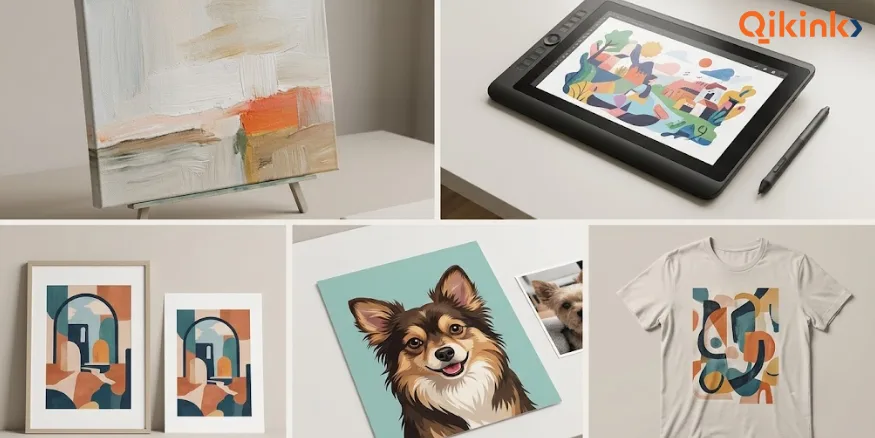
You can sell your art online as an original painting, digital file, print, commissioned piece, or design printed on merchandise. Each format has different production, pricing, fulfilment, and customer requirements.
Selling an acrylic painting, for example, means handling a very different product than selling a digital download or a T-shirt featuring your design.
Original Paintings and Artwork
Original artwork is a one-of-a-kind physical piece created by the artist. This includes acrylic, oil and watercolour paintings, drawings, mixed-media work, and other physical artwork.
When listing an original painting online, give buyers the details they cannot fully assess from photographs. Mention the medium, dimensions, surface, framing status, condition, and any other details that affect the piece. Use clear photographs that show the complete artwork along with close-ups of important details and texture.
Because an original is a physical piece, it also needs appropriate handling and delivery arrangements when sold online.
Digital Art
Digital art can be sold as a downloadable file or used to create physical products. Common examples include digital paintings, illustrations, printable artwork, patterns, and graphic designs.
For a digital product, the listing should make it clear what the buyer receives. State the file format, dimensions, resolution, number of files, and permitted usage rights where applicable. If you offer different usage rights, state clearly what the buyer can and cannot do with the file.
Digital artwork can also be adapted into other formats. An illustration, for example, can be sold as a downloadable file, reproduced as a wall-art print, or used as a design for merchandise.
Art Prints and Reproductions
Art prints are physical reproductions of existing artwork. Artists can sell posters, fine-art prints, framed prints, canvas prints, and other forms of wall art.
Prints allow you to sell the same artwork to multiple customers without creating a new original for every order. For a painting or drawing, the original usually needs to be photographed or scanned at a quality suitable for reproduction. The resulting file can then be prepared for the print sizes and materials you plan to offer.
The quality of the reproduction depends on factors such as the source image, resolution, colour accuracy, print method, and material. These details matter because the buyer is purchasing a reproduction of the artwork, not the original piece.
Want to Sell Posters Online?
Learn how to turn your artwork into posters and sell them online.
Start Selling Posters Online →
Custom Artwork and Portraits
Custom artwork is created for a specific customer based on their requirements. Portraits, pet portraits, personalised illustrations, and commissioned paintings are common examples.
Before starting a commission, agree on the important details with the customer. These can include the subject, size, medium, reference images, price, number of revisions, and expected completion date. If you require an advance payment, state the amount and when the remaining balance is due before starting the work. For digital commissions, also clarify how the customer can use the finished artwork.
A custom piece can be delivered as a physical original or digital file, depending on what the customer has ordered. Clear expectations are particularly important for commissions because the final artwork is created specifically for one buyer.
Art on Merchandise
You can use your artwork as a design on products such as T-shirts, hoodies, tote bags, mugs, posters, phone cases, and other merchandise.
Print on demand lets you offer this type of artwork on physical products without holding or storing finished stock, since each item is produced only after a customer places an order.
This model works well for artwork that can be reproduced across different products, including illustrations, patterns, typography, and digital designs. It is different from selling an original painting because the customer is buying a manufactured product featuring the artwork rather than the original piece.
You can also combine formats. As an acrylic painter, for example, you could sell original pieces, offer prints of selected works, accept portrait commissions, and use suitable designs on merchandise.
Turn Your Art Into Merch
Pick an art style and a product to see it come together.
Mountain & Sun T-Shirt
₹499
2. Pick a product
ColourThis product comes in white.
1. Pick your art
Your Artwork on Your Merchandise!
Upload your design, sell to your audience — Qikink takes care of the rest.
How to Sell Art Online: Step-by-Step
The process of selling art online in India commonly involves choosing and preparing the artwork, deciding where to sell it, pricing it, promoting it, and handling payments and fulfilment once orders start coming in.
Step 1: Choose What Art You Want to Sell
Start with a manageable selection of work rather than listing your entire portfolio at once, and decide which format to lead with first. If you paint originals, list two or three finished pieces rather than your whole body of work. If you sell merchandise through print on demand, begin with one or two designs across a small set of products rather than your entire catalogue.
Choose pieces you can create, prepare, price, and fulfil consistently, since that makes it easier to keep quality steady as orders come in. Before you start listing your work, keep these points in mind:
- Begin with your strongest work: Choose pieces that show your style and quality clearly.
- Know your buyer: Think about who is most likely to buy your work and what they are looking for.
- Consider your time: Factor in the time needed to create, customise, and prepare each order.
- Plan for repeatable products: If a piece can be reproduced as a print or merchandise design, decide that before preparing the artwork for sale.
You can expand the range later as you learn which products fit your audience and workflow.
Step 2: Digitise and Prepare Your Artwork
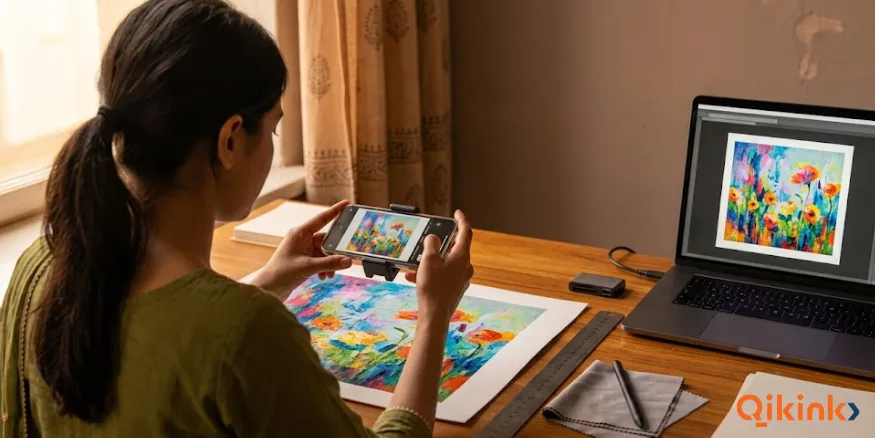
Before you list anything, prepare the artwork so it can be presented clearly online. Buyers cannot examine a painting or drawing in person before ordering, so your images should show its appearance, details, and scale as accurately as possible.
For original paintings, drawings, and other physical artwork, take clear photographs in good lighting. Keep the camera straight and avoid glare, strong shadows, distracting backgrounds, and filters that change the colours of the artwork. Include close-up images when texture or fine details are important. A simple photograph showing the artwork in a room can also help buyers understand its size, but always provide the exact dimensions in the product details.
If you plan to sell prints or use the artwork on merchandise, create a high-quality digital copy of the original. A good scan can work well for smaller, flat artwork, while larger paintings are often easier to photograph carefully. The digital file should have enough detail for the size and production method you plan to use.
Digital artwork needs similar preparation. Keep the original working file separately and create copies suited to the products or downloads you intend to sell. A digital illustration sold as a download may need different dimensions or file specifications from the same artwork prepared for a poster or T-shirt.
Before publishing anything, check the final images and files for colour, cropping, resolution, and visible errors. What the customer sees on the listing should give an accurate impression of what they will receive.
Step 3: Choose Where to Sell Your Art
You can sell paintings and other art online in India through several different channels, and the right one depends on what you are selling and how much control you want over the buying process.
Marketplaces can help you reach existing buyers, while your own store gives you more control over how your artwork is presented. Social media is useful for building an audience and taking enquiries, while print on demand can simplify the sale of artwork on merchandise.
| Selling channel | Suitable for | Main advantage | Responsibilities |
|---|---|---|---|
| Online marketplaces | Originals, prints, digital art and selected handmade products | Access to an existing marketplace audience | Marketplace rules, fees, listings and customer orders |
| Your own online store | Originals, prints, digital products and commissions | More control over your store and customer experience | Store setup, payments, traffic and order management |
| Instagram and Facebook | Originals, commissions, prints and merchandise | Useful for showcasing your work and building an audience | Content, enquiries, payments or checkout and customer communication |
| Print on demand store | Merchandise such as T-shirts, posters, mugs and tote bags | No finished stock required | Artwork preparation, product selection, pricing and promotion |
Marketplaces
Marketplaces such as Etsy can be useful when you want to start selling without building a website from scratch. You can list your work on the platform and reach people who are already browsing for products.
The requirements vary between marketplaces, so check the current rules before opening a shop. For example, new Etsy shops opened in India can currently sell internationally but cannot accept domestic sales. Etsy requires Indian sellers to verify a valid GSTIN and use Payoneer for Etsy Payments. It also charges a one-time USD 10 setup fee for new shops opened in India.
Marketplaces can work for original paintings, prints, digital products and other eligible artwork. Fees, product categories, payment methods and seller requirements vary by platform.
Your Own Online Store
An online store gives you more control over your product pages, branding, pricing and customer experience. It can be a good fit if you already have an audience through social media, repeat customers or other marketing channels.
The main challenge is getting people to the store. You need to bring in visitors through social media, search, advertising, email or other channels.
Social Media: Instagram and Facebook
You can sell directly through Instagram and Facebook by posting your work with prices and taking orders through direct messages, without setting up a separate store. This works well when you are starting or testing which pieces sell before investing in a full storefront.
This can work for originals, commissions, prints and merchandise. Keep the product details clear and decide how you will handle enquiries, payments and order information before you start taking orders.
Social media does not have to be the place where the final purchase happens. You can use it to bring buyers to your website, marketplace or another checkout.
Print on Demand: Qikink’s Creator Store
If you want to sell your artwork on products such as T-shirts, posters, mugs or tote bags, print on demand works the same way here: nothing is produced until a customer orders it, so there’s no stock to buy or store upfront.
Qikink’s Creator Store lets you set up a store and add products through the Creator Dashboard, with no subscription fee, no card required to sign up, and no minimum order quantity. The store goes live on a free subdomain instantly, and you can connect a custom domain later if you want one.
You still need to select the right products, prepare your artwork, set prices and bring customers to the store. The model is suited to selling designs on physical products rather than the original artwork itself.
You can also use more than one selling channel. For example, you could use Instagram to build an audience, sell original paintings through a website or marketplace, and offer selected designs through print on demand.
Step 4: Create Product Listings That Help Buyers Decide
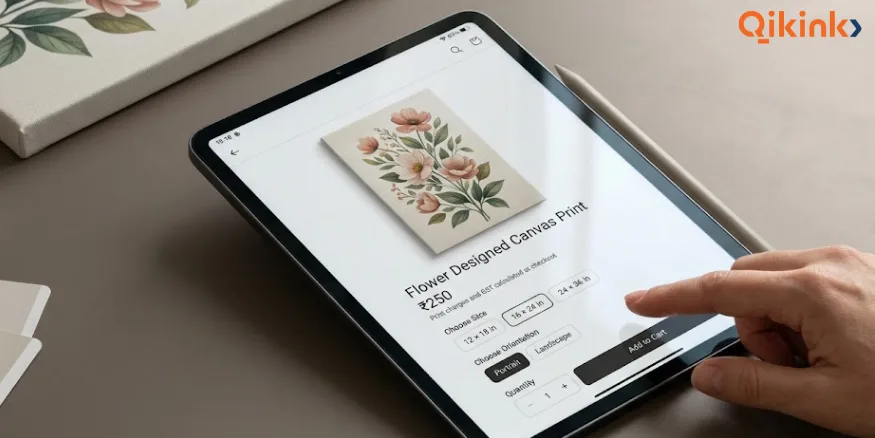
With the artwork prepared and a selling channel chosen, create a product listing that gives buyers the information they need to decide. The details will vary depending on whether you are selling an original painting, digital artwork, print, commission, or merchandise.
A useful listing should cover:
- Product name: Name the artwork and identify what the buyer is purchasing, such as an original acrylic painting, art print, digital illustration, or T-shirt.
- Key details: Include the specifications that matter for that product, such as medium, dimensions, material, file format, resolution, available sizes, or product variants.
- What the buyer receives: Clearly state whether the order includes an original artwork, reproduction, digital file, or physical product featuring your design.
- Customisation: For portraits and other commissioned work, explain what the buyer can customise and what information or reference material they need to provide.
- Usage rights: For digital artwork, state what the buyer is allowed to do with the file. If you offer commercial usage, specify what that permission covers.
- Delivery or production details: Mention relevant dispatch and delivery information, and make it clear when a product is produced after the order is placed.
Keep the information specific to the product. An original painting needs details about its physical artwork, while a T-shirt featuring the same design needs information about the garment, sizes, colours, and available variants. A digital artwork listing needs file and usage information instead.
For commissioned work, the listing should point buyers to the terms you’ll agree on directly, such as price, revisions, and completion date.
For print on demand products, check that the artwork is shown on the correct product and that the listed sizes, colours, and variants are accurate. The product price should also account for the costs you will calculate in the next step.
A buyer should understand what they are purchasing, what they will receive, and what to expect after placing the order, before they reach checkout.
Step 5: Price Your Art and Calculate Your Costs
The right price depends on what you sell. An original painting needs to account for your materials and time; prints and merchandise depend more on production and fulfilment costs, and digital work and commissions follow a different logic again since there’s no physical production cost.
Original Artwork
For an original painting, start with:
“Selling price = Materials + Your time + Selling costs + Profit”
For example:
- Canvas and paints: ₹1,200
- Frame: ₹800
- 15 hours of work at ₹200/hour: ₹3,000
- Packaging and other selling costs: ₹500
Your listed costs total ₹5,500. If you want ₹2,000 as profit, your starting price is ₹7,500.
Use this as a baseline, then consider the artwork’s size, medium, detail, your experience, and the market you are selling to.
Prints and Merchandise
For a print on demand product, calculate your profit after subtracting production, fulfilment, and selling costs:
“Profit = Selling price − Product and fulfilment costs − Selling fees”
For example, if a product costs ₹400 to produce and fulfil and you sell it for ₹699, ₹299 remains before marketplace, payment, advertising, or other additional selling costs.
Use the actual cost for each product rather than applying one price across your catalogue. A T-shirt, poster, canvas, and mug will have different production and fulfilment costs.
Digital Art and Commissions
Digital downloads have no physical production cost for each sale, but your price should still reflect the time spent creating the work, the usage rights you provide, and any platform or payment fees.
For commissions, factor in your creation time, materials or software, revisions, delivery, and any other agreed requirements. If you take an advance, make the payment terms clear before starting.
As your work, experience, materials, or demand change, review your prices too. This tells you what each sale actually costs you and how much you keep, which matters more than simply raising the price.
Start Earning with Different Ideas
From trendy apparel to unique accessories, discover how to boost sales.
Best Merch Ideas To Sell →
Step 6: Promote Your Art and Bring in Buyers
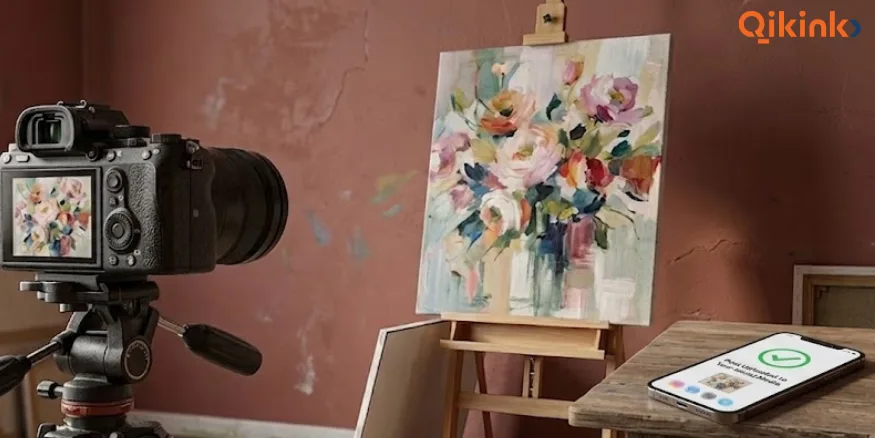
Promotion is what helps people discover your artwork once it is listed and priced. Focus on channels where your potential buyers are likely to spend time, and make it easy for interested people to reach the relevant product or order page.
Use Instagram and Facebook to Showcase Your Work
Instagram and Facebook can help you display your work, share your creative process, and communicate with buyers directly. You can use posts, Reels, and Stories to introduce new artwork, announce collections, show works in progress, or demonstrate how a product looks in use.
Direct interested buyers to the relevant store, product page, or enquiry method instead of making them search for the product themselves.
Behind-the-scenes content can also give people more context about your work. You could show a painting being created, explain the inspiration behind a collection, demonstrate how a print is made, or show how your artwork looks on products. You can also look at how YouTubers use merchandise to turn their audience and personal brand into another revenue stream.
Build Content Around Your Artwork
You do not need to make every post a direct sales announcement. Create content that helps people understand your work and gives them a reason to follow your account.
For example, you can share:
- Finished artwork and new releases
- Short videos of the creative process
- Close-ups showing texture or detail
- The story or inspiration behind a collection
- Customer photos, with their permission
- Announcements for upcoming commissions, prints, or product launches
Keep the content connected to what you sell. If you sell original paintings, focus on the creative process and finished pieces. If you sell merchandise, show how the artwork looks on different products.
Use Search and Email to Reach Existing and New Buyers
Social media is not the only way to bring people to your store. If you have your own website, clear product pages can help potential buyers find and understand your work through search.
Email can also be useful when customers or subscribers have chosen to receive updates. You can use it to announce new artwork, collections, commissions, or product launches to people who have already shown interest in your work.
Consider Paid Promotion
Paid advertising can help you reach a specific audience with a particular product or collection. Start with a defined budget and a clear objective rather than promoting your entire catalogue at once.
For example, if you sell personalised portraits, promote a small selection of finished examples. If you sell merchandise, promote one collection at a time rather than your whole catalogue.
Track useful actions such as product-page visits, enquiries, and purchases so you can understand what your advertising spend is generating.
Before increasing your promotional activity, make sure the artwork is presented clearly, the price is easy to find, and the buyer has a straightforward way to place an order.
Step 7: Handle Payments, GST, Copyright and Business Basics
Accepting orders means setting up a clear payment process, understanding the tax requirements for your selling method, and keeping records of your sales and expenses. You should also protect your artwork and clearly define how buyers can use it.
Handle Payments and Keep Records
Your payment process depends on where you sell. Marketplaces may process payments for you, while your own store can use a payment gateway. If you take orders through Instagram or Facebook, decide how customers will pay and how you will confirm each order.
Keep records of orders, payments, refunds, platform fees, production costs, shipping charges, and other business expenses. These records help you track your actual profit and manage your tax obligations.
Understand GST Requirements
Most online art sellers in India need GST registration earlier than the general threshold suggests, for two reasons. Selling through a marketplace such as Etsy or Amazon requires a GSTIN from your first sale, with no turnover exemption. Shipping to a buyer in a different state also requires registration regardless of turnover, since this counts as inter-state supply.
The turnover threshold only applies if you sell exclusively within your own state and not through a marketplace. In that case, the limit is ₹40 lakh for sellers of goods in most states, though it drops to ₹20 lakh in a handful of states including Telangana and Puducherry. A small-seller exemption also exists for sellers who meet specific intra-state conditions while selling through an eligible marketplace; check with a tax professional if that narrow case applies to you.
Protect Your Artwork With Copyright
Copyright protection generally arises automatically when an original artistic work is created; registration is not required for copyright protection to exist, although registration can provide evidence of ownership in a dispute.
If you want to register your work, you can do so through the Copyright Office, Government of India. Keep your original files and other evidence of creation where possible.
Also make sure you have the necessary rights to any third-party images, fonts, characters, logos, or other material used in your artwork or merchandise.
Clarify Usage Rights
For digital artwork and commissions, state what the customer is allowed to do with the finished work. Personal-use permission does not automatically give the buyer the right to reproduce or sell the artwork commercially.
For commissioned work, agree on the price, payment terms, revisions, final deliverable, and permitted usage before starting. If you license artwork for merchandise or another business, specify where and how the artwork can be used.
Step 8: Fulfil Orders and Handle Customer Support
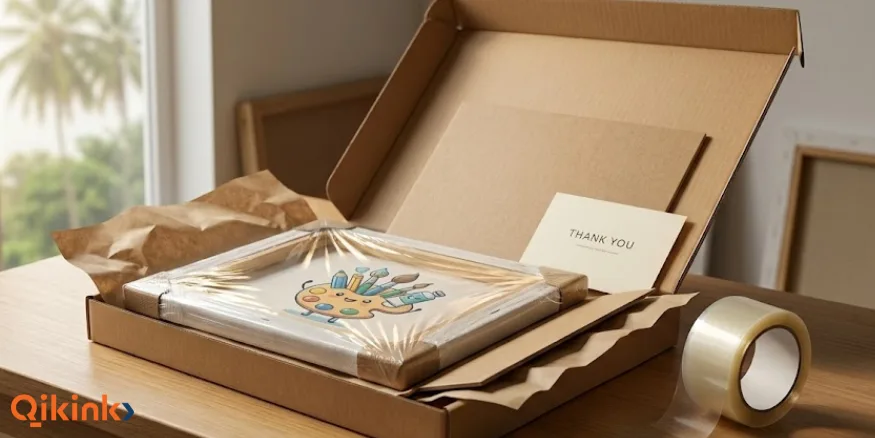
Every order needs a clear process for preparation, delivery, and customer support. The exact steps depend on what you sell. An original painting may require careful packaging and shipping, while a digital download can be delivered online immediately.
For each order, make sure you have:
- Order details: Confirm the product, size, customisation requirements, delivery address, and payment status before starting.
- Production or preparation: Complete the artwork or prepare the product according to the details shown in the listing.
- Packaging and delivery: Use suitable packaging for physical artwork and products. For fragile or valuable originals, take extra care with protection during transit and use a shipping option appropriate for the order.
- Delivery updates: Share dispatch and tracking information when available so customers know when to expect their order.
- Issue handling: Have a clear process for damaged, incorrect, delayed, or missing orders. Check the policies of your marketplace, payment provider, or fulfilment partner before deciding how to resolve an issue.
- Digital delivery: For digital products, provide the correct files in the format and resolution promised in the listing and make sure the buyer knows how to access them.
For commissions, communication is particularly important because the artwork is created specifically for one customer. Confirm the agreed requirements before beginning and provide updates at the stages you have promised. If revisions are included, keep track of the agreed number so there is no confusion later.
After delivery, you can ask customers for feedback and, if they share photos of your artwork, request permission before using those images in your own marketing.
How to Sell Paintings Online in India?
You can sell paintings online in India through your own website, online marketplaces, social media, or direct enquiries, depending on the type of artwork and the buyers you want to reach. Original paintings need careful photography, pricing, packaging, and delivery, while prints and reproductions can be sold repeatedly from the same artwork.
Original paintings follow the same preparation and listing process covered above, with one added consideration: since each piece is one of a kind, buyers weigh photographs and framing details more heavily than they would for a print or a merchandise item, since there’s no second unit to compare against.
For acrylic, oil, watercolour, canvas, and other physical paintings, you can also create digital versions for prints or merchandise. A high-quality photograph or scan can become the source file for posters, canvas prints, or products featuring your artwork. This gives you another way to sell the same creative work without producing another original painting.
How to Make Money Selling Art Online?
You can make money selling art online through original paintings, prints, digital artwork, commissions, and merchandise. Each model works differently, so your earnings depend on your selling price, costs, time, and number of sales.
- Original paintings: Sell one-of-a-kind artwork directly to buyers.
- Prints and reproductions: Sell posters, canvas prints, or other reproductions of existing artwork multiple times.
- Digital art: Sell downloadable illustrations, printable artwork, patterns, or other digital files.
- Custom commissions: Create portraits, personalised paintings, illustrations, or other artwork for individual customers.
- Print on demand merchandise: Put your artwork on T-shirts, hoodies, posters, tote bags, mugs, and other products without buying finished inventory upfront.
Most sellers don’t stick to one model. A common pattern is starting with prints or merchandise, since both have lower upfront effort, then adding originals or commissions once you know what your audience actually buys. Track your materials, time, platform fees, production, fulfilment, shipping, and marketing costs so you know how much each sale actually contributes to your income.
Making Money Online as an Indian Artist
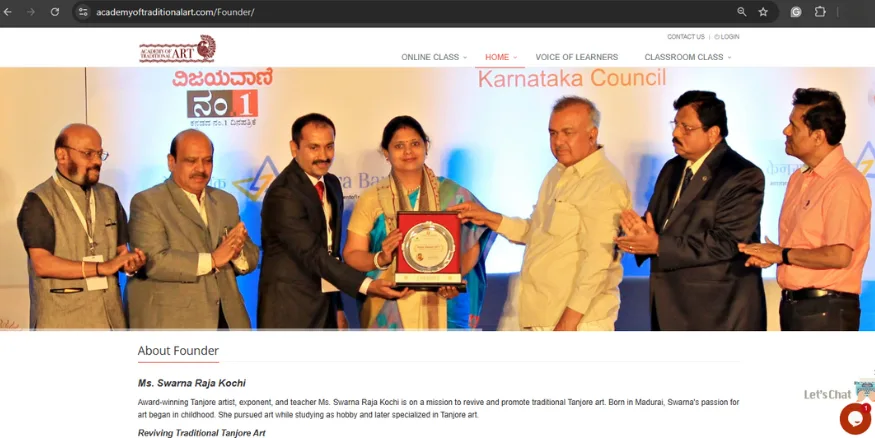
Swarna Raja Kochi, the founder of Tanjore Art Studio, is an award-winning artist and a teacher at her own art school, the Academy of Traditional Art. She started selling her original paintings and artwork online through platforms such as Etsy and Instagram.
In a 2025 research paper based on an interview with Swarna Raja Kochi, she described the role of spirituality in her approach to Tanjore painting: “90% of the work is spiritual and only 10% is technical.”
Within months, she earned a steady income by selling both original paintings and digital prints. Her experience shows how artists can use online platforms to reach buyers and create different ways to sell their work.
You can similarly start with a small selection of artwork, choose suitable selling channels, and expand into formats such as prints, digital products, commissions, or merchandise as your online art business develops.
Convert Your Social Media into Income!
Learn rules, eligibility, and proven ways to start earning from your channel.
Monetise YouTube Channel: Guide →
Frequently Asked Questions
1. How Can I Sell My Art Online in India?
2. Where Can I Sell My Paintings Online in India?
3. How Can I Sell Art Online for Free?
4. Can I Sell Digital Art Online?
5. Can I Sell My Art on Instagram Without a Website?
6. Can I Use Print on Demand to Sell My Artwork?
7. How Do I Protect My Artwork When Selling It Online?
Final Thoughts
Selling art online becomes easier to manage when you treat the artwork, selling channel, pricing, promotion, and fulfilment as parts of the same process. Start with the type of art you can create consistently, present it clearly, and choose a selling method that fits how you want to handle orders and customers.
You do not need to launch with a large catalogue. A small collection can help you understand what buyers respond to, which products are worth continuing, and where your actual costs come from. You can then expand into prints, commissions, digital products, or merchandise as your business develops.
If you want to put your artwork on physical products without keeping finished stock, Qikink’s Creator Store is one option to consider. It lets you create a storefront, add merchandise featuring your designs, and have the products printed, packed, and shipped after customers place orders.
Sign up Now →Read More
- Explore Indian Influencers Who Have Their Own Brands
- Best Art Selling Websites in India Suited For Digital Artists
- Top Inspiring YouTuber Merch Stores and Self-Brands
- How To Make Phone Cases To Sell: From Design to Sales
Share the Article


