

DTF printing is a method of digital printing where ink is directly transferred onto a material using a special film layer. This technique offers a cost-effective and efficient way to produce high-quality, full-colour prints on various surfaces.
Qikink has installed 2-head and 4-head DTF printers to enhance production capabilities and deliver high-quality prints efficiently. We look forward to serving you better with our advanced printing technology in the print on demand journey.
In this article, we will see everything from what Direct to Film printing is, the process involved, the quality, and the pros and cons of this technology. So let’s get started.
What is DTF Printing?
DTF stands for direct-to-film printing. This process involves printing your design straight onto a film and then transferring it to a T-shirt made of cotton, polyester, or their mixes, regardless of colour, because white ink may be used.
Although DTF printing appears to be a version of transfer printing, it needs a desktop inkjet printer equipped with DTF-specific textile inks.
The best feature of DTG printing is its versatility in printing on any fabric, making it stand out from all other printing technologies. You can print on polyester, cotton, silk, or synthetic fibres like rayon or terrycloth.
DTF printing is noted for its ability to generate high-quality, full-colour graphics on various materials, including dark and colourful fabrics, compared to other printing technologies such as screen printing or sublimation printing.
DTF is also quick and straightforward to start up, with no high minimum order quantities, making it a popular choice for small to medium-sized businesses.
DTF Printing Process
DTF, or direct-to-film printing, is a novel technique that allows users to print graphics directly onto specific films. These films are then applied to the fabric of choice. Like other heat transfer methods, a high-quality printer and heat press are required to maximize this procedure. The DTF printing process is simple and easy. Here’s how
Step 1: DTF printing
A PET film is used in DTF to achieve quality. Print the entire image on PET film, with white at the bottom. Then, select the desired colour and print the picture on the white layer. Keep in mind that the image in the film must be reversed.
PET films have a thickness of around 0.75mm, which gives them greater transmitting properties. On the market, these films are also known as DTF Transfer Films.
They are available as cut sheets for small-scale applications or as rolls for large commercial settings. PET Films are classified into two types based on their temperature. These are cold-peel and hot-peel films, respectively.
Step 2: Ink Drying
Once the design is printed on the film, it is dried using powder glue on the back to secure the print. This powder acts as an adhesive between the inks and the fabric.
Step 3: Film Transfer
The final step includes transferring the film onto the fabric using a heat press machine. The film is then peeled off the material, transferring the design to the fabric.
Advantages of DTF Printing
High Print Quality
Although DTF prints may not have the same soft feel as DTG prints, they can provide a relatively soft touch once transferred. Your consumers will receive a significantly smoother print than with vinyl printing.
Now, try to stretch and bend the design as much as possible. You will notice that your design can keep its original form. Looking closely at the pattern, you’ll see no cracking or peeling!
Cost Effective
DTF is cheaper than DTG printing and almost serves the same purpose as DTG. However, the print look and feel have a significant role to play.
No Print Size Restrictions
You heard this right. Like DTG, DTF does not bind you to a certain print size area, making it more desirable. You are free to design any size of print and print placement.
No Fabric Restrictions
DTF is compatible with cotton, polyester, silk, linen, etc. Since the patterns or designs are first printed on the PET film and later heat transferred, there are no fabric restrictions here, making DTF an easy-to-scale option for online sellers.
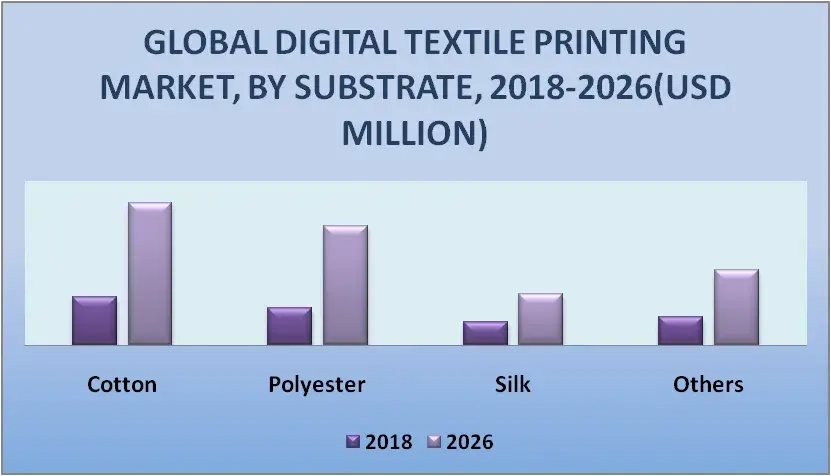
Source: Textile printing market size
No Minimum Quantity
DTF is print-on-demand friendly. It means you can print your designs on the garments whenever there is a demand for that product. It also makes it partially eco-friendly, as you do not have to store inventory.
No Colour Restrictions
There are no restrictions on the design colours. You can print a single-colour design or a multiple-colour design within a few minutes. Unlike screen printing, you are not restricted to using a solid colour. DTF can print any number of colours, shades, and patterns.
DTF Printing Durability
DTF printing durability is what sets it apart from other printing technologies. It prints bright colours, has pleasing gradations, and is fade- and peel-proof.
So, does DTF printing last long? Of course, it lasts longer than the fabric itself.
Customization
DTF printers enable a high level of customization since they can print patterns, photos, and text into fabric in various colours and fabrics. They can be highly customized. With DTF printing, your pattern is first pressed into a film.
It enables highly accurate ink amounts, producing vibrant colours, opaque whites, and amazingly crisp and delicate edges. DTF film absorbs practically every drop of colour, allowing for high detail levels and colour gradients.
What are the Disadvantages of DTF Printing?
With many advantages, let’s understand the disadvantages of DTF printing, which should be considered while choosing a printing technique.
Print Feel
The printing process is simple, but the print feels heavy and textured. Because of the fixing powder, there is a plastic, glossy, and less blended feel. It won’t be your ideal print technique if you wish to sell a premium quality product and provide your customers with a soft, blended, and comfortable feel. It is simply not as smooth and light as DTG printing.
Now that we have covered everything about DTF printing, here are a few questions that usually pop up while considering a printing technology. So, let’s quickly look into those.
Showcase Your Design Creativity
Discover how custom photo-printed t-shirts can elevate your small orders
T-Shirt Photo Printing →
Which is Cheaper, DTG or DTF?
Direct-to-garment (DTG) printing has traditionally been the most popular method for t-shirt printing and small productions. Still, in recent months, Direct-to-film (DTF) has gained traction in the industry, with more supporters on the way.
While both technologies have advantages, with the rise of business expenses, sellers are more likely to consider a cheaper alternative that can also produce high quality.
So, without further ado, let’s see the DTG and DTF printing process.
| Aspect | DTG (Direct to Garment) Printing | DTF (Direct to Film) Printing |
|---|---|---|
| Printing Process |
DTG involves 4 steps:
|
DTF includes 3 effortless steps:
|
| Cost of Printing | Due to the cost of inks and processes being time-consuming and requiring skilled labor, the printing costs are high. | Due to technology development and the presence of the film, the printing costs are lower than DTG printing. |
| Fabric Flexibility | The pigment ink is heat-pressed to the fabric surface in DTG printing, which limits compatibility. Suitable mainly for cotton, combed cotton, organic cotton, linen, and similar fabrics. | Because the design film is applied using heat-melting adhesive, DTF works on a wide range of fabrics like cotton, silk, linen, polyester, and more. |
| Print Texture and Feel | Even though only a tiny amount of ink is sprayed on the clothing, the hand feel is excellent. | The dress has a regular hand feel, with a slight film of hot-melting powder sticking to it. |
| Eco-friendliness | DTG printing inks are eco-friendly, and there is no waste. | DTF printing is not eco-friendly as it involves a huge waste of PET films. |
| Print Size | Because the technique uses frames for specific garment sizes, setup expenses for different sizes can be high. | There are no additional fees with DTF. You can simply modify the print film size to fit all clothing sizes. |
| Print Texture | DTG inks blend with the fabric and give a rougher, more natural feel. | Due to the fixing powder, DTF gives the fabric a plastic, glossy, and less blended feel. |
Is DTF Better than Sublimation Printing?
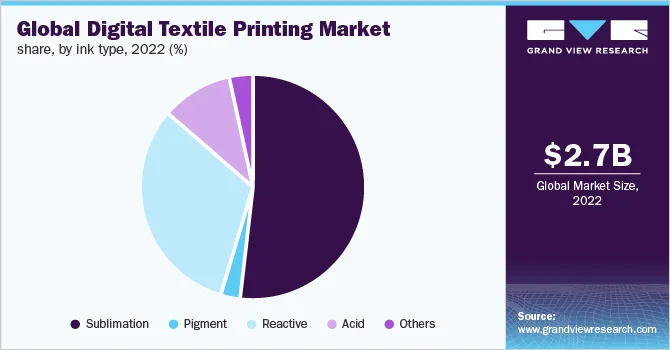
Because of the increasing demand for dye-sublimation in customized printing services, the sublimation category held more than 52% of the global market share. Sublimation inks are more lasting than other types of inks because they are absorbed into the cloth rather than simply adding a coating of colour to it.
Both DTF and Sublimation printing involve the heat transfer technique. DTF is a new printing technology that uses digital transfers to design dark and light fabrics. Sublimation printing uses a chemical process in which a solid quickly transforms into a gas without passing through the liquid stage.
The graphic is printed onto the fabric using a transfer PET film in DTF printing. Sublimation printing, on the other hand, uses sublimation paper.
Here’s what makes the difference:
DTF transfer produces photo-quality pictures and outperforms sublimation. The higher the polyester content of the cloth, the better and more vivid the image quality. However, the difference is the touch and feel of the print.
DTF generates a heavy and glossy finished print.
On the other hand, the prints are soft and matte in sublimation as the designs are printed directly on the fabric.
These technologies are suitable for printing high-quality prints, as they have their uses in the printing industry. So, you get to decide if DTF is better than sublimation according to your requirements.
How long does DTF Printing Last?
When you print on film, the design is printed onto the film in thick layers with internal cohesion. The design is applied to the film layer by layer, and the thick coat of ink is pressed into the fibres of the garment.
DTF (direct-to-film) transfers are far better than traditional transfers. The ink and adhesive layers press into the garment. When pressed, the patterns reflect the garment’s texture, providing a more comfortable feel.
It means it’s far more durable and will last longer, even after several washes.
Does DTF Transfer Crack?
DTF lasts longer than sublimation since the ink stands out from the cloth. Direct-to-film transfers wash well and are flexible, so they won’t split or peel, making them ideal for premium products.
Because the inks are elastic, the print does not crack when the garment is stretched.
Unlike screen printing or DTG, you will not notice the fibres pushing through the image if the cloth is pulled and stretched.
DTF prints are more durable than DTG printing, which means they will last longer before fading or cracking. For these reasons, DTF printing is frequently chosen by companies or individuals to generate high-quality printed clothes quickly.
DTF Printing vs Silkscreen
The DTF printing technique is more versatile than screen printing technology. Cotton, nylon, rayon, polyester, leather, silk, and other textiles can be printed using DTF. In this sense, the DTF printer pricing is reasonable, and the process is quick and straightforward. It is a low-cost printing process.
Screen printing has the advantage of being ideal for managing large volumes of orders. Silk screen printing is the most efficient and cost-effective way of fast printing hundreds or thousands of t-shirts. Because colour is applied at a time, screen printing requires some preparation.
Both DTF printing and screen printing have advantages and disadvantages, and various factors determine the success of your different printing methods. DTF printing may be ideal if you want high-quality prints with brilliant colours and a particular feel.
Screen printing may be the way to go if you need a low-cost alternative for large-scale orders. Hence, analyzing all elements and deciding based on your print requirements is essential.
Is DTF Better than Silk Screen?
Silkscreen, also known as screen printing or silk screen printing, is a traditional method of printing that involves creating a screen of the design and then using that screen to apply ink onto the fabric.
However, the silk screen or screen printing is time-consuming, whereas DTF is more straightforward.
The major drawback of screen printing is the limitation of the design to colour, patterns, sharp edges, and gradients. On the other hand, DTF can print any number of colour patterns with sharp edges and gradients.
Screen printing and DTF printing have their own benefits and drawbacks. The best option depends on your needs and what you want to print. It is important to select a suitable print technique for your brand.
The printing method you select will significantly influence your costs and product quality. Screen printing and DTF printing are appropriate for various printing techniques. The best approach is determined by print quality, material, and quantity.
Conclusion
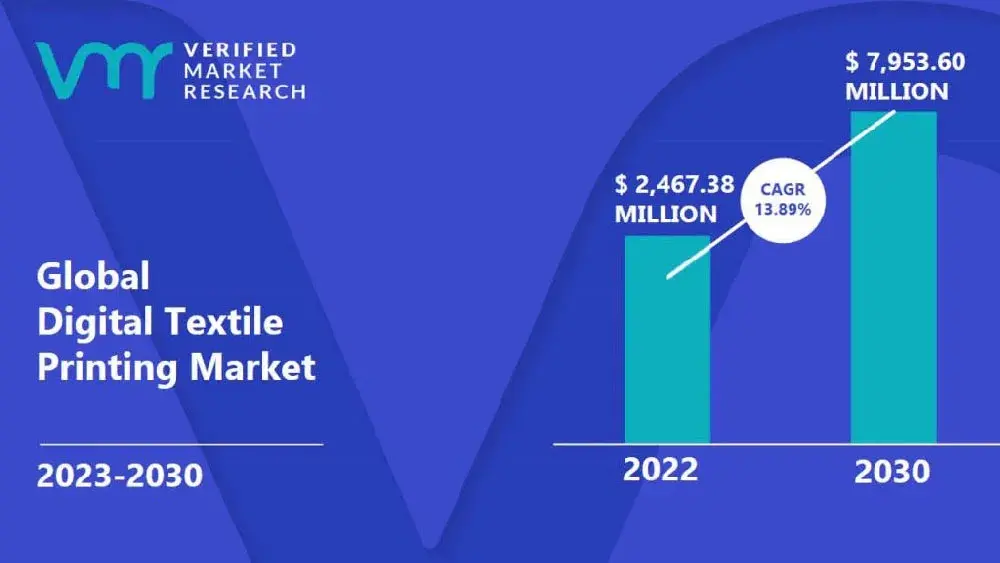
The textile printing industry is expected to expand tremendously as more and more printing technologies enter the market. The benefits of DTF printing make it a desirable choice for anybody looking to start printing apparel.
With the way DTF utilizes new applications and technology, we believe it will be the future of garment printing.
The DTF market is still growing, which means there is plenty of scope for experimentation and development. Don’t worry if you’re not convinced just yet.
DTF printing will continue to shake the business as technology advances.
We hope this article has helped you understand the DTF printing technology. Let us know if you want us to write more on different printing technologies.
Frequently Asked Questions
1. Is DTF Printing Good Quality?
2. Does DTF last Long?
3. Does Qikink offer DTF Printing?
4. What is DTF (Direct-to-Film) Printing, and How Does it Differ from Other Printing Methods?
5. How can DTF Printing Benefit My Business in Terms of Customization and Design Flexibility?
6. Are there Specific Industries or Applications where DTF Printing Excels as a Game-Changer?
7. What are the Key Advantages of Integrating DTF Printing into My Business Operations?
8. How does DTF Printing contribute to Cost-effectiveness and Reduced Production Times?
Share the Article


