
Table of Contents
What is Fabric Printing?
Fabric printing is the process of applying designs or artwork onto textile materials. It is a common method in the apparel industry for creating printed garments, patterned fabrics, and customised textile products.
The fabric printing applies a specific design to the material’s surface rather than colouring the fabric with a single shade. This allows manufacturers and clothing brands to produce garments with customised logos, illustrations, artwork, and repeating patterns.
This personalised printing on apparel has created a revolution in the textile industry. Printed fabrics are now widely used in clothing, fashion collections, promotional merchandise, and also on accessory products.
Fabric printing has become an essential part of modern textile production and clothing manufacturing, especially for brands that focus on unique designs and personalised products.
What are the Types of Printing on Fabric?
Fabric printing covers a wide range of techniques, from the traditional printing methods to modern digital output, where each printing has its own process for how custom apparel, home textiles, and fashion products are made.
Each printing type is chosen based on the fabric type, the complexity of the design, and the production quantity. Different printing methods create different textures, durability levels, and visual results. Some of the commonly used fabric printing methods are:
1. Screen Printing
Screen printing is one of the most established methods used in apparel printing. This method uses a mesh screen and ink to transfer the design onto the fabric. It is commonly used for bulk printing because it produces strong, long-lasting prints and vibrant colours.
2. Sublimation Printing
Sublimation printing is mainly used for polyester fabrics, where the design is printed on a transfer paper and then applied to the fabric using heat and pressure. During this process, the ink bonds with the fabric fibres, producing smooth and durable prints.
3. DTF Printing
DTF (Direct-to-Film) printing is the process where the design is first applied onto a coated transfer film, then bonded to the garment using heat and pressure. Works across more fabric types and is an ideal choice for a print on demand business.
4. DTG Printing
DTG (Direct-to-garment) printing is a digital printing method where designs are printed directly onto finished garments such as t-shirts. This technique is commonly used for custom clothing and is better suited for designs with fine detail or photography.
How To Print Photo On A T-Shirt Online
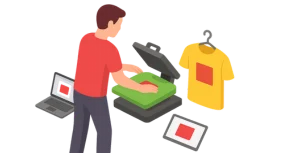
5. Digital Fabric Printing
Digital fabric printing uses specialised textile printers to print designs directly onto fabric. It works similarly to inkjet printing and allows detailed artwork, multiple colours, and complex graphics to be printed without the need for separate screens.
Each printing method offers different advantages depending on the design style, fabric material, and printing requirements.
How Digital Prints Work on Fabric?
Digital prints on fabric are created using modern digital textile printing technology. Digital printing has become widely used in apparel production because it supports smaller production quantities while maintaining high design accuracy.
These fabric digital prints are particularly useful for custom clothing brands, fashion designers, and businesses that want to create unique printed garments with detailed artwork.
Why Businesses rely on Fabric Printing?
Printed fabrics are used to produce items such as
- T-shirts,
- Hoodies,
- Sweatshirts,
- Activewear,
- Other Fashion Garments.
Clothing brands nowadays rely on the trending fabric printing to add branding elements, artwork, and distinctive design styles to their products.