
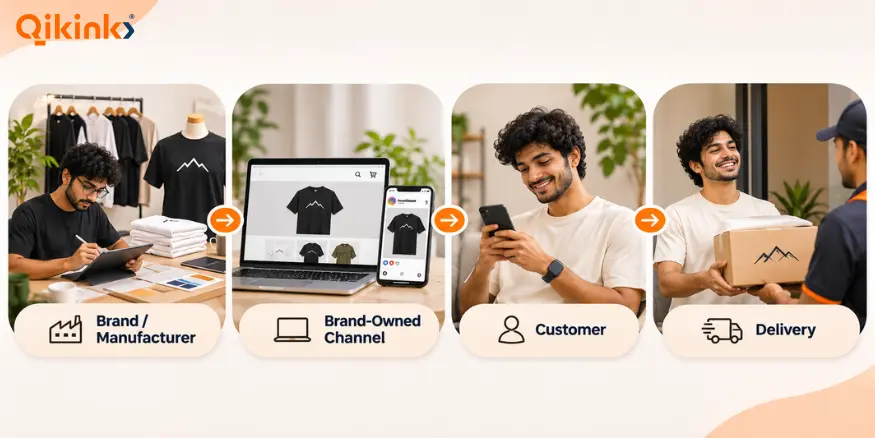
D2C meaning refers to Direct-to-Consumer, a business model in which a brand sells its products directly to customers instead of relying on intermediaries such as wholesalers, distributors or third-party retailers
For example, an Indian clothing brand that designs T-shirts and sells them through its own website follows the D2C business model. The brand manages product pricing, customer communication and the shopping experience while arranging production and delivery.
D2C businesses can sell through ecommerce websites, company-owned physical stores and direct social selling channels. This approach gives entrepreneurs greater control over their brand identity and customer relationships.
If you are planning to launch a clothing brand or start selling products online, understanding the D2C model can help you choose suitable sales channels, manage business expenses and build a long-term brand.
Key Takeaways
- D2C means Direct-to-Consumer, where brands sell products directly to end customers.
- D2C brands can operate through their own websites, physical stores and social selling channels.
- The model gives businesses greater control over branding, pricing and customer relationships.
- D2C businesses must manage expenses such as marketing, manufacturing, shipping and customer service.
- Entrepreneurs can use print on demand to start certain D2C clothing businesses without purchasing bulk printed inventory.
- A successful D2C business needs the right products, a defined audience, reliable fulfilment and effective marketing.
D2C Meaning in Business: What Does It Mean?
In business, D2C refers to a selling approach where a brand or manufacturer sells products directly to the final consumer instead of depending entirely on retailers or distributors.
Traditionally, products may pass through wholesalers, distributors and retail stores before reaching customers. In the D2C model, the brand sells directly through its own customer-facing channels.
For example, imagine you want to start a clothing brand in India.
You create unique T-shirt designs, build an online store and promote your products through Instagram. Customers visit your website and purchase directly from your brand.
You manage the customer relationship, product pricing and order experience, even if a third-party partner handles manufacturing or shipping.
A D2C brand can sell through:
- Its own ecommerce website.
- A company-owned physical store.
- Social media channels supporting direct selling.
- A branded online storefront.
- Other brand-managed direct sales channels.
The main characteristic of D2C is that the brand establishes a direct connection with its customers.
What Is a D2C Brand?
A D2C brand is a business that sells its own products directly to consumers. Understanding the D2C meaning helps explain why these businesses manage their customer relationships instead of depending entirely on retailers.
For example, Indian brands such as boAt, Mamaearth and The Souled Store have developed direct sales channels alongside other distribution methods.
These businesses sell products under their own brand identities and interact with customers through websites, marketing campaigns and customer support.
A D2C brand does not necessarily manufacture every product itself. It can work with suppliers, manufacturers or fulfilment partners while maintaining control over its branding and direct customer relationships.
To explore more examples across different industries, read our guide to Top D2C Brands in India.
How Does the D2C Business Model Work?
The D2C business model connects brands directly with consumers. Instead of depending entirely on retailers, the brand manages its sales channels and coordinates product delivery.
Here is how a typical D2C business works.
Step 1: Identify a Product and Target Audience
Choose what you want to sell and identify the customers most likely to purchase it.
For example, a clothing brand might target college students interested in oversized graphic T-shirts or fitness enthusiasts looking for workout apparel.
Step 2: Develop Your Product and Brand
Select suitable products, create designs and build a recognisable brand identity.
This includes your brand name, logo, product quality, packaging and communication style.
Step 3: Choose Your Sales Channels
Create an ecommerce website, branded online store or another direct sales channel.
Your chosen platform should allow customers to browse products, understand pricing and place orders easily.
Step 4: Attract Customers
Promote your products using channels relevant to your target audience, such as:
- Search engine optimisation (SEO).
- Social media marketing.
- Influencer collaborations.
- Paid advertising.
- Email and WhatsApp marketing.
Step 5: Receive and Fulfil Orders
When a customer places an order, the business processes it and arranges product preparation, packaging and delivery.
Some brands handle these activities internally, while others work with fulfilment partners.
Step 6: Build Customer Relationships
Provide order updates, answer customer questions and collect feedback.
A positive shopping experience can encourage repeat purchases and customer recommendations.
Typical D2C business flow:
Product Planning → Brand Development → Sales Channel → Marketing → Customer Order → Fulfilment → Customer Support
Ready to Start Your Own D2C Business?
Turn your business idea into reality with Qikink’s print-on-demand platform.
Get Started with Qikink →
Key Features of a D2C Business
A D2C business has several characteristics that distinguish it from businesses relying mainly on traditional retail distribution.
1. Direct Customer Relationships
D2C brands communicate with customers through their websites, social media, email and customer support channels.
This allows businesses to understand customer preferences and respond directly to questions or feedback.
2. Greater Control Over Brand Experience
Brands have more control over how products are presented and how customers experience the business.
For example, a clothing brand can create its own product photography, packaging, promotional messages and shopping experience.
3. Customer Data and Insights
Direct sales channels allow businesses to understand customer behaviour through information such as:
- Most-viewed products.
- Frequently purchased items.
- Customer preferences.
- Repeat purchases.
- Product returns.
These insights can support product development and marketing decisions. Customer data should always be collected and managed responsibly.
4. Flexible Product and Marketing Decisions
D2C businesses can introduce new products, test different designs and make changes based on customer feedback.
For example, a clothing brand might launch a small T-shirt collection, evaluate customer interest and expand the designs that perform well.
5. Multiple Direct Sales Channels
D2C brands can reach consumers through websites, company-owned stores and direct social selling.
Businesses can select channels based on their product category, audience and available budget.
Benefits of the D2C Business Model
The D2C model provides several advantages for entrepreneurs looking to build and grow their own brands.
1. Better Control Over Branding
Brands can communicate their story, highlight product features and maintain a consistent identity.
This helps customers recognise what makes the business different from competing brands.
2. Direct Customer Feedback
Customer reviews, questions and support conversations can reveal opportunities to improve products.
For example, a clothing brand may discover that customers want additional sizes, colours or fabric options.
3. More Control Over Customer Experience
D2C businesses can manage important parts of the buying journey, including product discovery, checkout, order communication and after-sales support.
This creates opportunities to provide a consistent customer experience.
4. Opportunities to Improve Profit Margins
Selling directly can reduce dependence on intermediaries and their distribution margins.
However, this does not automatically mean higher profits.
Businesses must still account for manufacturing, marketing, packaging, shipping, payment processing and other operating expenses.
5. Faster Product Testing
D2C brands can introduce smaller collections and evaluate customer responses before expanding.
For clothing businesses, this can reduce the risk of investing heavily in designs that may not sell.
6. Opportunities to Build Customer Loyalty
Direct communication helps brands provide relevant product recommendations, useful support and consistent after-sales service.
These experiences can encourage repeat purchases and long-term customer relationships.
Challenges of Running a D2C Business
Although D2C offers greater control over branding and customer relationships, businesses must also manage several responsibilities.
1. Customer Acquisition Costs
New brands need to attract customers through marketing activities such as advertising, SEO, social media and influencer collaborations.
If customer acquisition costs become too high, maintaining profitability can be difficult.
What you can do: Identify your target audience, test marketing channels and monitor customer acquisition cost (CAC), conversion rates and repeat purchases.
2. Inventory and Stock Management
Businesses purchasing products in advance must manage storage, stock availability and unsold inventory.
What you can do: Begin with manageable quantities or explore print-on-demand fulfilment for suitable products.
3. Order Fulfilment and Delivery
Customers expect accurate orders and reliable delivery.
Packaging, shipping, tracking, returns and replacements can become challenging as order volumes grow.
What you can do: Choose dependable fulfilment partners and communicate delivery expectations clearly.
4. Customer Trust
New brands may struggle to gain customer confidence without an established reputation.
What you can do: Provide accurate product descriptions, clear photographs, genuine reviews and transparent return policies.
5. Managing Business Expenses
Marketing, production, shipping, technology and customer support costs can affect profitability.
What you can do: Calculate the complete cost of selling and fulfilling each order before setting prices.
6. Competition in Consumer Markets
Customers can compare products, prices and reviews across multiple brands.
What you can do: Focus on a defined audience, offer useful products and develop a clear brand identity.
D2C vs Traditional Retail: What Is the Difference?
The D2C meaning becomes clearer when you compare how brands sell directly to consumers versus how products move through traditional retailers.
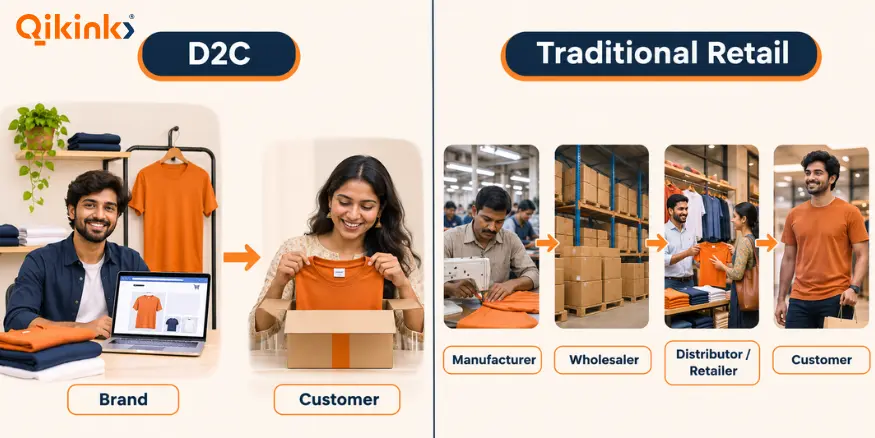
The main difference between D2C and traditional retail is how products reach the final customer.
In traditional retail, products often move through distributors, wholesalers or retailers before reaching consumers.
In D2C, the brand sells directly to customers through its own sales channels.
Example: D2C vs Traditional Retail
Imagine a company producing T-shirts.
In traditional retail, the company may supply T-shirts to distributors who sell them to retailers. Customers then purchase the products from those retailers.
In the D2C model, the company sells those T-shirts directly through its website or company-owned physical store.
D2C is also a type of B2C (Business-to-Consumer). While B2C describes businesses selling to individual consumers, D2C specifically refers to brands selling their own products directly to customers.
Neither D2C nor traditional retail is automatically better for every business. The right approach depends on the products, customers and available resources.
How D2C Brands Build Direct Customer Relationships
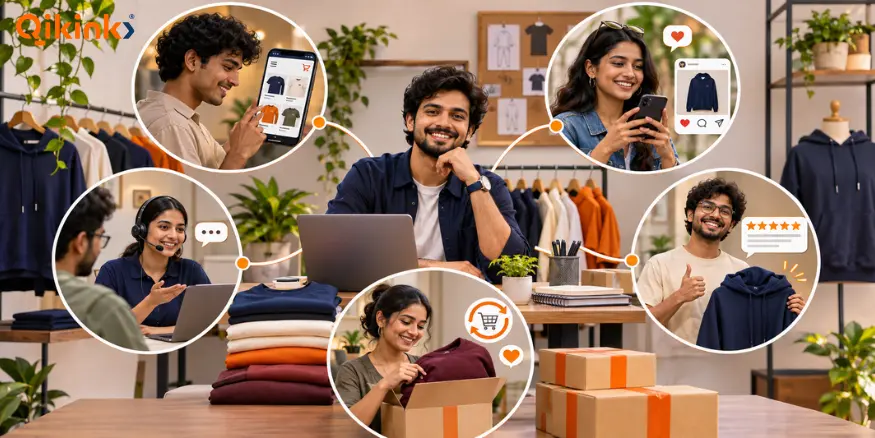
One of the main characteristics of D2C businesses is their ability to communicate directly with customers throughout the buying journey.
Instead of depending entirely on retailers, brands can manage communication through their own sales and support channels.
For example, a clothing brand can:
- Announce new collections directly to customers.
- Collect product reviews and feedback.
- Share relevant product recommendations.
- Communicate through email and WhatsApp.
- Provide support before and after purchases.
These interactions help brands understand customer preferences and improve their products.
A D2C business can also use customer feedback to identify recurring issues, improve product descriptions and make better decisions about future collections.
For additional insights, explore Shopify’s guide to the Direct-to-Consumer (D2C) business model
How to Start a D2C Business in India: Step by Step
Starting a D2C business does not always require a large team or physical retail store. Entrepreneurs can begin with a focused product idea and suitable sales channels.
Here are the main steps to consider.
Step 1: Choose Your Business Niche
Identify the type of products you want to sell.
Possible categories include:
- Clothing and fashion.
- Personal care products.
- Home and lifestyle products.
- Accessories.
- Fitness products.
- Customised gifts.
Choose a category based on customer demand, competition and your ability to offer useful products.
For product ideas, explore our guide to High-Demand Products to Sell in India.
Step 2: Research Your Target Audience
Understand who is most likely to purchase your products.
Research customer preferences, age groups, expected pricing, shopping habits and problems your products can solve.
A clearly defined audience makes product development and marketing decisions easier.
Step 3: Research Competitors
Study businesses selling similar products.
Compare their:
- Product range.
- Pricing.
- Customer reviews.
- Sales channels.
- Marketing strategies.
- Brand positioning.
The objective is to identify customer expectations and opportunities to differentiate your business.
Step 4: Develop Your Product
Decide how your products will be manufactured or sourced.
For clothing brands, important considerations include fabric quality, fit, sizes, colours and printing options.
Test samples before launching to verify product quality and understand the customer experience.
Step 5: Calculate Your Costs and Set Price
Your selling price should account for the major expenses involved in completing an order.
These include product costs, printing, packaging, shipping, payment processing, marketing and expected return-related expenses.
For example, selling a T-shirt for ₹699 does not mean the entire amount is profit. The business must deduct production and operating expenses to determine its actual earnings.
Step 6: Create Your Brand Identity
Develop a memorable brand name, logo, visual identity and communication style.
Your branding should reflect the audience you want to attract and the products you plan to sell.
Step 7: Select the Right Sales Channels
Choose where customers can discover and purchase your products.
Options include ecommerce websites, company-owned stores and direct social selling.
For online stores, provide:
- Clear product descriptions.
- High-quality images.
- Accurate pricing.
- Size information.
- Payment options.
- Shipping and return policies.
- Contact information.
Make the shopping experience simple for mobile users.
Step 8: Plan Your Marketing Strategy
Choose marketing channels that match your audience and budget.
You can explore SEO, social media, influencer collaborations, paid advertising and customer communication campaigns.
Start with manageable marketing activities and measure their performance before increasing your investment.
Step 9: Choose an Order Fulfilment Method
Decide how products will be produced, packed and shipped.
You can manage fulfilment internally, purchase ready-made products or work with manufacturing and fulfilment partners.
For customised clothing, print on demand can reduce the need to maintain bulk printed inventory.
Step 10: Launch, Measure and Improve
After launching, track important business metrics such as website traffic, conversion rate, average order value, customer acquisition cost, returns and repeat purchases.
Use customer feedback and sales performance to improve products, pricing and marketing.
For a detailed clothing-specific launch process, read How to Start a Clothing Brand in India.
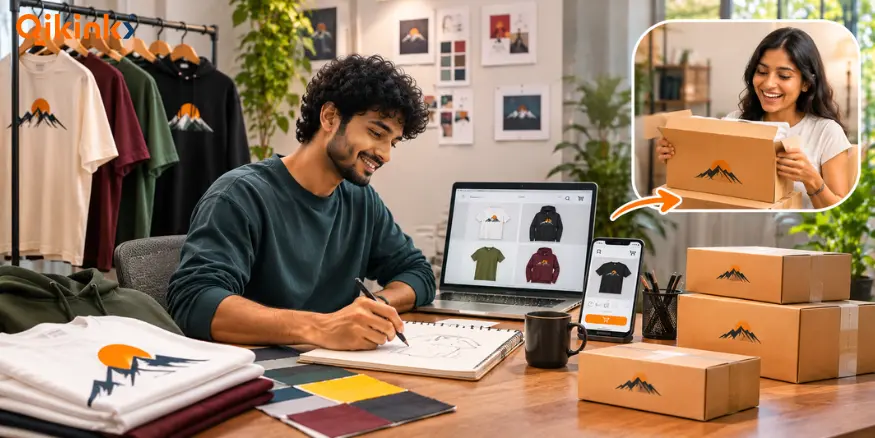
Build Your Clothing Brand Without Managing Inventory
Create custom products while Qikink handles printing and fulfilment.
Start Your Clothing Brand →
How Much Does It Cost to Start a D2C Business?
The cost of starting a D2C business in India depends on the product category, manufacturing approach, sales channels and marketing budget.
A business that purchases products in advance may need more capital for inventory and storage.
A business using print-on-demand fulfilment may avoid purchasing bulk printed inventory, although samples, marketing, website setup and order fulfilment still involve costs.
Major expenses include:
Example: Starting a Small D2C Clothing Brand
Imagine you want to launch a clothing brand selling graphic T-shirts.
You would need to research your audience, create designs, order samples, select a selling platform, prepare product listings and promote your collection.
You must also arrange production and delivery.
Your starting investment depends on whether you purchase printed T-shirts in bulk or produce them after customers place orders.
Choosing the right fulfilment approach can help you manage upfront inventory expenses while testing customer demand.
How Print on Demand Helps D2C Clothing Brands
Print on demand (POD) is a fulfilment method in which products are printed or customised after customers place orders.
It allows clothing businesses to sell custom-designed apparel without purchasing large quantities of printed inventory in advance.
This approach is useful for entrepreneurs who want to test designs, launch niche clothing brands or begin selling with a lower inventory commitment.
How Does Print on Demand Work?
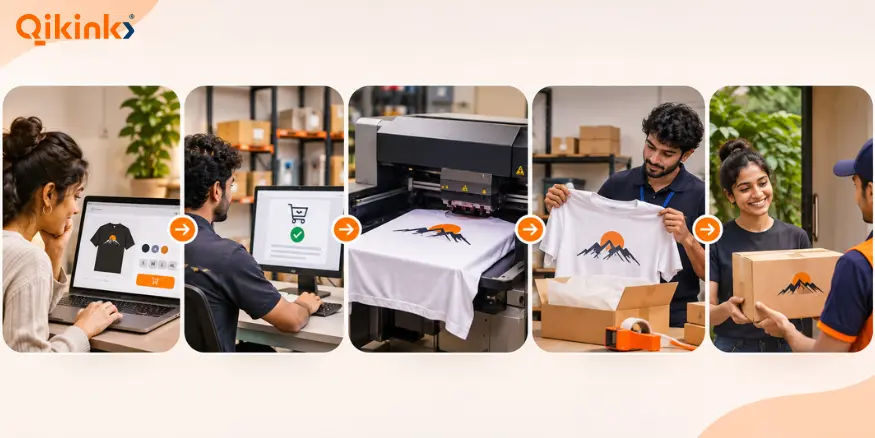
A typical print-on-demand process involves the following steps:
- Create your clothing designs.
- Select suitable products and add your artwork.
- List the products in your online store.
- Customers place orders.
- Orders reach the fulfilment provider.
- Products are printed, packed and shipped.
The exact process depends on the provider and available ecommerce integrations.
Qikink supports this approach by providing printing and fulfilment services for online sellers.
You can explore the process in our guide on How Print on Demand Works with Qikink.
Why Is POD Useful for New Clothing Brands?
1. Less Upfront Inventory Commitment
You can sell selected customised clothing products without purchasing large quantities of printed stock in advance.
2. Opportunity to Test Designs
Brands can introduce different designs and evaluate demand before expanding their collections.
3. More Focus on Branding and Marketing
Working with a fulfilment partner reduces the need to manage every printing and shipping activity internally.
4. Product Range Flexibility
Depending on the provider’s catalogue, businesses can explore additional apparel and customised products.
Is Print on Demand the Same as D2C?
No. D2C and print on demand describe different parts of a business.
D2C is a sales model that explains how brands sell products directly to consumers.
Print on demand is a production and fulfilment method that explains when and how products are customised.
A clothing brand can combine both approaches by selling directly through its website while using a print-on-demand partner for production and delivery.
For a broader explanation, read What Is Print on Demand?.
Want to Sell Custom Products Online?
Sell your designs without investing in bulk inventory.
Explore Qikink’s Platform →
Common Mistakes to Avoid When Starting a D2C Business
1. Targeting Everyone
Trying to attract every customer makes it difficult to build a clear brand identity.
Avoid it: Focus on a specific audience and develop products around their needs.
2. Ignoring Product Quality
Poor product quality can lead to complaints, returns and negative reviews.
Avoid it: Test product samples and maintain consistent quality standards.
3. Spending Too Much on Marketing Too Early
Advertising heavily before understanding customer demand can waste your budget.
Avoid it: Start with controlled campaigns and increase spending based on performance.
4. Underestimating Fulfilment Costs
Shipping, packaging, payment processing and returns can affect profit margins.
Avoid it: Calculate all major order-related expenses before deciding your selling price.
5. Neglecting Customer Support
Customers may need assistance with product details, sizing, payments, shipping and returns.
Avoid it: Provide clear contact information and communicate order updates. For Qikink-related services, visit the Qikink Help Center.
6. Launching Too Many Products at Once
Managing a large product range can be difficult for a new business.
Avoid it: Start with a focused collection and expand after understanding customer preferences.
7. Not Tracking Business Performance
Without measuring results, businesses may struggle to identify what is working.
Avoid it: Monitor website traffic, conversion rates, marketing expenses, order value and repeat purchases.
Frequently Asked Questions
1. What Is the Full Form of D2C?
2. What Is a D2C Brand?
3. What Is the Difference Between D2C and Ecommerce?
4. What Is an Example of a D2C Business?
5. Is D2C Profitable in India?
6. How Do D2C Brands Make Money?
7. Can I Start a D2C Clothing Brand Without Inventory?
8. Is Print on Demand a D2C Business Model?
9. Can a D2C Business Have a Physical Store?
10. What Are the Main Costs of Running a D2C Business?
Final Thoughts
Understanding the D2C meaning helps entrepreneurs build their own brands, sell directly to customers and establish lasting customer relationships.
However, a successful D2C business requires more than creating a website or choosing products. Businesses need to understand their target audience, manage costs, attract customers and provide a reliable buying experience.
For aspiring clothing brand founders, print on demand offers a practical way to test designs and sell customised apparel without maintaining large quantities of printed inventory.
If you are planning to build a clothing brand, explore Qikink’s print-on-demand solutions to understand how printing and fulfilment can support your business.
Read More
- 7 Most Profitable Clothing Business Ideas
- How to Sell Products Online in India
- How to Run Facebook Ads for Your Ecommerce Store
- WooCommerce vs Shopify: Which Is Good for Your Online Store
Share the Article


