
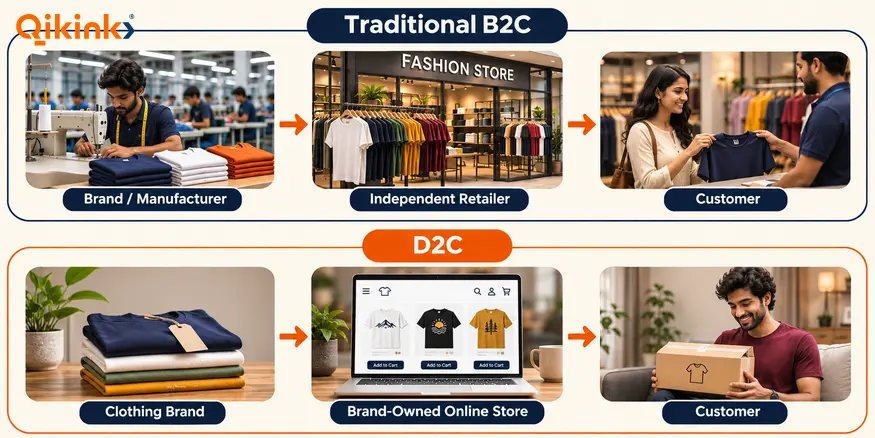
D2C vs B2C differs mainly in how businesses reach consumers and manage sales. B2C (Business-to-Consumer) covers businesses selling products or services to individual customers, while D2C (Direct-to-Consumer) is a type of B2C where brands sell directly through their own channels without independent retailers completing the sale.
For example, a clothing brand selling T-shirts through an independent retail store uses traditional B2C distribution. When the same brand sells through its own website, it operates a D2C channel.
The main differences involve distribution, pricing control, customer relationships, marketing costs and profit margins. Understanding these factors helps Indian entrepreneurs choose suitable selling channels for their businesses.
Key Takeaways
- B2C means Business-to-Consumer: It includes businesses selling products or services to individual customers through direct or third-party channels.
- D2C means Direct-to-Consumer: It is a type of B2C where brands sell directly through their own sales channels.
- D2C provides greater brand control: Brands can manage prices, product presentation and customer relationships.
- Retailer-led B2C offers established distribution: Retailers and marketplaces can connect products with existing audiences.
- Profitability depends on costs: Avoiding retailer margins does not automatically make D2C more profitable.
- Both approaches can work together: Brands can combine direct websites, physical stores and external retail channels.
D2C vs B2C: Comparison at a Glance
The main difference between D2C and B2C is how the product reaches the customer and who manages the selling relationship.
B2C describes the broader category of consumer sales. D2C is a specific form of B2C where brands sell directly to customers.
When comparing B2C vs D2C, the practical distinction is usually between traditional retailer-led selling and direct brand-to-customer sales.
D2C vs B2C Comparison Table
How Does Traditional B2C Selling Work?
Traditional B2C selling involves businesses offering products or services to individual customers, often through retail stores, online marketplaces or other third-party selling channels.
B2C stands for Business-to-Consumer. It describes who purchases a product, rather than requiring a particular distribution method.
For example, when someone buys shoes from a fashion retailer or orders headphones through an ecommerce marketplace, the seller completes a B2C transaction.
How Products Reach Customers Through Retailers
A typical retail distribution process may involve:
- A manufacturer produces the product.
- A distributor or wholesaler supplies it to retailers.
- Retailers display and promote the product.
- Individual customers purchase from the retailer.
- The retailer completes the transaction and manages customer-facing services.
Not every product passes through all these stages. Some manufacturers supply retailers directly, and some retailers produce their own products.
Example
Imagine a clothing brand supplying graphic T-shirts to independent fashion stores.
The retailers display the products and sell them to shoppers.
The clothing brand benefits from established retail audiences but has less direct control over product presentation, final selling prices and customer interactions.
Note:
B2C also includes direct consumer sales. D2C is therefore a subset of B2C, not a completely separate buyer category. This article compares D2C primarily with traditional retailer-led B2C distribution.
How Does the D2C Sales Model Differ from Traditional Retail?
The D2C sales model allows brands to sell directly to consumers through their own websites, company-owned stores or other brand-managed sales channels.
Unlike retailer-led distribution, an independent retailer does not complete the sale between the brand and its customer.
The brand manages product presentation, pricing, marketing communication and the direct buying relationship.
For example, a streetwear brand selling oversized graphic T-shirts through its official ecommerce website operates a D2C channel, even if another company manufactures or ships the garments.
D2C is also called DTC. Both abbreviations mean Direct-to-Consumer.
For a detailed explanation, read What Is D2C? Meaning, Full Form and Business Explained.
How Do D2C Brands Reach Customers?
D2C businesses commonly use:
- Brand-owned ecommerce websites.
- Company-owned physical stores.
- Direct ordering channels.
- Social media campaigns directing customers to their own checkout.
- Email marketing and repeat-customer programmes.
The basic D2C sales journey is:
Brand → Brand-Owned Sales Channel → Customer
The brand maintains the customer relationship even when external partners handle manufacturing, payments or shipping.
This provides greater control but also requires reliable marketing, customer support and order management.
10 Key Differences Between D2C and Traditional B2C Selling
The comparison table outlines the major differences. The following explanations show how those differences affect real business decisions.
1. Distribution Channels
Retailer-led B2C businesses reach customers through retail partners, resellers or marketplace sellers.
D2C brands use sales channels they manage themselves.
For example, a skincare brand supplying an independent cosmetics retailer uses third-party distribution. When the same brand sells through its official website, it uses D2C.
Retail distribution provides access to established audiences, while D2C supports direct brand-customer relationships.
2. Customer Relationships
In retailer-led distribution, the retailer usually handles checkout and immediate customer interactions.
D2C brands communicate directly with buyers.
They can answer product enquiries, collect feedback, provide order updates and introduce products to returning customers.
Direct access creates opportunities for loyalty, but it also requires consistent service.
3. Pricing Control
D2C brands generally control prices, discounts and product bundles on their own channels.
Brands selling through independent retailers must consider wholesale agreements, retailer margins and distribution conditions.
For example, a D2C clothing brand can introduce a limited-edition T-shirt collection with its own pricing strategy.
However, prices must still cover costs and meet customer expectations.
4. Marketing Responsibilities
Retail partners can introduce products to shoppers already visiting their stores or marketplaces.
D2C brands usually attract customers through SEO, paid advertisements, social media, email marketing and creator collaborations.
This provides more flexibility in brand communication, but customer acquisition can become expensive.
5. Customer Data and Insights
D2C businesses can collect first-party information through their own stores, subject to privacy requirements and customer consent.
This may include product preferences, purchase history and repeat-order patterns.
Brands relying on retailers may receive limited customer-level information.
Such insights can help businesses improve product development and marketing.
6. Branding and Product Presentation
D2C brands can control website design, product descriptions, photography, packaging and post-purchase communication.
In multi-brand retail environments, products appear alongside competing brands.
For example, a clothing brand selling directly can explain fabric quality, garment fit and design details through its own product pages.
7. Inventory and Fulfilment
Both D2C and retailer-led businesses can use warehouses, manufacturers and fulfilment partners.
D2C does not automatically mean zero inventory.
A brand may manufacture hundreds of garments and sell them directly, or use print on demand to produce selected custom products after receiving orders.
The sales model and production method are separate decisions.
8. Profit Margins
Retail distribution may involve wholesale discounts, retailer margins or marketplace costs.
D2C can avoid some intermediary margins, but the brand must pay for customer acquisition, payments, delivery and support.
Higher sales revenue per product does not necessarily result in higher net profit.
9. Customer Experience
D2C businesses can manage the buying journey from product discovery to after-sales support.
Retailers may offer established checkout systems, physical shopping experiences and familiar return procedures.
Customer satisfaction depends on service quality and execution rather than the business model alone.
10. Scalability
Retailer-led distribution can help brands expand through existing stores and distribution networks.
D2C supports growth through direct marketing, brand-owned channels and repeat customers.
Both approaches require suitable investment and reliable operations.
Many established brands combine them to balance control and customer reach.
Ready to Build Your Own D2C Brand?
Sell custom products without inventory. Qikink handles printing and shipping
Start Selling with Qikink →
D2C vs B2C Examples in India
Real Indian businesses show how direct and third-party distribution channels can operate together.
For example, a brand may sell products through its own website while also supplying independent retailers.
boAt: Direct Website vs Marketplace Sales
boAt is an Indian consumer electronics brand selling audio products, smartwatches and accessories.
Customers can purchase boAt products through its official website and through authorised external sales channels.
According to boAt’s official authorised sales-channel information, these include the boAt website, Amazon, Flipkart, Croma and other retailers.
D2C example: A customer purchases boAt earphones directly from the brand’s official website.
Retailer-led B2C example: A customer purchases the same brand’s earphones from an independent seller on Amazon or from a third-party retailer.
The product brand remains the same, but the selling relationship changes.
Key Takeaway
D2C and retailer-led distribution are sales-channel choices. One brand can use both without changing its product category.
An Indian Clothing Brand: Practical Comparison
Imagine an entrepreneur launching a streetwear brand in India, specialising in oversized graphic T-shirts.
The entrepreneur considers two selling approaches.
Option A: Selling Through Retailers
The entrepreneur supplies printed T-shirts to independent fashion stores.
The retailers display the products, attract customers and complete sales.
The brand benefits from existing retail audiences but has limited control over the final buying experience.
Option B: Selling Directly to Customers
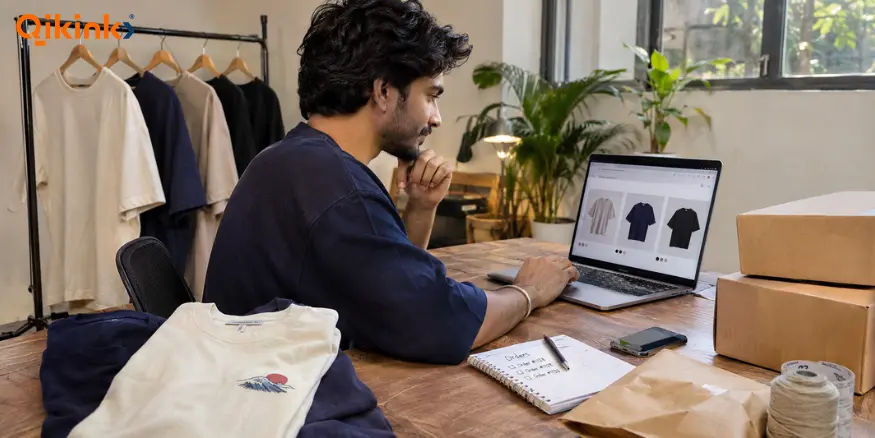
The entrepreneur creates a branded ecommerce website and promotes the collection through Instagram.
Customers purchase directly from the brand.
The entrepreneur manages product listings, pricing and customer communication, while production and delivery may be outsourced.
Both approaches serve individual consumers. However, D2C gives the clothing brand greater control over its customer relationships.
For additional examples across fashion, beauty and other categories, explore Top 100 D2C Brands in India.
Why Are Different Selling Channels Important in India?
India’s ecommerce landscape offers growing opportunities for brands to reach customers through different sales channels. According to McKinsey & Company’s research on India’s D2C market, D2C adoption is accelerating nearly three times faster than ecommerce marketplace growth.
According to the India Brand Equity Foundation’s May 2026 ecommerce industry report, India had approximately 290–300 million online shoppers in 2025.
The report also highlights that Tier-2 and smaller cities accounted for around 65% of new online shoppers.
This growth does not necessarily mean that D2C is better than retailer-led B2C. Instead, it highlights why brands should evaluate different sales channels to reach customers across India.
For example, a new clothing brand might begin with its own ecommerce website, test customer demand and gradually expand into other sales channels as its operations grow.
Note:
The shopping-audience figures above describe India’s broader ecommerce market, not D2C-only sales or Qikink customer data.
D2C vs B2C Profit Margins: Which Is More Profitable?
D2C is not automatically more profitable than traditional retailer-led B2C.
Direct selling may help brands retain more revenue per order by avoiding certain intermediary margins.
However, marketing, delivery, payment processing and customer service create additional costs.
Retailer-led distribution may generate lower revenue per unit for the brand, but it can provide access to established customer audiences.
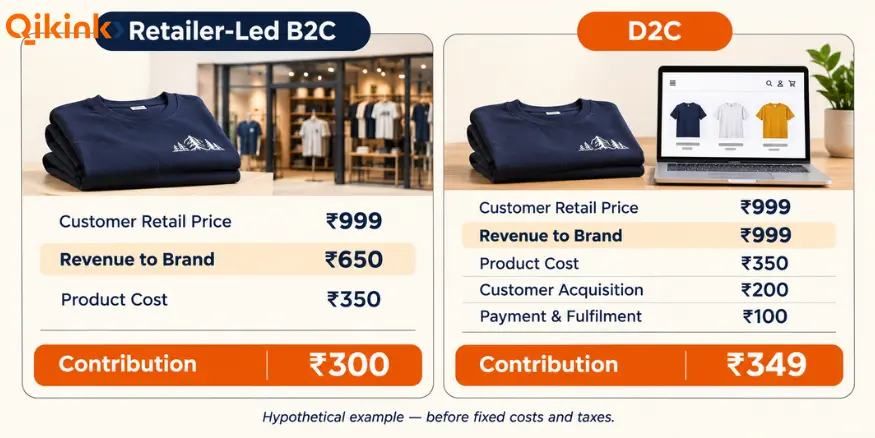
Example: Selling a ₹999 T-Shirt in India
Consider a hypothetical clothing brand comparing the same T-shirt through two sales channels.
Note:
These figures are hypothetical, not Qikink prices or industry averages. Taxes, returns, additional costs and fixed operating expenses are excluded. The retailer’s own expenses are not shown.
In this example, D2C generates ₹349 contribution per T-shirt compared with ₹300 through retailer-led distribution.
However, if D2C customer acquisition costs increase by ₹100, the contribution decreases to ₹249.
The example demonstrates why higher revenue per sale does not always mean higher profitability.
How Should Businesses Compare Profitability?
Use the following calculation:
Contribution per order = Revenue received − Variable costs per order
Variable costs may include manufacturing, payment processing, shipping, packaging, order-related advertising and expected return costs.
Track these metrics:
- Customer acquisition cost (CAC).
- Average order value (AOV).
- Contribution margin.
- Repeat purchase rate.
- Shipping and return expenses.
- Fixed operating costs.
Contribution is not the same as net profit.
A sustainable business needs enough contribution to cover its fixed expenses and provide a reasonable return.
Tip
Compare the actual contribution from each selling channel. Avoid choosing D2C or retailer-led distribution based only on the selling price.
Start Your Clothing Brand Without Buying Stock
Launch your clothing brand without stock. We print, pack and ship every order.
Get Started with Qikink →
Advantages and Disadvantages of D2C and B2C
Both approaches offer advantages, but their responsibilities and costs differ.
Advantages of D2C
- Brand control: Businesses manage product presentation, selling prices and communication through their own channels.
- Customer relationships: Brands can receive direct feedback and develop repeat-purchase programmes.
- Customer insights: First-party information can help brands understand purchasing behaviour, subject to privacy requirements.
- Flexible launches: Businesses can introduce new products, limited collections and promotions more independently.
Disadvantages of D2C
- Customer acquisition costs: Brands must attract customers through marketing and organic discovery.
- Operational responsibilities: Businesses coordinate orders, payments, fulfilment and customer support.
- Building trust: New brands may need time to establish credibility.
- Technology requirements: Website performance, checkout quality and order management affect sales.
Advantages of Retailer-Led B2C
- Existing audiences: Retailers provide access to shoppers already using their channels.
- Distribution infrastructure: Partners may offer stores, checkout systems and logistics support.
- Market expansion: Brands can reach new locations through retail relationships.
- Product availability: Multiple retailers can increase customer access.
Disadvantages of Retailer-Led B2C
- Channel margins: Wholesale pricing or fees can reduce brand revenue.
- Limited customer visibility: Brands may have less access to individual buyer information.
- Reduced control: Retailers influence product presentation and customer experience.
- Partner dependency: Changes in distribution relationships may affect sales.
Key Takeaway
D2C provides greater direct control but requires more customer acquisition and service responsibilities. Retail distribution can provide established reach but may reduce control over the final sale.
B2B vs B2C vs D2C: What’s the Difference?
B2B, B2C and D2C describe different selling relationships.
B2B (Business-to-Business): A company sells products or services to another business.
B2C (Business-to-Consumer): A business sells products or services to individual consumers.
D2C (Direct-to-Consumer): A brand sells directly to customers through brand-managed channels.
C2C (Consumer-to-Consumer): One individual sells products or services to another individual.
B2B vs B2C vs D2C Comparison Table
D2C is a subset of B2C, while B2B and C2C describe other buyer-seller relationships.
A clothing company may operate across multiple models by supplying retailers, selling directly and working with other businesses.
D2C vs B2C: Which Is Better for Your Business?
The right selling approach depends on your products, target customers, marketing capabilities and distribution needs.
A direct website offers brand control, while established retailers may provide access to shoppers who already use their channels.
Which Selling Model Should You Choose?
Choose D2C When Brand Control Matters
D2C may suit businesses that want to build a recognisable brand, manage pricing and communicate directly with customers.
For example, an illustrator launching graphic T-shirts may prefer a branded website where buyers can explore original artwork and related collections.
The business must still invest in attracting customers and maintaining a dependable shopping experience.
Choose Retailer-Led B2C When Distribution Matters
Retail distribution may suit businesses that want to reach existing store audiences or expand through established partners.
For example, an apparel manufacturer with a ready-made product range may prefer supplying retailers across different locations.
The arrangement can provide wider availability but requires managing wholesale terms and partner relationships.
Choose a Hybrid Model When You Need Both
A brand can operate its own website while also supplying independent retailers or marketplaces.
Direct selling supports brand relationships, while retail distribution expands reach.
Businesses should monitor profitability and customer experience separately for each channel.
For entrepreneurs planning a clothing business, read How to Start a Clothing Brand in India.
Can a Business Use Both D2C and B2C?
Yes. Brands can combine D2C and retailer-led B2C through a hybrid or omnichannel strategy.
For example, a fashion brand might sell through:
- Its official ecommerce website.
- Company-owned physical stores.
- Independent clothing retailers.
- Third-party ecommerce marketplaces.
Sales through brand-owned channels are D2C. Sales completed by independent retailers are B2C transactions but are not direct sales by the brand.
What Should Businesses Consider Before Going Hybrid?
- Pricing: Different channel costs may require careful pricing decisions.
- Inventory: Businesses need accurate product availability across channels.
- Customer experience: Product quality and service standards should remain consistent.
- Profitability: Retail margins, marketplace fees and direct acquisition costs should be measured separately.
- Operations: Multiple channels create additional fulfilment and support responsibilities.
A hybrid approach provides flexibility, but businesses should expand only when they can manage each channel effectively.
How Can Print on Demand Support a D2C Clothing Brand?
Print on demand (POD) helps D2C clothing brands sell custom-printed products without purchasing large quantities of finished printed inventory upfront.
With POD, products are customised after customer orders are received, while the brand maintains its direct sales relationship.
D2C determines how the brand sells to customers. Print on demand determines how products are produced and fulfilled.
For example, an entrepreneur can create a branded ecommerce website selling graphic T-shirts and use a print-on-demand provider to produce them after receiving orders.
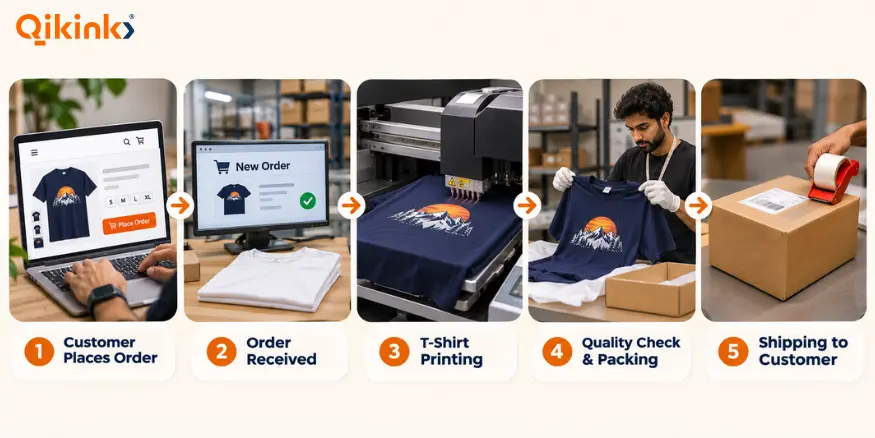
How Qikink Supports D2C Clothing Businesses
Qikink provides print-on-demand and fulfilment services for entrepreneurs selling custom clothing and other supported products in India.
With Qikink, a seller can:
- Create a free account.
- Choose suitable products, such as T-shirts or hoodies.
- Add original artwork to the selected products.
- Create product listings and connect a supported ecommerce store.
- Receive orders through the brand’s sales channel.
- Use Qikink to print, pack and ship supported orders under the seller’s brand.
The entrepreneur remains responsible for product selection, pricing, marketing and customer relationships.
Qikink handles supported production and fulfilment activities, reducing the need to operate printing equipment or maintain large quantities of pre-printed stock.
Can Print on Demand Reduce D2C Startup Costs?
Print on demand can reduce the initial investment needed for finished printed inventory.
It also allows entrepreneurs to test designs before committing to larger production quantities.
However, the business must still account for product costs, printing, shipping, payment processing, returns and customer acquisition.
POD can make product testing more flexible, but it does not guarantee sales or higher profitability.
Turn Your D2C Business Idea Into a Real Brand
Build your D2C brand while Qikink handles printing and fulfilment.
Launch Your Brand with Qikink →
Frequently Asked Questions
1. What Is the Main Difference Between D2C and B2C?
2. Is Amazon a D2C or B2C Business?
3. Is Blinkit D2C or B2C?
4. Are DTC and B2C the Same?
5. What Is DTC Meaning in Business?
6. What Is the Difference Between B2B, B2C, C2C and D2C?
7. Which Is More Profitable: D2C or B2C?
8. Can a Brand Use Both D2C and B2C?
9. Can Small Businesses Start D2C in India?
Final Thoughts
Understanding D2C vs B2C helps entrepreneurs choose how to reach customers and build sustainable businesses.
B2C includes businesses selling products or services to individual consumers, while D2C specifically describes brands selling directly through their own channels.
Retailer-led distribution can provide established customer reach. D2C gives brands more direct control over pricing, product presentation and customer relationships.
Neither approach is universally better. The right choice depends on product demand, costs, customer acquisition and long-term business goals.
Businesses can also combine direct and retail channels as they grow.For clothing entrepreneurs in India, selecting the right sales channels and fulfilment approach can help create a business that is easier to manage and develop over time.
Sign Up & Start Today! →Read More
- How to Sell Products Online in India: Complete Guide
- WooCommerce vs Shopify: Which Is Good for Your Online Store?
- Print on Demand vs Dropshipping: Which Is More Profitable?
Share the Article


