
What Is DTF (Direct-To-Film) Printing?
DTF stands for Direct-To-Film. DTF printing is a textile printing method where designs are first printed onto a special film and then transferred onto fabric using heat and pressure.
Rather like other direct printing methods, the design is not applied straight onto the garment, instead it is transferred as a thin printed layer that sits on top of the fabric surface. This is a key difference in DTF from DTG printing, where the ink absorbs into the fabric fibres.
In DTF printing, the design forms a flexible layer above the fabric, which helps retain colour vibrancy and makes it suitable for a wider range of materials.
DTF printing is widely used in custom apparel because it supports detailed designs and works across different fabric types.
Quick takeaways
- ✓Designs are printed on a film and not directly printed on the fabric.
- ✓Works on a wide range of fabrics, including cotton, polyester, nylon, leather, and blends.
- ✓Supports detailed artwork and multiple colours on both light and dark garments.
- ✓Preparation, printing, powder application, curing, and heat transfer are the processes involved.
How DTF Printing Works?
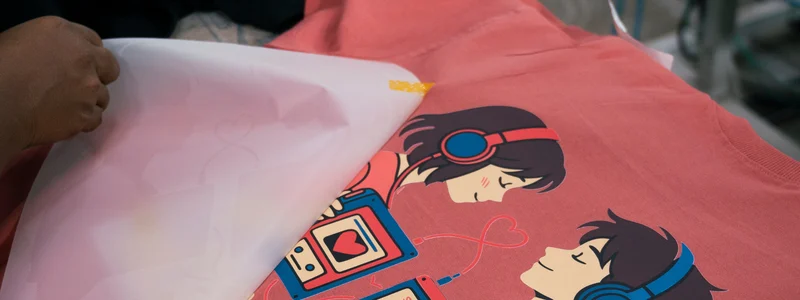
The DTF printing undergoes a few stages that involve preparing the design before it is transferred to the fabric:
1. Design Preparation
The design for a DTF printing process is created or adjusted digitally to make sure the size, colours, and resolution are suitable for printing.
2. Film Printing
The design created is printed onto a coated 'PET (Poly Ethylene Terephthalate) transfer film' using specialised textile inks. A white ink layer is often added behind the colours so the design appears bright on both light and dark fabrics.
DTF Paper
DTF paper refers to the coated transfer sheet used to print the design before it is transferred onto the garment. It holds the ink in place during the printing and transfer process.
PET Transfer Film
PET film is the most commonly used material in DTF printing. It is designed to handle heat and ensure the design transfers cleanly without distortion.
Coated Transfer Film
The coated transfer film is a specially treated film surface that helps the ink stay stable and prevents it from spreading, ensuring sharp and accurate print output.
3. Applying Powder:
After printing, a fine adhesive powder is applied over the wet ink. This powder helps the design bond to the fabric during the heat transfer stage.
Adhesive Powder
A hot melt adhesive powder is commonly used in the process of DTF printing. This powder sticks to the ink and melts during the heating process, acting as a bonding layer that helps the design stick to the fabric.
Sell Printed Apparel Products Online
Design and sell t-shirts and hoodies using the DTF printing method.
4. Curing:
The printed film is heated to melt and fuse the powder with the ink layer, so it attaches properly to the ink. The finished transfer can be stored at this point.
5. Heat Transfer:
The film is placed on the garment and pressed using a heat press. Once pressed and cooled, the film is peeled away, leaving the printed design on the fabric.
This step-by-step process allows every design to be prepared in advance and transferred when needed.
Why DTF Printing Is Popular?
DTF printing has gained attention in the custom printing industry because it offers flexibility and reliable results. Some of the main reasons businesses use this method include:
- It works on multiple fabric types, including cotton, nylon, leather, polyester, and blends.
- The product design can include fine details, gradients, and multiple colours.
- It is suitable for small orders and print-on-demand production.
- Designs can be printed first and transferred later, which helps streamline production.
Because of these advantages, DTF printing is widely used for producing custom apparel and other products in both small and large quantities.
Is DTF reliable for Custom Apparel?
DTF in apparel printing means that when someone refers to direct to film printing, they are usually talking about this particular printing method, which is used to apply custom designs to clothing and other textile products.
For dropshipping or a custom merchandise business, DTF is the most reliable method that helps in producing colourful, intricate work, which withstands many washes.
How Does DTF Printing Support Print-on-Demand?
DTF printing supports the print-on-demand model by allowing designs to be prepared separately and applied to garments only when required. This makes the production process more easier and flexible to manage across different order types.
Since designs are printed on the film first, they can be also stored and used later, which enables more faster order processing. This approach helps brands in handling multiple designs or varying order volumes. DTF is particularly useful in print on demand because it:
- Adapts easily to different fabric types without changing the printing or production method.
- Maintains consistent output across a wide range of print on demand products.
- Supports detailed and colour-rich designs for individual orders.
- Allows better control over production by separating printing and transfer stages.
Because of these advantages, DTF printing is widely used by businesses which offers diverse product options while maintaining consistent print quality on the apparel and other products.
Which Printing Method is Better?: DTG vs DTF
Discover and compare the key differences between DTG and DTF printing methods.