
Starting a clothing business in India involves choosing what to sell, identifying your customers, planning costs and selecting a reliable production model.
You can start a clothing brand from home through print on demand (POD) without buying bulk inventory, or manufacture original garments when you need control over fabrics and construction. Qikink lets you test custom-printed designs without purchasing bulk stock or meeting a minimum order quantity.
Begin with a focused collection, test demand using samples and customer feedback, then build a practical plan for pricing, registrations, online selling and marketing. Running a clothing business also takes dependable suppliers, clear customer service and enough working capital to fulfil orders.
This guide takes you through ten steps for launching your clothing business in India and growing it using actual sales results.
Key Takeaways:
- A clothing business can sell through a shop, marketplace or owned brand website; print on demand, dropshipping, and manufacturing are different ways to source and fulfil clothing.
- Choose a target audience, research competitors and test product demand before investing in a large collection.
- Print on demand needs no bulk stock, while a first bulk-manufactured collection indicatively needs ₹1 lakh to ₹5 lakh, depending on products, quantities and production requirements.
- A clothing business plan helps you set prices, manage cash flow and check Goods and Services Tax (GST) registration rules. The applicable thresholds vary by state and circumstances.
- Choose suppliers based on product quality, minimum order requirements, production timelines and delivery reliability.
- Track orders, contribution margins, returns and customer feedback before adding products or increasing spend.
What Is a Clothing Business?
A clothing business involves sourcing, producing or selling apparel to customers. It can operate through a physical shop, online store, marketplace, wholesale supply or manufacturing unit.
A clothing brand is a type of clothing business that sells products under its own name and identity. You can build one by creating original garments, customising ready-made clothing or selling printed products through a fulfilment partner.
Types of Clothing Businesses
These types can overlap. For example, a manufacturer may also operate its own retail store or sell directly to customers online.
An online clothing brand can use print on demand, dropshipping or bulk manufacturing to source and fulfil products. For example, you can sell graphic T-shirts through Shopify and use Qikink to print and ship orders without holding finished stock.
Why Start a Clothing Business in India?
India’s apparel market offers opportunities across everyday wear, fashion, custom apparel and specialised products. According to Statista Market Insights, apparel revenue in India is projected to reach ₹10.65 trillion in 2026, with an expected annual growth rate of 3.13% from 2026 to 2031. Women’s apparel is the largest segment.
- Different customer segments: Build products for students, working professionals, fitness enthusiasts or customers with specific fashion preferences.
- Online selling: Reach customers beyond your local area through your website, supported marketplaces and social media, without opening a physical shop first.
- Flexible production: Choose print on demand, dropshipping or small production batches based on available investment.
- Expansion: Begin with a focused collection and introduce other styles as customer demand becomes clearer.
Market growth does not guarantee sales for an individual brand.
Things to Know Before Starting a Clothing Business
Before starting a clothing business, choose how you will source products, manage inventory and fulfil orders. Your business model affects investment, daily operations, product control and scale.
Choose the Right Business Model
These are the five common ways to run a clothing business in India:
1. Print on Demand
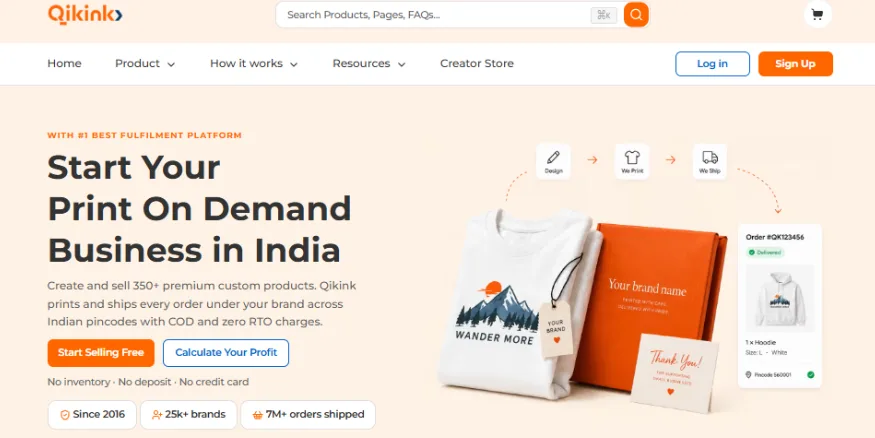
Print on demand allows you to sell custom-designed clothing printed after a customer places an order, without buying finished inventory. A provider such as Qikink can print, pack and ship on your behalf.
- Pros: Low inventory risk while you test designs and see which ones sell.
- Cons: Per-order costs can be higher, and production performance depends on your provider.
- Best suited for: Beginners, creators and brands testing printed apparel.
2. Dropshipping
You sell clothing sourced from a third-party supplier who ships directly to the customer. Conventional dropshipping often sells existing garments rather than original printed designs.
- Pros: You can offer existing products without storing inventory yourself.
- Cons: Stock, product quality and delivery depend on the supplier.
- Best suited for: Sellers testing ready-made clothing categories.
3. Bulk Manufacturing
A manufacturer makes garments in planned quantities to your specifications, including fabric, fit and finishing. You need stock planning and working capital.
- Pros: You can define fabric, sizing, construction and finishing in detail.
- Cons: Inventory commitments require capital and may leave unsold stock.
- Best suited for: Brands developing original garments or meeting established demand.
4. Do-It-Yourself (DIY)
You handle design, fabric sourcing, cutting, stitching or finishing yourself, requiring practical skills, tools and time.
- Pros: You control design and production details directly.
- Cons: Output is limited by your equipment, skills and available time.
- Best suited for: Independent designers and small tailoring businesses.
5. Hybrid Models
A hybrid business combines production methods, such as print on demand for new designs and bulk manufacturing for bestselling products.
- Pros: You can test new designs on demand while producing proven items in bulk.
- Cons: Managing different fulfilment methods adds operational complexity.
- Best suited for: Growing clothing businesses with multiple collections.
Clothing Business Models Compared
Choose a model that fits your customers, product specifications and working capital.


How Much Does It Cost to Start a Clothing Business in India?
Startup cost depends on your production model, products, inventory, store and marketing budget. Print on demand needs no bulk stock, but samples, store setup, marketing and fulfilment still require money.
A first bulk-manufactured collection indicatively needs ₹1 lakh to ₹5 lakh, and the amount can be higher for complex fabrics or larger quantities.
Main Clothing Business Startup Expenses
- Product samples: Check fabric, fit, printing and finishing before selling.
- Product development: Budget for artwork, designs or patterns.
- Inventory: Include garments purchased or manufactured before sale, if your model requires stock.
- Online store: Account for domain, hosting, subscriptions and selling tools.
- Branding: Budget for labels, packaging and product photography.
- Marketing: Include content creation, creator collaborations and advertising.
- Working capital: Keep funds available for order payments, returns, reprints and unexpected expenses.
You can use savings or eligible business financing, including loans under schemes such as MUDRA, to cover startup expenses. Include loan repayments in your cash-flow plan before borrowing.
Cost of Fulfilling a Print-on-Demand Order
For a printed T-shirt order, calculate the garment, printing and shipping charges. Include optional services such as box packing and cash on delivery (COD) where applicable. Add marketing, payment processing, returns and other business expenses when setting your selling price.
Actual order costs depend on the garment, print size, shipment weight and selected services. Check the current Qikink dashboard charges before setting your retail price.
Example: Cost of One Printed T-Shirt
Suppose you order a Male Standard Crew T-Shirt with one DTF print (₹80), using surface shipping within 500 g.
- T-shirt: ₹170 + 5% GST = ₹179
- Printing: ₹80 + 5% GST = ₹84
- Shipping: ₹50 including GST
- Total fulfilment cost: ₹313 for one prepaid order.
This excludes optional packaging, COD, payment processing and marketing. The example uses Qikink’s published rates; check your dashboard before setting a selling price.
Become a Brand!
Explore what branding is and why it’s important in an online business
Branding: Explained →
How to Start a Clothing Business in India: Step-By-Step Guide
Use these ten steps to launch a clothing business in India, from customer research and product development through sales, marketing and scaling.
Step 1: Define Your Niche, Audience and Brand Identity

Decide who will buy your products and why they should choose your brand. Your target audience shapes your products, pricing, designs and marketing.
a. Identify Your Target Audience
Identify customers by age, lifestyle, interests, location and shopping habits. Students buying oversized graphic T-shirts may value different fits, prices and styles than professionals shopping for office wear.
b. Choose Your Clothing Niche
Choose a category based on demand, your product knowledge and your brand’s point of view. Examples include streetwear, casual wear, activewear, minimalist clothing and designer apparel. Start with a focused collection rather than targeting every clothing customer.
Starting a Designer Clothing Brand
Start with a clear design language, a defined customer and a small collection. Keep fit, fabrics, photography and finishing consistent across products. For custom-printed collections, test a few designs through print on demand and expand the products that attract paying customers.
c. Craft Your Brand Identity
Write down your brand’s personality, positioning and tone in a few lines, and check that they suit your audience and price range.
Step 2: Validate Your Idea and Estimate Costs

Before committing money, test whether people want the product. Compare competing offers and gather evidence of purchase intent rather than depending on social engagement alone.
a. Conduct Market Research
Use Google Trends, reviews, competitor listings and social discussions to identify preferred fits, fabrics, prices and unresolved customer needs.
b. Study the Competitors
Compare similar brands on price, sizing, shipping, reviews, product presentation and service. Find problems you can solve without copying designs.
c. Test Demand Before You Build
Share mockups, test samples or launch a small online store. Genuine enquiries, pre-orders and purchases carry more weight than likes. Launching with one main product makes demand easier to interpret than a large first collection.
d. Estimate Your Initial Investment
Add one-time costs (samples, store setup, branding and photography) and recurring costs (subscriptions, advertising and order fulfilment). Reserve funds for returns, reprints and unexpected costs. Do not spend your entire budget before testing demand.
Step 3: Create Your Clothing Business Plan

A clothing business plan sets out the customers, products, operations, costs and sales channels needed to run the business and manage cash flow.
Your Goals and Vision
Define your target audience, initial product range and main selling point. Set measurable launch goals, such as completed orders, customer reviews and repeat purchases within a defined period.
Business Model and Operations
Plan daily activities around your production model. Assign responsibility for sourcing, quality, inventory, fulfilment and support. Document how orders are received, processed and resolved when issues occur.
Clothing Business Registration and Legal Requirements in India
- Business structure: Choose a sole proprietorship, partnership, limited liability partnership (LLP) or company to suit operations and compliance.
- GST: For eligible suppliers dealing exclusively in goods, the general GST registration threshold is ₹40 lakh in many states and ₹20 lakh in specified states and Union Territories. Registration may be required earlier in certain circumstances, including interstate taxable supplies. Check the rules that apply to your location, products and sales channels.
- E-commerce: Under Notification No. 34/2023-Central Tax, eligible small goods sellers may sell through qualifying e-commerce operators without regular GST registration. Conditions include turnover below the applicable threshold, PAN, GST portal enrolment, no interstate goods supplies and selling through such operators in only one state or Union Territory.
- Udyam: Eligible micro, small and medium enterprises (MSMEs) can register through the official government portal. Udyam registration is separate from GST registration.
- Local permits and imports: A physical shop may need a Shops and Establishments licence under state rules. An Importer-Exporter Code (IEC) is generally needed only for importing or exporting goods.
- Records: Separate business finances and track receipts, expenses, taxes and refunds.
- Trademark: Search the Indian Trademark Registry and consider registration after checking potential conflicts.
Product Plan and Pricing
Choose your initial products, colours and sizes. Calculate garment, printing, packaging, payment, marketing and shipping costs before setting your selling price.
Contribution per order = Selling price − Variable costs per order
Contribution is the amount remaining after variable costs, which can cover fixed expenses and contribute to profit. Use the clothing business profit margin calculator to estimate your costs and margins.
Marketing and Sales Strategy
Select primary sales channels, set a test marketing budget, and track customer acquisition cost, completed orders, returns and repeat purchases.
Step 4: Choose Your Brand Name and Visual Identity

Choosing the perfect name for your clothing brand is a foundational step that shapes your identity, marketing, and legal protections. A great brand name captures your vision, excites your target audience, and sets you apart in the crowded, competitive market.
a. Memorable and Relevant Name
- Your name should reflect your brand personality and the emotions or values you want to evoke.
- Choose a distinctive name. Check domain and social media handle availability, and search the Indian Trademark database for potentially conflicting names or marks.
- Keep it short, easy to spell, and relevant to your niche. Consider exploring name types like descriptive, evocative, invented, or playful to discover fresh angles.
b. Finalise and Protect Your Name
- Share your top name choices with trusted peers, potential customers, or industry experts to get feedback on memorability, appeal, and relevance. Shortlist and choose the name that best aligns with your vision.
- Consider trademark registration after checking availability to prevent misuse. Early trademark protection safeguards your brand’s long-term value and credibility.
c. Choose Your Visual Identity
- Design your identity logo, select your brand colours, and use professional typography.
- Your visual identity will be consistent across packaging, your website, and social media, which will build recognition for your brand.
Step 5: Design and Product Development

With your brand identity and business plan in place, the next crucial step is bringing your clothing line to life through design and product development. This phase transforms your creative vision into tangible products that your customers will love.
Sketch your Designs
Begin by creating simple sketches or digital illustrations for your clothing items, with variations in style, colours, patterns, and cuts to capture the essence of your brand. Your designs should reflect your brand’s personality, niche, uniqueness and customer preferences.
Fabrics and Materials
Select materials that resonate with your target audience and match your price point and quality standards. Consider comfort, durability, care requirements, and sourcing options. Local suppliers or sustainable fabric producers can add authenticity to your brand story.
If you make sustainability claims, support them with accurate material or supplier information. Match the printing method to the fabric and artwork, because the same design can look different on cotton, polyester and blended garments.
Test with Prototypes
Make samples of each design to test fit, comfort, and overall appearance. Samples help you refine sizing, quality, and aesthetics before full-scale production. Next, gather feedback from friends, potential customers, or focus groups to identify your audience’s preferred type.
Collaborate with Designers
Not being a designer isn’t a problem. Partner with professional designers or utilise user-friendly design tools to create professional, market-trendy apparel designs. Modern digital mockups help visualise your collection.
Make sure you have the necessary rights to use any artwork, graphics or designs.
Plan Costing and Production
Plan production costs by accounting for fabric, materials, labour, printing and shipping. These expenses vary by design, garment specifications and production quantity.
Design Your T-Shirts!
Check out the T-shirt design resources available from basic to advanced level
Top Selling T-shirt Designs →
Step 6: Finding Suppliers and Manufacturers

Finding the right manufacturers and suppliers is a pivotal step in turning your clothing brand from concept into a real product. In India, with its vast apparel industry, choosing trustworthy partners ensures not only product quality and timely delivery but also protects your brand reputation.
Research the Manufacturers
Start by researching local and international manufacturers that align with your niche and product type. For bulk production, India has numerous textile hubs offline, while online platforms like IndiaMART and TradeIndia can also connect you with verified suppliers.
Understand Minimum Order Quantities (MOQs)
Ask each supplier about minimum quantities, samples, prices and production timelines. MOQs vary by supplier, fabric and garment. Bulk manufacturing usually involves production commitments, while Qikink has no minimum order quantity for eligible print-on-demand orders.
Quality and Shipping Capabilities
Order samples to evaluate stitching, fit, fabric, colour and print quality. Confirm packaging, order tracking, damage claims and returns. Qikink generally dispatches standard printed products within 2 to 3 working days, while all-over-print products typically take 4 to 5 working days to dispatch. Shipping time is additional.
Step 7: Build Sales Channels and Online Store

Sell through an owned website, relevant marketplaces or social channels. Shopify and WooCommerce support branded stores and Qikink integrations.
Your own website gives you greater control over branding, product presentation, pricing and customer relationships. Marketplaces such as Amazon and Flipkart bring existing shoppers, but they set their own fees, listing rules and return policies. Check each marketplace’s seller registration, GST and product-listing requirements before choosing where to sell.
Instagram, WhatsApp, local fairs and pop-ups can also support early customer feedback. Start with channels you can serve reliably.
Create Clear Product Listings
Show accurate product images, prices, variants, size charts, fabric and care details. Explain fit clearly, especially for oversized products. Display shipping fees, delivery estimates, returns and support contact information.
Choose a Payment Gateway
Compare payment methods, fees, refunds and settlement terms before choosing a gateway. If you offer COD, include its charge and payment delay in cash-flow planning. Qikink charges ₹40.12 per COD order, including GST and processes remittance within 5 working days after delivery. You still pay Qikink to fulfil the order even if the buyer pays on delivery.
Step 8: Branding, Packaging and Customer Experience

The customer experience continues after checkout. Protective packaging, timely updates and clear support policies affect whether shoppers trust your brand and return to buy again.
a. Pack with Care
Choose packaging that protects clothing in transit and matches your product positioning. Optional neck labels, hangtags and thank-you cards can strengthen brand recognition. Check the supplier’s current charges and include these costs when setting your prices. Qikink offers optional box packing for an extra per-product charge, and the selected packaging can also affect chargeable shipment weight.
b. Customer-First Experience
Provide clear delivery updates and an accessible contact method for sizing, order status, exchanges and damaged products. Publish return and exchange rules before checkout and resolve complaints consistently. Track repeated questions and problems to improve size charts, product descriptions, packaging and fulfilment.
c. Manage Returns and Delivery Issues
Set procedures for incorrect items, damage, exchanges and undelivered parcels. Track return to origin (RTO) separately from customer returns. Qikink does not charge for RTO on undelivered COD or prepaid orders. Confirm claim periods and customer refund responsibility with your provider.
Step 9: Marketing and Launch Strategy

Marketing helps customers discover your clothing business and understand your products. Launch with a focused collection and use content and targeted campaigns to reach potential buyers. Measure purchases and customer acquisition costs rather than relying only on views or followers.
Pre-Launch Buzz
Share sample photographs, design previews, fit demonstrations and behind-the-scenes videos before launch. Encourage interested customers to sign up for launch updates. Collaborate with relevant creators whose audiences match your clothing category, and agree on deliverables, content rights and disclosure requirements before posting. Use early customer questions to improve your listings.
Social Media Marketing
Use Instagram Reels and YouTube Shorts to demonstrate styling, fabric and fit; Pinterest can help customers discover outfit ideas. For example, show an oversized T-shirt on different body types and explain its measurements. Publish consistently, then track which posts produce site visits, enquiries and purchases.
Email Marketing
Send product launches, restock announcements and useful care or styling tips to customers who have agreed to marketing messages. Segment campaigns by relevant products or previous purchases when possible. Monitor clicks, purchases and unsubscribes, and avoid sending repeated promotional emails.
SEO and Content Marketing
Use descriptive product titles, accurate size charts, original photographs and helpful descriptions that answer buying questions. Publish relevant articles on clothing fit, fabric care or styling, and link them to products that genuinely answer the search intent. Measure organic visits and purchases from organic traffic, not only keyword positions.
Paid Advertising
Test small campaigns through suitable Google Ads or social media advertising platforms once product pages and tracking are ready. Compare acquisition cost, completed purchases and contribution per order for each campaign. Increase spend only when margins, fulfilment capacity and repeat-purchase behaviour support growth.
Step 10: Manage and Scale Your Clothing Business

Use actual sales and feedback to decide which products to improve or expand. Monitor cash flow and fulfilment quality before increasing commitments.
- Sales and conversion: Track completed orders, average order value and the percentage of store visitors who purchase.
- Contribution: The amount left from each order after variable product, shipping, payment and marketing costs.
- Returns and RTO: Monitor customer returns and undelivered shipments separately.
- Operations: Fix fulfilment errors and improve supplier communication.
- Repeat customers: Improve support and offer related products where demand exists.
- Expansion: Add colours, channels or bulk production when demand, profit margins and cash reserves justify them.
For example, after a graphic T-shirt sells consistently with low returns, test a second colour. Compare bulk unit savings with the cash tied up in unsold inventory before changing production method.
Launching a Luxury Clothing Brand
A luxury clothing brand needs a clear premium identity supported by suitable materials, product quality and customer experience. Its pricing should reflect workmanship, finishing and service rather than a luxury label alone.
Start with a small collection and assess fabric feel, fit, stitching, labels, packaging and imagery against the promised quality. Order samples and compare them with products your target customers already trust.
Before increasing production, test demand and check whether the product economics support your selling price. Print on demand can help validate some custom-printed designs, while original fabrics, patterns or specialist construction may require dedicated manufacturing.
Building a Streetwear Brand
A streetwear brand generally develops around a recognisable aesthetic, audience or community. Define the people you want to reach, then maintain a consistent approach to silhouettes, artwork, photography and messaging.
Launch a small collection of graphic T-shirts, hoodies or other products that suit the style. Show how garments fit and can be worn, and collaborate with creators whose communities overlap with your target buyers. Small releases let you test interest before committing to stock. For specialist garments, confirm the available product options before launch.
Tip
Whichever niche you build toward, Qikink supports it without separate sourcing: no MOQ on designer and luxury runs, and print-to-order for streetwear drops.
How to Start Your Own Clothing Brand Using Print on Demand with Qikink?
Qikink, founded in 2016, supports more than 25,000 brands with in-house printing and fulfilment. Its printing capabilities include direct-to-garment (DTG), DTF, embroidery, sublimation and UV printing, with delivery coverage across more than 29,000 pin codes in India.
You manage your clothing designs, pricing, marketing and customers, while Qikink handles printing, packing and shipping for supported products.
Steps to Start Your Clothing Brand with Qikink
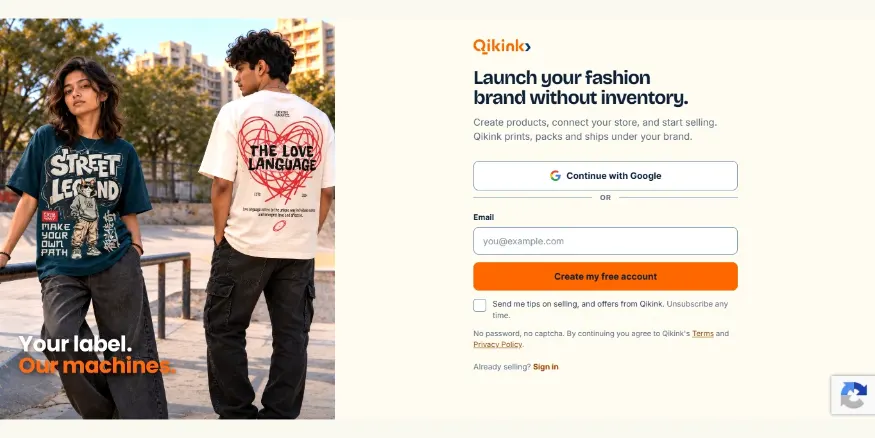
- Sign up with Qikink: Create a free Qikink account. Sign-up needs no GST number and no deposit.
- Connect your online store: Integrate Qikink with Shopify or WooCommerce to sync orders with your Qikink dashboard. Check your order-processing settings and maintain sufficient wallet credits for fulfilment.
- Create products using your designs: Upload your artwork in the Qikink dashboard, choose suitable products and generate mockups. Order samples to check garment fit, fabric and print quality.
- Launch and promote your store: Publish your product listings with accurate sizing, prices and descriptions. Promote your collection through suitable social media and other marketing channels.
- Get orders printed and delivered: Pay Qikink to process each order. Qikink prints, packs and ships supported products under your brand, with optional custom branding services. Standard printed products generally dispatch within 2 to 3 working days, with delivery taking additional time.
- Receive COD remittances: Qikink processes collected COD payments to your selected wallet or verified bank account within 5 working days after delivery.
Qikink’s user-friendly dashboard and broad product category empower and encourage every Indian entrepreneur to start their own clothing brand with zero hassles. Place a test order to check the actual fulfilment charges, order processing and delivery experience.
Your T-shirt Business!
Sell your T-shirts at a decent profit margin from Day 1 of your business
Start a Profitable Business →
Frequently Asked Questions
1. How Do I Start a Clothing Business in India?
2. Can I Start a Clothing Brand with No Money?
3. How Do I Get My Clothing Brand Noticed?
4. How to Start Your Own Clothing Brand as a Teenager?
5. Do I Need a License or GST Registration to Sell Clothes Online?
6. Can I Start a Clothing Business From Home?
7. How Do I Design and Sell Clothes Online Without Holding Inventory?
8. Can I Sell Kids’, Women’s, Men’s or Designer Clothing?
9. How Do I Photograph Clothing Products for Online Listings?
10. How Do I Start a Sustainable Clothing Brand with POD?
11. How Much Investment Is Needed to Start a Clothing Business in India?
12. Is a Clothing Business Profitable in India?
Final Thoughts
Starting a clothing business in India requires clear customer positioning, suitable products, realistic pricing and dependable operations. Begin small, test demand and use completed orders, returns and customer feedback to decide what to improve.
For custom-printed clothing without purchasing bulk finished inventory, Qikink can support product testing, printing and fulfilment. Choose your first products, order samples and check the actual costs before launching your clothing brand.
Sign up with Qikink →Read More
- Profitable Clothing Business Ideas in India (Today)
- T-Shirt Size Chart Guide In India: For Men, Women, Kids
- eCommerce Business Name Ideas For Online Brands
- T-Shirt Market Size in India for Custom T-Shirts
Share the Article


