
The best dropshipping suppliers in India include Qikink, Baapstore, Dropship India, Deodap, Seasonsway, Wholesalebox, Meesho, IndiaMART, ExportersIndia and others. Each supplier has different strengths, so the right option depends on your product category, selling model, fulfilment needs, and store platform.
The right supplier depends on your product, customer location, delivery time, product quality, pricing, minimum order quantity, and store platform. A print on demand partner like Qikink works well for custom products without inventory, while a B2B marketplace like IndiaMART can help you source products directly from manufacturers and wholesalers.
This guide compares 20 dropshipping websites, suppliers, platforms, marketplaces, and sourcing tools relevant to sellers in India. You will also find what each one offers, where it fits best, and the main advantages and limitations to consider before choosing a supplier for your store.
Key Takeaways
- Choosing the best dropshipping platform in India depends on your product category, selling model, delivery requirements, and store platform.
- There is no single best dropshipping supplier for every Indian seller. The right option depends on the requirements, availability, and terms.
- Supplier costs, shipping charges, COD support, product quality, and return or RTO policies can directly affect your selling price and profit margin.
- Before adding products from a supplier to your store, check product quality, delivery time, integrations, minimum order requirements, and service terms with sample orders or test purchases where possible.
What is a Dropshipping Supplier?
A dropshipping supplier is a platform or a company that provides or produces products and fulfils orders by shipping them directly to your customer after you make a sale. You list the supplier’s products in your store at your own selling price. When a customer places an order, you pay the supplier for the product and fulfilment, while the remaining amount can help cover your other business costs and profit.
Platforms that provide dropshipping in India may hold ready-to-ship inventory or produce the product after an order is placed. They handle tasks such as picking, packing, and shipping. You handle the storefront, product pricing, customer orders, and customer communication.
The terms below are related, but they are not the same:
- Dropshipping supplier: Provides or produces products and fulfils individual customer orders on your behalf.
- Wholesaler: Sells products in bulk, often at lower per-unit prices, and may require larger order quantities. A wholesaler is not automatically a dropshipping supplier.
- Marketplace: Connects sellers with manufacturers, wholesalers, and suppliers. You usually need to contact and evaluate individual sellers yourself.
- Automation tool: Helps with product sourcing, order processing, inventory updates, or other store tasks.
Find Your Dropshipping Deal
Customised Products, Zero Inventory
Sell products carrying your own designs without buying stock before you make a sale.
Qikink
An Indian print-on-demand and dropshipping fulfilment platform for selling custom products without holding inventory.
Reveal This Deal?
We’ll reveal the platform behind this deal and show you where it appears in the comparison.
Why the Right Dropshipping Supplier Matters in India?
The right dropshipping supplier affects more than the product price. Delivery time, product quality, COD availability, return handling, and order fulfilment can all affect your customer experience and the cost of running your store.
For Indian sellers, local fulfilment can also make a difference. A supplier that can deliver across India with predictable delivery times may be more practical than one shipping every order internationally. Cash on Delivery support is another important factor when selling to customers in India.
India’s online retail market has grown to roughly $230 billion in 2026, according to IMARC Group. As more transactions move through this ecosystem, fulfilment becomes as important as product selection, making delivery coverage, dispatch times, COD, and returns key factors when choosing a supplier.
Supplier terms also vary. Some suppliers have zero minimum order quantities, while others may require bulk purchases. Some connect directly with Shopify or WooCommerce, while others require orders to be placed manually. Before choosing a supplier, check the following:
- Product quality: Order samples before listing products at scale.
- Shipping: Confirm dispatch times, delivery coverage, and available shipping methods.
- COD and returns: Confirm how COD orders, failed deliveries, returns, and RTO are handled.
- Integrations: Check if the supplier works with your store platform and supports order syncing.
- Pricing: Compare the product cost, shipping charges, and any other supplier fees.
- Order requirements: Check minimum order quantities and whether you can place individual customer orders.
- Support: Verify how the supplier handles damaged products, missing orders, and order-related issues.
Choose a dropshipping supplier in India based on the fulfilment experience, not just the product price. This is especially important when selling across India, where shipping, COD, and returns can vary from one order to another.
Want to Start Your Own Business?
Find key steps, costs, supplier selection, practical dropshipping tips and tricks
Dropshipping Business in India →
Dropshipping Suppliers India: Quick Comparison
The table below compares 20 dropshipping suppliers, platforms, marketplaces, and sourcing tools relevant to sellers in India. It includes direct suppliers, platforms with free registration, print on demand fulfilment services, reseller platforms, B2B marketplaces, international suppliers, and automation tools, so the options available are not all the same type of service.
Note:
Access and pricing refer to registration or platform access, not the final product, shipping, or fulfilment cost. Supplier terms can vary by product, seller, destination, plan, and order volume.
20 Best Dropshipping Suppliers in India
Here are the best dropshipping websites, suppliers, platforms, marketplaces, and sourcing tools that are relevant to sellers in India. They cover different product categories and fulfilment models, so check the supplier type and best use case before choosing one for your store.
1. Qikink
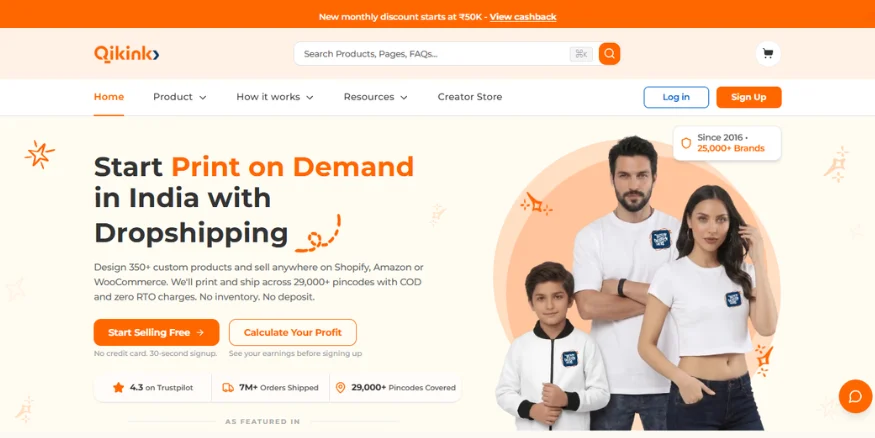
Qikink is an Indian print on demand and dropshipping supplier platform for custom products. Sellers can choose from customisable products, add their own designs, and sell without holding inventory. When a customer places an order, Qikink produces, packs, and ships it under the seller’s brand.
It integrates with Shopify and WooCommerce, with orders syncing automatically after the store is connected. Qikink supports COD across India, covers 29,000+ pincodes, and states that 95% of orders are dispatched within 2–3 business days.
Pros:
- 350+ customisable products across apparel, accessories, drinkware, home and living, and other categories.
- No minimum order quantity or inventory purchase is required.
- Shopify and WooCommerce integrations support automated order processing.
- COD, white-label fulfilment, and custom branding are available for Indian sellers.
Cons:
- Product and fulfilment costs vary by product, printing method, and shipping requirements.
Qikink is best suited to Indian sellers who want to launch custom products without buying inventory upfront.
2. Baapstore
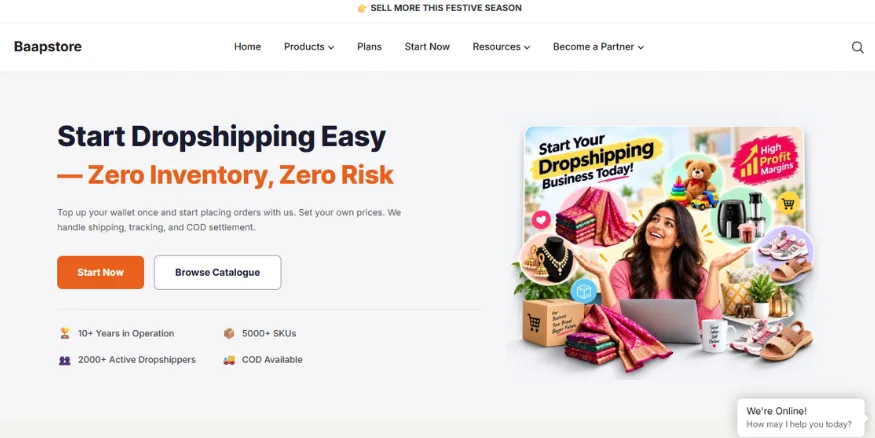
Baapstore is an Indian dropshipping supplier that provides ready-to-sell products. It sources products from its supplier network and ships orders directly to customers using the seller’s store or brand details.
Baapstore currently states that it has 2,000+ active dropshippers, with a catalogue spanning home and kitchen, bags, bedding, and ethnic wear. Baapstore provides a wallet system for account funding, while sellers set their own selling prices and Baapstore handles product fulfilment and delivery.
Pros:
- MOQ is 1 piece, allowing sellers to fulfil individual customer orders.
- Supports white-label dropshipping and COD across India.
- Provides product data for Shopify and WooCommerce, along with other selling-channel options.
- Offers a broad catalogue across multiple product categories.
Cons:
- Baapstore uses a prepaid wallet model, so sellers need to add funds before placing orders.
- Shipping and return charges are additional costs and can vary according to the applicable terms.
- The platform uses its own product catalogue, so sellers have less sourcing flexibility than with an open B2B marketplace.
Baapstore is suited for Indian sellers who want a ready-made catalogue with white-label fulfilment.
3. Dropship India
Dropship India is an India-focused dropshipping and fulfilment platform that sources products in India and lets sellers add them to their online stores. Its Shopify app supports product sourcing, inventory management, and automated order processing, with categories ranging from clothing and accessories to home, electronics, toys, and pet products.
The platform is free to install on Shopify, while product costs and other order-related charges are applied separately. COD is supported, but the current Shopify listing states that COD commissions and RTO or return penalties may apply.
Pros:
- Products are sourced from India, making the platform relevant for sellers targeting Indian customers.
- Shopify integration supports product sourcing, order processing, and inventory management.
- Covers multiple product categories rather than being limited to one niche.
Cons:
- Product, COD, and return-related charges apply separately from the free app installation, so the real per-order cost runs higher than the free listing suggests.
Dropship India is best for sellers who want an India-based product catalogue with Shopify fulfilment.
4. Deodap
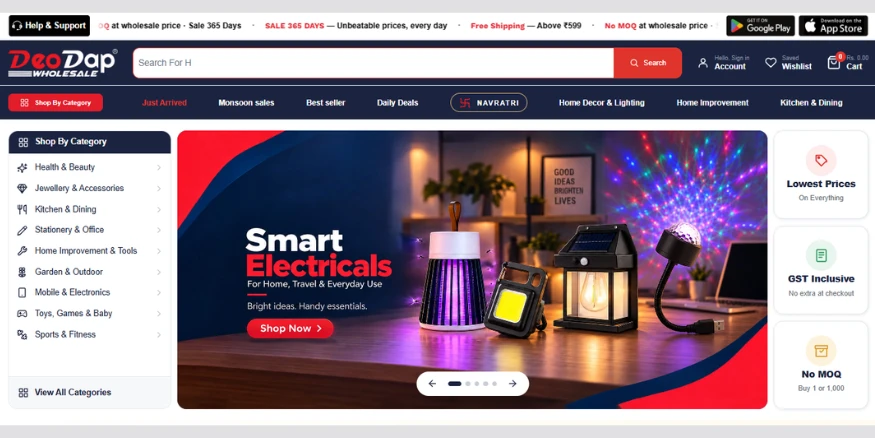
Deodap is an Indian dropshipping supplier and B2B platform offering ready-to-sell products across categories such as home and kitchen, tools, personal care, toys, and accessories. Sellers can list Deodap products without holding inventory, then forward customer orders to Deodap for packing and direct delivery.
Deodap offers a large catalogue of ready-to-sell products and provides multiple dropshipping plans for channels such as Shopify, websites and social-media reselling. Its current offerings include white-label dispatch, order-management tools and inventory updates, with features depending on the plan.
Pros:
- 12,000+ SKUs across 35+ product categories.
- No inventory is required for its dropshipping model.
- COD and pan-India fulfilment are supported.
- Offers white-label packaging and dedicated plans for channels such as Shopify and Amazon.
Cons:
- Some selling options are tied to specific Deodap plans, so sellers should compare the available plans before signing up.
- Plan and service charges vary depending on the selling model and channel.
- The broad catalogue means sellers still need to check individual product quality, margins, and return terms before listing products.
Deodap is best suited to Indian sellers who want a large ready-to-sell catalogue and domestic fulfilment, though the features and costs depend on the plan they choose.
5. Seasonsway
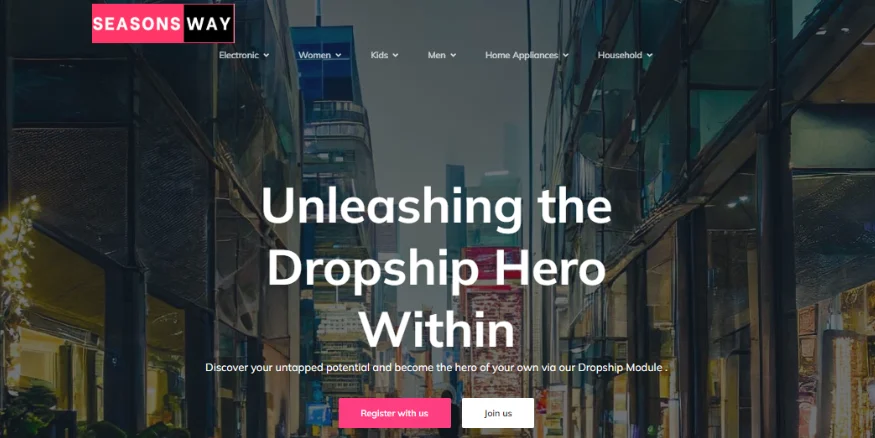
Seasonsway is an Indian dropshipping supplier and B2B platform with products across fashion, electronics, mobile accessories, sports, and other categories. Seasonsway offers different dropshipping plans, including products-only and all-inclusive accounts, with access and features depending on the plan selected.
Pros:
- Works with major shopping-cart providers, so listings can be connected across different store platforms.
- COD and standard shipping are available once a dropshipper account is approved.
- Multi-category catalogue means sellers aren’t limited to a single niche.
Cons:
- Registration goes through a manual email application and approval process rather than instant sign-up.
- Seasonsway’s public pages give different catalogue-size figures, so a specific SKU count shouldn’t be quoted without confirming directly with the platform.
- Inventory-sync and automation details aren’t clearly stated publicly, so sellers should confirm real-time stock accuracy before listing at scale.
Seasonsway is best suited to Indian sellers who want a broad multi-category catalogue and are comfortable with a paid dropshipping account.
6. KaKiSo
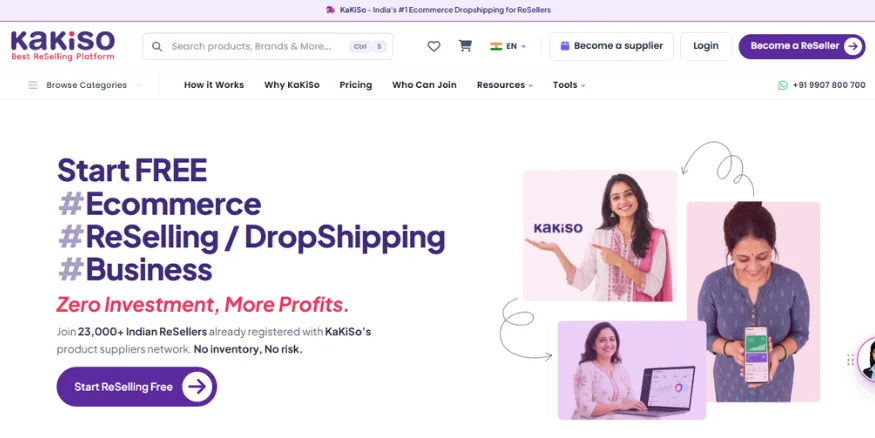
KaKiSo is an Indian B2B2C reseller and dropshipping marketplace that connects suppliers with resellers, with more than 23,000 Indian resellers currently registered on its network. Sellers can browse products at reseller prices, add their own margin, and share them through WhatsApp, Instagram, Shopify, marketplaces, or other selling channels.
When a customer places an order, the seller pays the product price on KaKiSo, and the product is packed and shipped directly to the customer. KaKiSo currently offers free reseller registration with no monthly subscription fee or minimum order requirement.
Pros:
- Free registration with no monthly subscription fee or minimum order requirement.
- Sellers do not need to purchase or store inventory before receiving a customer order.
- White-label shipping keeps the supplier and KaKiSo branding away from the customer-facing package.
- Products can be shared through social channels and other selling channels, while direct third-party integrations should be checked against KaKiSo’s current platform capabilities.
Cons:
- COD is currently not supported, so orders use a prepaid model.
- Inventory API syncing is not currently available, limiting real-time stock automation.
- Sellers should confirm the current payment, inventory-sync, and per-order fee terms before committing to the platform.
KaKiSo is best suited to Indian resellers who want zero-inventory sourcing and white-label delivery, though its prepaid-only model and current lack of inventory API syncing limit some store workflows.
7. Wholesalebox
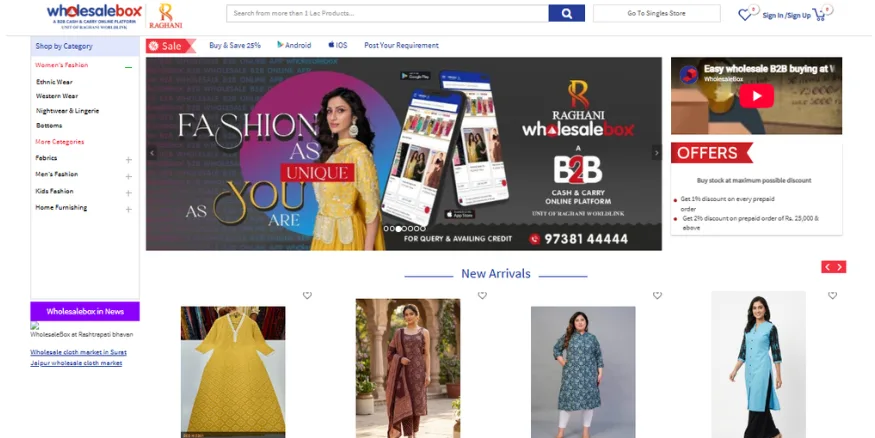
Wholesalebox is an Indian B2B fashion supplier with a focus on women’s clothing and a dropshipping offering. Dropshippers can buy single items at wholesale prices through the singles store on Wholesalebox’s site, then place each customer order manually using the shipping-address section. Product feeds or APIs are only provided once Wholesalebox reviews the seller’s website, sales history, and traffic.
Pros:
- Strong focus on Indian women’s fashion, including ethnic and casual clothing.
- Single-item dropshipping is supported, so sellers do not need to purchase products in bulk.
- Wholesalebox handles picking, packing, and shipping for dropshipping orders.
- Anonymous shipping is available for dropshippers.
Cons:
- The catalogue has a strong focus on women’s fashion, so it is less suitable for sellers looking for unrelated product categories.
- Sellers should confirm the current product feed, API, and order-processing options before choosing an automated workflow.
- The dropshipping service does not charge a separate dropshipping fee, although product and shipping costs still apply.
Wholesalebox is best for sellers building a women’s fashion store in India who want single-item wholesale sourcing, though sellers looking for automated product feeds may need to qualify for access first.
8. Snazzyway
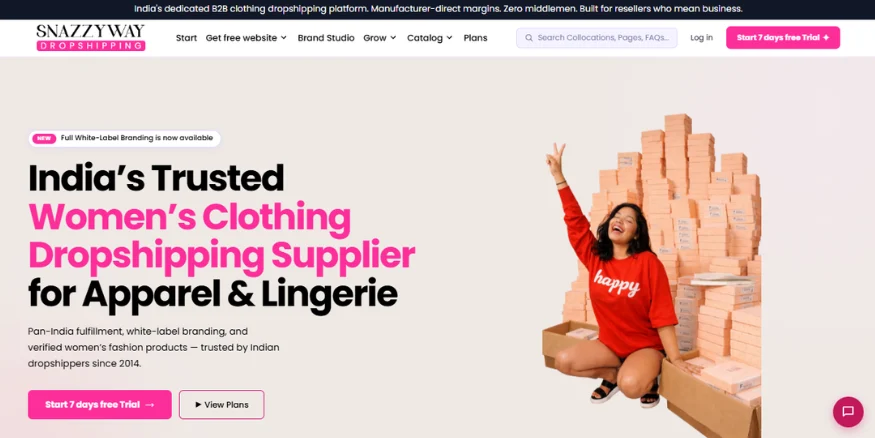
Snazzyway is an Indian women’s fashion and lingerie manufacturer and dropshipping supplier. Sellers can list its products through their own selling channels and have Snazzyway fulfil orders directly to customers, without needing to hold the products themselves. Snazzyway says it has operated since 2014 and currently works with more than 4,000 active sellers.
Pros:
- Specialises in women’s clothing, lingerie, leggings, and related fashion products.
- Provides manufacturer-direct sourcing and dropshipping fulfilment.
- White-label fulfilment and branded packaging options are available.
- Supports selling channels including Shopify, WooCommerce, Amazon India, Wix, and OpenCart.
Cons:
- The product range is concentrated on women’s fashion and lingerie rather than general product categories.
- Plan pricing and account terms can vary, so sellers should check the current dropshipping plans before signing up.
- Sellers should confirm product-level stock, shipping, and return terms before listing products at scale.
Snazzyway is best for sellers who want manufacturer-direct sourcing for a focused women’s fashion catalogue.
9. Meesho
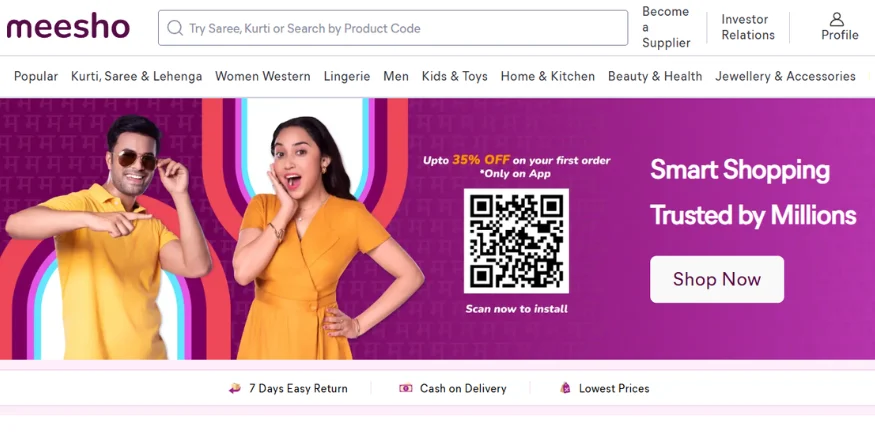
Meesho is better described as a marketplace-based selling model than as a conventional dropshipping supplier. Sellers list products through Meesho’s Seller Panel, while Meesho supports payment processing, logistics and delivery. It does not function as a direct Shopify or WooCommerce supplier that fulfils orders for an independent store.
The model is different from store-integrated dropshipping. Resellers work through the Meesho platform and its catalogue instead of connecting a separate Shopify or WooCommerce store to Meesho as a dropshipping supplier. Meesho also has a separate supplier system for businesses that list their own products.
Pros:
- Meesho’s marketplace allows sellers to list products and manage customer orders through its seller system, while its social-commerce model can be used for zero-inventory reselling.
- Its marketplace covers categories such as fashion, home and kitchen, beauty, and kids’ products.
- Meesho currently states that sellers on its marketplace pay 0% commission, although other service charges can apply.
- COD orders are supported, with Meesho handling delivery and payment collection through its platform.
Cons:
- It is not a direct Shopify or WooCommerce dropshipping supplier for running an independent store.
- Resellers depend on Meesho’s catalogue, platform rules, pricing, and order flow.
- Registration requirements differ between GST sellers and eligible non-GST sellers, so sellers should check Meesho’s current registration rules.
Meesho can suit beginners who want to use its marketplace and reseller model without maintaining their own inventory.
10. IndiaMART
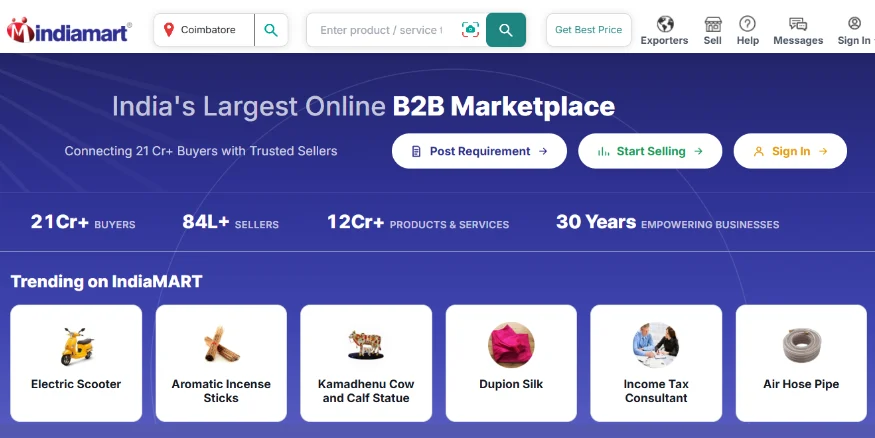
IndiaMART is an Indian B2B marketplace and supplier directory, not a single dropshipping supplier. It connects buyers with manufacturers, wholesalers, distributors, exporters, and other businesses across a wide range of product categories. Sellers can use the platform to find potential suppliers and contact them directly.
For dropshipping, the supplier relationship is handled separately from IndiaMART. You need to contact the individual supplier, confirm product pricing and minimum order requirements, and ask if they can fulfil individual customer orders and ship directly to your customers. Shipping, COD, returns, branding, and payment terms can therefore vary from one supplier to another.
Pros:
- Provides access to manufacturers, wholesalers, distributors, and other B2B suppliers across India.
- Covers a wide range of product categories, making it useful for niche and private-label sourcing.
- Buyers can contact individual suppliers and negotiate product prices, quantities, and fulfilment terms.
- Useful for sellers who want to source directly rather than use a fixed dropshipping catalogue.
Cons:
- IndiaMART does not itself fulfil dropshipping orders, so sellers must arrange fulfilment directly with the individual supplier.
- MOQ, pricing, shipping, COD, branding, and return terms vary between suppliers.
- Sellers need to verify product quality, supplier reliability, samples, and fulfilment capability before using a supplier for customer orders.
IndiaMART is best suited to sellers who want to find Indian manufacturers and wholesalers for direct sourcing, though it requires more supplier-level verification than a dedicated dropshipping fulfilment platform.
11. ExportersIndia
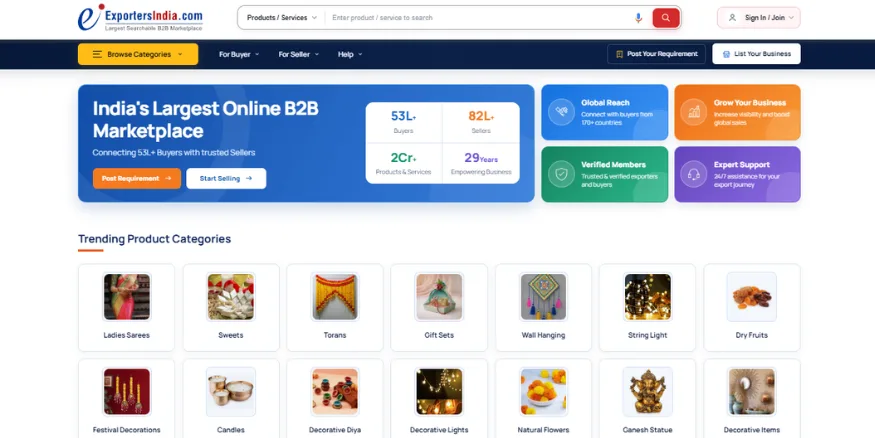
ExportersIndia is an Indian B2B marketplace connecting buyers with manufacturers, suppliers, exporters, and other businesses. It does not fulfil dropshipping orders itself, so sellers work directly with the supplier they find. Buyers can search products and companies, post requirements, and contact suppliers through the platform. ExportersIndia offers supplier discovery and business-promotion services; specific membership features and commercial terms vary by account type.
Pros:
- Covers a wide range of product categories.
- Buyers can contact suppliers directly.
- Product and fulfilment terms can be negotiated with individual suppliers.
- Free registration is available.
Cons:
- ExportersIndia does not handle customer-order fulfilment.
- MOQ, shipping, pricing, and returns vary by supplier.
- Sellers must confirm whether a supplier supports one-by-one dropshipping orders.
ExportersIndia is best suited to sellers looking for Indian manufacturers and wholesalers, though finding a dropshipping-ready supplier requires more direct checking.
12. AutoDS
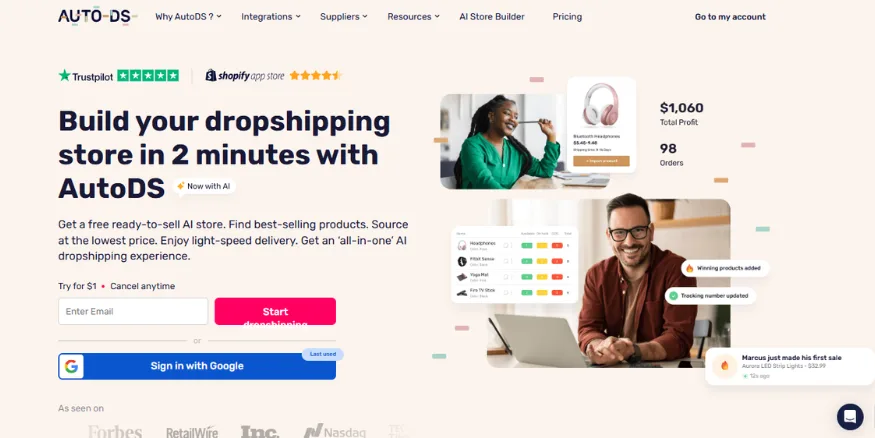
AutoDS is a dropshipping automation platform for product importing, order management, monitoring, and other store tasks. It supports several ecommerce selling channels rather than supplying products itself. The platform currently supports channels including Shopify, eBay, Wix, WooCommerce, Amazon, Etsy, and Facebook Shop. AutoDS subscriptions are set up separately by selling channel, and new subscriptions currently include a 3-day trial.
Pros:
- Automates product importing and store-management tasks.
- Supports multiple major selling channels.
- Price and stock monitoring are available on eligible plans.
- Automatic order fulfilment is available through an add-on.
Cons:
- AutoDS is an automation platform, not the underlying supplier.
- Each selling channel requires its own AutoDS subscription plan.
- Automatic order fulfilment is available through the Orders Processor add-on, which carries a separate charge.
AutoDS is best suited to sellers who want to automate sourcing and order-management tasks across supported channels, though subscription and add-on costs need to be included in the operating budget.
13. DSers
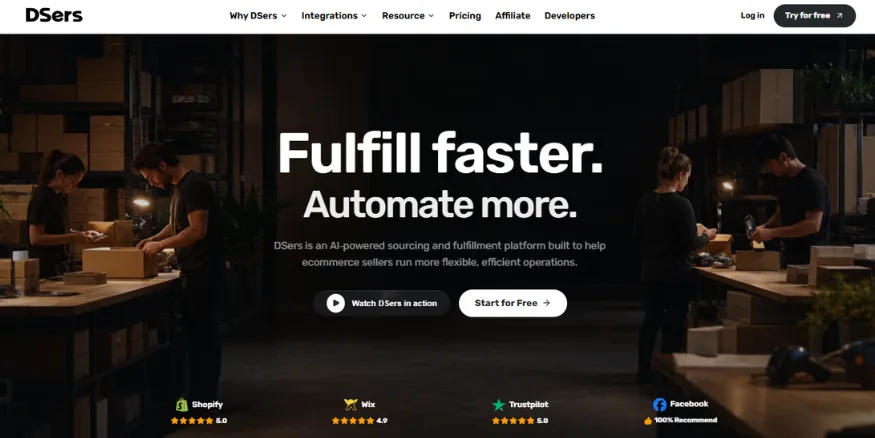
DSers is a dropshipping automation tool built around product sourcing and order management rather than a product supplier itself. It helps sellers import products, process orders, and sync tracking information with connected stores. Its Shopify app currently offers a free Basic plan alongside paid plans, with features such as bulk order processing, product management, order-status updates, and tracking synchronisation.
Pros:
- Supports bulk order processing.
- Product importing and bulk ordering reduce repetitive listing and order-processing work.
- Order and tracking information can be synchronised.
- A free Basic plan is available.
Cons:
- DSers does not supply or manufacture the products.
- Product quality and delivery depend on the underlying supplier.
- Higher limits and additional features are available on paid plans.
DSers is best suited to sellers using supported product suppliers who want to automate repetitive order tasks, though supplier quality still needs to be checked separately.
Build a Hands-free Online Store!
Learn from choosing the right software to syncing and automating orders
Automated Dropshipping →
14. Spocket
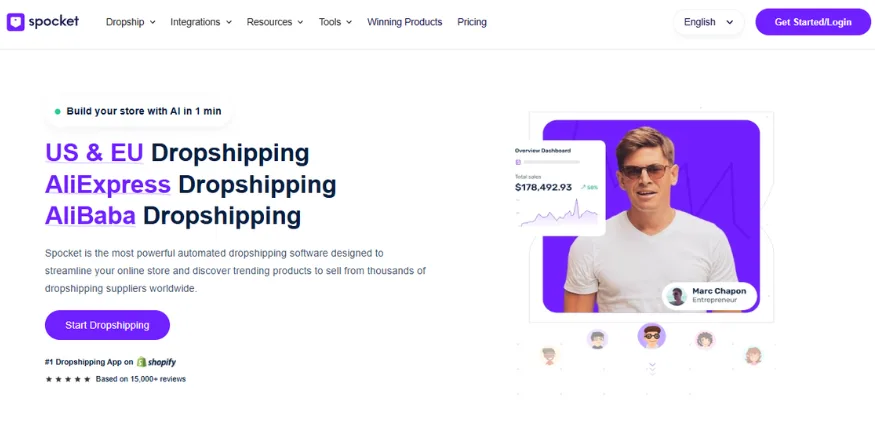
Spocket is a global dropshipping platform that connects sellers with suppliers and lets them import products into supported ecommerce stores. It handles product sourcing and order workflows rather than supplying products from one central warehouse. Spocket currently supports platforms including Shopify, WooCommerce, Wix, BigCommerce, Squarespace, Ecwid, Amazon, and eBay. Spocket currently offers paid plans with a 7-day trial before billing begins.
Pros:
- Supports several major ecommerce platforms.
- Order fulfilment and tracking can be managed through connected stores.
- Orders can be synced and fulfilled through the platform.
- Supplier samples can be ordered before selling.
Cons:
- Product-import limits vary by plan.
- Paid plans are required after the trial for continued access to the main features.
- A separate subscription is required for each store when using multiple stores.
Spocket is best suited to sellers who want a managed international sourcing platform, though its subscription and product limits need to be considered as the store grows.
15. AliExpress
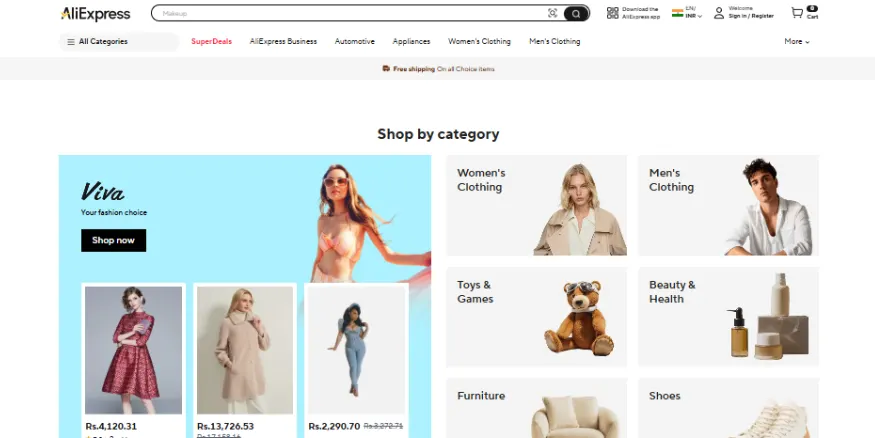
AliExpress is a global online marketplace where sellers can source products from individual suppliers and manufacturers. It is not one central dropshipping supplier, so fulfilment terms depend on the seller chosen for each product. For dropshipping, sellers select products, check the individual supplier’s terms, and arrange fulfilment through the supplier or a connected automation tool.
Pros:
- Offers products across a very wide range of categories.
- Sellers can compare multiple suppliers selling similar products.
- Individual products can usually be tested without large wholesale orders.
- Can be connected to several third-party dropshipping tools.
Cons:
- Product quality varies between individual suppliers.
- Processing and delivery times depend on the supplier and destination.
- Returns and after-sales support can differ between sellers.
AliExpress is suited to sellers who want broad international product sourcing, though supplier checks are important because fulfilment terms vary between individual sellers.
16. CJDropshipping
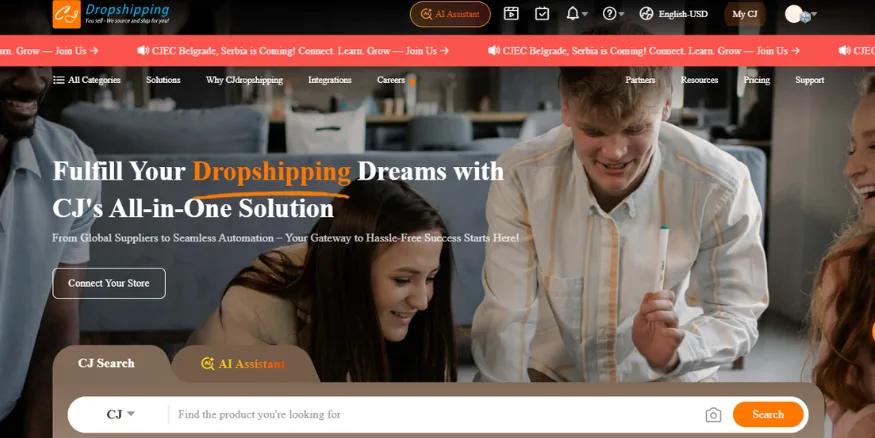
CJDropshipping is a global sourcing and fulfilment platform that helps sellers find products, connect stores, and send orders for fulfilment. It also accepts sourcing requests when a product is not already available in its catalogue. The platform provides product sourcing, fulfilment, custom packaging, and other services, with product and shipping costs varying by order and destination.
Pros:
- Supports product sourcing requests.
- Store connections and order syncing are available.
- Offers product inspection and fulfilment services.
- Custom packaging and product customisation are available.
Cons:
- Product and shipping costs vary by order.
- Extra services can add separate charges.
- Delivery options depend on the product, warehouse, and destination.
CJDropshipping is best suited to sellers who want sourcing and fulfilment in one system, though the final landed cost needs to be checked for each product.
17. Zendrop
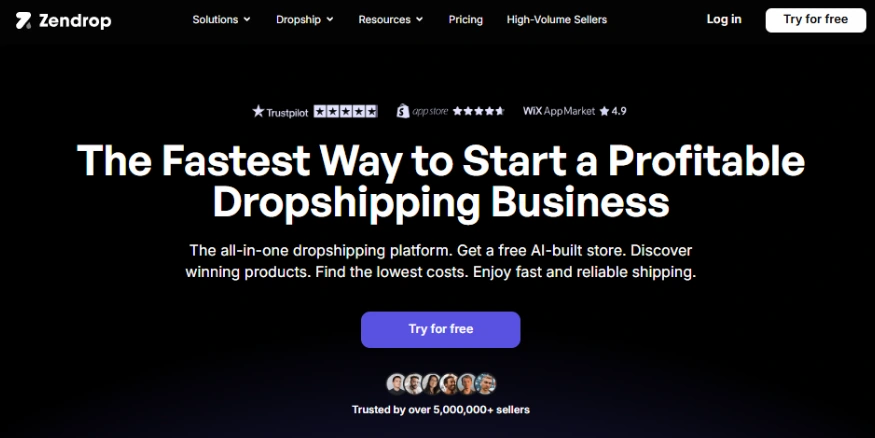
Zendrop is a dropshipping sourcing and fulfilment platform that connects online stores with products and suppliers. Sellers can import products and use Zendrop to manage fulfilment after an order is placed. Zendrop currently uses usage-based billing, with a free level and paid tiers based on the number of linked products. Its direct integrations include Shopify, Wix, and ClickFunnels.
Pros:
- Product sourcing and fulfilment are handled in one platform.
- Shopify and other supported store integrations are available.
- Automated fulfilment is available on paid plans.
- Custom branding and customisation options are supported.
Cons:
- The free plan has limited access to features.
- Automated fulfilment requires a paid plan.
- Direct integrations are limited to the platforms currently supported by Zendrop.
Zendrop is best suited to sellers using its supported ecommerce channels who want sourcing and fulfilment in one system, though sellers on other platforms may need a different workflow.
18. Doba
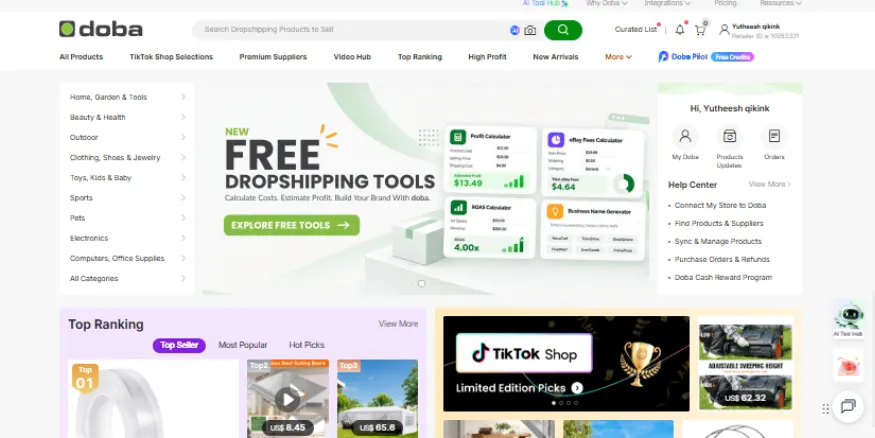
Doba is a dropshipping platform that combines product sourcing, store connections, product imports, and order-management tools. Sellers connect a store and use Doba to manage products and supplier fulfilment. Its current plans range from Limited to Enterprise, with higher tiers adding more store connections, product listings, inventory capacity, and automation features.
Pros:
- Supports store integrations for dropshipping operations.
- Product listings can be imported through the platform.
- Higher plans provide more store and product capacity.
- API access is available on higher plans.
Cons:
- Its current Limited plan starts at a paid subscription, with higher tiers adding more capacity and features.
- Product listings, store connections, and inventory limits depend on the plan.
- Higher-level automation features require higher tiers.
Doba is best suited to sellers who want a structured sourcing and fulfilment platform, though the subscription level needs to match the store’s product and integration requirements.
19. SaleHoo
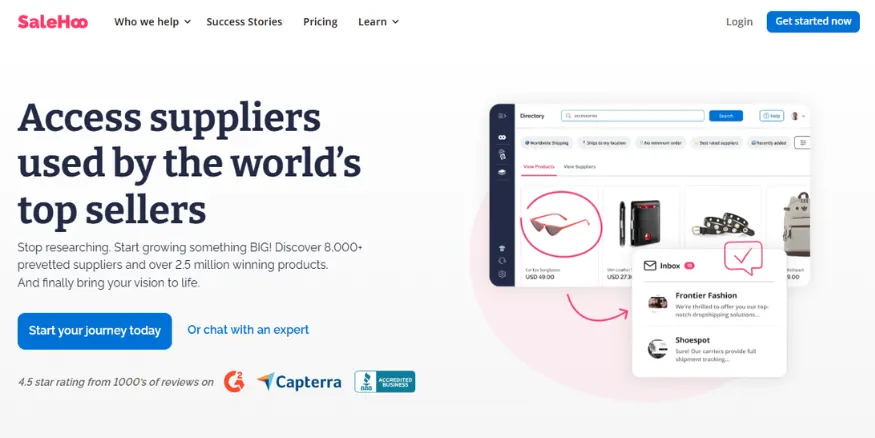
SaleHoo is a supplier directory and ecommerce research platform that helps sellers find dropshippers, wholesalers, and manufacturers. It also provides product research and Shopify-focused tools. Its current Starter plan is $9 per month when billed annually and includes access to 8,000+ suppliers, 200 monthly product imports, and one Shopify store. Higher plans increase supplier contacts, imports, and store connections.
Pros:
- Supplier listings cover multiple product categories.
- Supplier filters help sellers narrow down suppliers by relevant criteria.
- Shopify product importing is supported.
- SaleHoo’s directory covers suppliers for different ecommerce channels, while its current product-import integration is focused on Shopify.
Cons:
- SaleHoo is primarily a directory and research platform, not the fulfilment provider.
- Product imports and store connections depend on the plan.
- Sellers still need to confirm individual supplier terms.
SaleHoo is best suited to sellers who want a structured way to find and research suppliers, though fulfilment arrangements still need to be confirmed with each supplier.
20. Alibaba
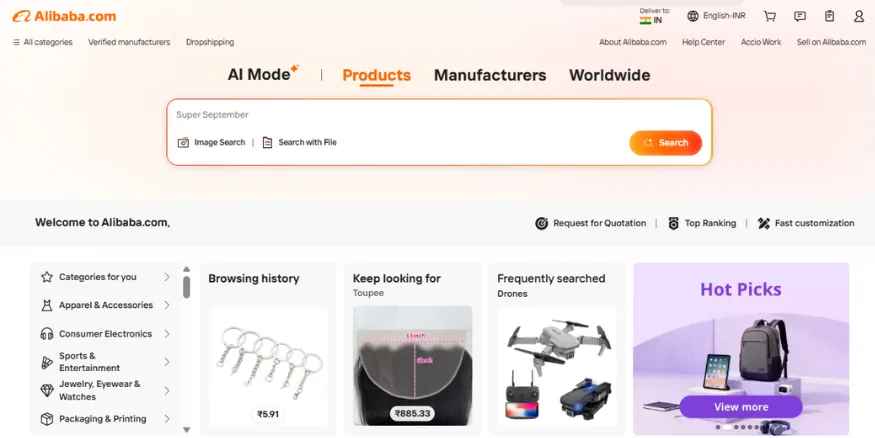
Alibaba is a global B2B marketplace connecting buyers with manufacturers and suppliers. Sellers can use it for wholesale sourcing, private-label products, and supplier negotiations. Buyers can communicate directly with suppliers and negotiate product terms. Eligible orders can also use Alibaba’s Trade Assurance service, which provides transaction protection when its requirements are met.
Pros:
- Large network of manufacturers and suppliers.
- Supports private-label and customised products.
- Buyers can negotiate directly with suppliers.
- Trade Assurance provides protection for eligible orders.
Cons:
- It is primarily a B2B sourcing marketplace rather than a managed dropshipping service.
- MOQ and pricing vary by supplier.
- Sellers must confirm whether a supplier will fulfil individual customer orders.
Alibaba is best suited to sellers looking for direct manufacturer sourcing or private-label opportunities, though individual supplier arrangements require more work than a dedicated dropshipping platform.
Best Dropshipping Platforms by Use Case
Each option suits a different product category, selling model, or fulfilment setup.
- Clothing and fashion:
Qikink, Wholesalebox, Snazzyway, and Seasonsway are relevant for apparel and fashion-focused stores. Qikink also works well when you want to sell custom-designed clothing without holding inventory.
- Zero-investment reselling:
Meesho and KaKiSo support marketplace-based or reseller-style selling, but their models work differently from connecting a conventional dropshipping supplier to your own store. KaKiSo supports zero-inventory reselling, while Meesho operates primarily as a seller marketplace.
- Wholesale and bulk sourcing:
IndiaMART, ExportersIndia, and Alibaba are useful when you want to find manufacturers or wholesalers directly. Product prices, minimum order quantities, shipping, and dropshipping availability need to be confirmed with each individual supplier.
- International product sourcing:
AliExpress, Spocket, and CJDropshipping give access to products and suppliers outside the Indian market. Check delivery times, shipping costs, import considerations, and supplier terms before listing products for Indian customers.
- Store-integrated dropshipping:
Qikink, Dropship India, Spocket, and CJDropshipping can connect with supported ecommerce platforms and help reduce manual order processing. The available integrations and fulfilment features vary, so check that the platform supports your store before signing up.
How to Find Dropshipping Suppliers in India?
Finding a dropshipping supplier is easier when you know where to look and how to verify the supplier before sending customer orders through them.
India’s digital commerce network has widened well beyond any single marketplace. ONDC, the government-backed open network for digital commerce, had more than 1.16 lakh retail sellers live across 630+ cities and towns as of 9 December 2025, according to the Ministry of Commerce and Industry.
For sellers looking for products and selling channels, this reflects how many different routes into online selling now exist beyond one fixed supplier or platform.
Where to Find Dropshipping Suppliers?
You can find dropshipping suppliers through a few different channels:
- B2B directories: You can use a dropship directory to find manufacturers, wholesalers, and suppliers and contact them directly.
- Dedicated dropshipping platforms: These platforms already have fulfilment processes in place, so you do not need to arrange every order manually.
- Shopify and WooCommerce app stores: Supplier apps can be installed and connected to supported stores, making product imports and order processing easier.
- Seller communities: Facebook groups, LinkedIn communities, Reddit, and other seller networks can help you find suppliers through recommendations from people who have used them. Always verify the supplier’s current terms before signing up based on a recommendation.
How to Check a Dropshipping Supplier?
Once you have shortlisted a few suppliers, contact them directly and ask specific questions. Ask about their average dispatch time, how they handle RTO and returns, whether they support individual customer orders or only bulk purchases, and what their product return policy covers.
Also check their branding options if you want the order to reach customers under your store’s name. Ask if they provide white-label packaging, custom labels, or invoices without the supplier’s branding. The supplier’s communication also matters. Clear answers to basic questions before you start can make supplier coordination easier as your order volume grows.
Before adding products to your store, place a test order whenever possible. Check the product quality, packaging, dispatch time, tracking updates, profit margin and delivery experience yourself. A test order gives you a better idea of what your customers will actually receive.
Understand Your Dropshipping Profits!
Explore hidden insights, optimise costs and skyrocket your business growth
Dropshipping Profit-Margin Calculator →
Frequently Asked Questions (FAQs)
1. Which are the Best Indian Dropship Suppliers For A Beginner?
2. Are There Free Dropshipping Websites In India?
3. Which Dropshipping Companies In India Work With Shopify?
4. Can I Use Dropshipping Suppliers For Amazon In India?
5. Which Clothing Dropshipping Suppliers are Available in India?
6. What Are the Best Dropshipping Sites in India for Selling Online?
Final Thoughts
The dropshipping model gives sellers several ways to start an online business without investing in inventory upfront. You can build your own brand, resell ready-to-sell products, work directly with manufacturers, or use sourcing and automation platforms to manage products and orders.
As your store grows, the fulfilment side of the business becomes just as important as the products you sell. Consistent product quality, reliable dispatch, clear shipping and return terms, and smooth order handling can make a noticeable difference to the customer experience and your operating costs.
A practical way to get started is to test a small selection of products and go through the complete order process yourself. This helps you understand the actual delivery experience, costs, and customer response before expanding your product range.
If you want to sell products online without keeping inventory, Qikink can help you manage fulfilment and dropshipping in India, from getting your products ready for sale to shipping orders to your customers.
Sign up & Start Today →Read More
- Best Dropshipping Products To Sell Online Profitably
- How to Start Business with T-Shirt Dropshipping
- Dropshipping Product Research Tools to Find Products
- Branded Dropshipping: Build Your Online Business
Share the Article


