

B2B dropshipping is a fulfilment model where businesses sell products to other businesses without holding inventory. Instead of purchasing, storing, and shipping products themselves, sellers work with suppliers who fulfil orders directly for the buyer.
The seller manages customer relationships and sales activities, while the supplier handles inventory and order fulfilment. This allows businesses to offer a wider range of products without investing in inventory, warehousing, or fulfilment operations.
In India, B2B dropshipping supports businesses across sectors such as corporate gifting, promotional merchandise, uniforms, retail distribution, and industrial supplies, where bulk purchasing and reliable fulfilment are often key requirements.
The model helps businesses expand into new markets, test new product categories, respond to changing customer demand, and scale operations with lower upfront investment than traditional inventory-based models. Products are manufactured only after customer orders are confirmed.
Understanding how B2B dropshipping works, how it differs from wholesale and B2C models, and how to evaluate dropshipping suppliers helps businesses decide whether the model is the right fit. This guide includes a free Supplier Fit Tool that tells you which type of B2B supplier matches your business in under a minute
Key Takeaways:
- B2B dropshipping is designed for business customers, where bulk orders, repeat purchases, and ongoing supplier relationships are common.
- It differs from B2C dropshipping and wholesale in how products are sold, fulfilled, and managed.
- A reliable supplier plays a critical role in product quality, fulfilment, and customer satisfaction.
- Businesses across industries in India use B2B dropshipping to grow without maintaining inventory.
- Have a clear market target with the product selection and choose reliable suppliers with the Supplier Fit Tool provided, that detemines your success.
What is B2B Dropshipping?
B2B dropshipping is designed for businesses that sell products to other businesses rather than individual consumers. While the fulfilment process is similar to traditional dropshipping, the customers, purchasing journey, and order management process are different.
Business buyers typically purchase products for resale, day-to-day operations, corporate gifting, promotional campaigns, employee use, or other business requirements. In this model, the seller manages sales activities, customer communication, and commercial discussions, while the supplier manages inventory availability and fulfilment.
They may also have specific requirements such as negotiated pricing, branded packaging, customised products, scheduled deliveries, or documentation support. Consistently meeting these expectations depends on a supplier that can maintain product quality, fulfil orders accurately, and communicate reliably.
B2B dropshipping is commonly used across industries where businesses source products from external suppliers instead of manufacturing or stocking them in-house.
How does B2B Dropshipping Work?
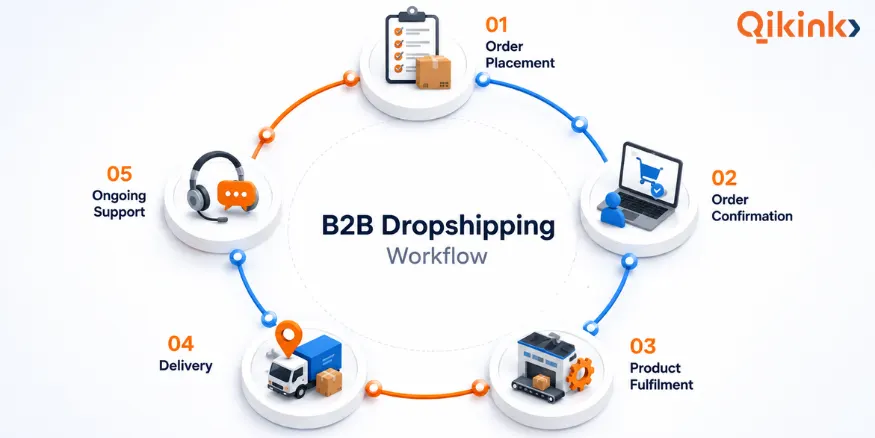
B2B dropshipping follows a straightforward fulfilment workflow. While the exact workflow varies by business and industry, the overall process typically follows these five steps:
Step 1: Order Placement
A business buyer places an order with the seller after confirming the required products, quantities, specifications, pricing, and delivery expectations. Depending on the order, it may also include custom branding, packaging, or other commercial requirements.
Step 2: Order Confirmation
The seller reviews the order details and shares the confirmed requirements with the manufacturer or supplier responsible for fulfilling the order. Product availability, pricing, production timelines, and delivery schedules are confirmed before fulfilment begins.
Step 3: Product Fulfilment
Once the order is confirmed, the supplier prepares the products for dispatch. This may include quality checks, customisation, packaging, or other fulfilment activities based on the agreed specifications.
Step 4: Delivery
The supplier ships the completed order directly to the business buyer. Throughout the process, the seller remains the primary point of contact, providing order updates and coordinating communication with the buyer.
Step 5: Ongoing Support
After the order is delivered, the seller continues to manage the customer relationship by addressing enquiries, resolving fulfilment issues when required, and supporting repeat orders and ongoing business relationships.
Dropshipping Workflow
Explore what happens during the process of a traditional dropshipping
What is Dropshipping? →
B2B Dropshipping vs Other Business Models
B2B dropshipping, B2C dropshipping, and wholesale all allow businesses to sell products without manufacturing themselves, but they differ in inventory ownership, customers, and fulfilment methods.
Comparing B2B dropshipping with B2C dropshipping and the wholesale business model makes it easier to identify the option that best fits different business requirements.
| Feature | B2B Dropshipping | B2C Dropshipping | Wholesale |
|---|---|---|---|
| Primary customer | Business buyers | Individual consumers | Business buyers |
| Typical order size | Medium to large | Usually small | Large bulk orders |
| Inventory ownership | Supplier | Supplier | Buyer |
| Fulfilment | Supplier ships directly to the business buyer | Supplier ships directly to the consumer | Buyer manages storage and distribution |
| Pricing model | Negotiated or contract-based | Retail pricing | Bulk pricing |
| Best suited for | Businesses selling to other businesses without upfront inventory investment | Businesses selling directly to consumers | Businesses purchasing inventory upfront for resale or distribution |
Each model serves a different purpose. B2B dropshipping is well suited for businesses that want to supply products to other businesses without investing in inventory.
B2C dropshipping is designed for businesses selling directly to consumers, while wholesale is often preferred by businesses that want greater control over inventory management and are prepared to purchase stock in bulk.
Who Uses B2B Dropshipping in India?
B2B dropshipping is commonly used by businesses that need to source and deliver products to other businesses without maintaining their own inventory.
In India, the model is especially useful for businesses handling bulk orders, customisation requirements, recurring demand, or multiple product categories across different customer needs.
Common users of B2B dropshipping include:
- Corporate gifting companies fulfil employee gifts, client kits, and event merchandise without maintaining seasonal inventory.
- Marketing and promotional agencies source customised merchandise for client campaigns, allowing them to handle varying quantities and branding requirements.
- Distributors and procurement companies expand their product offerings without investing in inventory across every SKU.
- Uniform and merchandise suppliers fulfil recurring orders for schools, organisations, and businesses while relying on suppliers for production and shipping.
How B2B Dropshipping is Different in India?
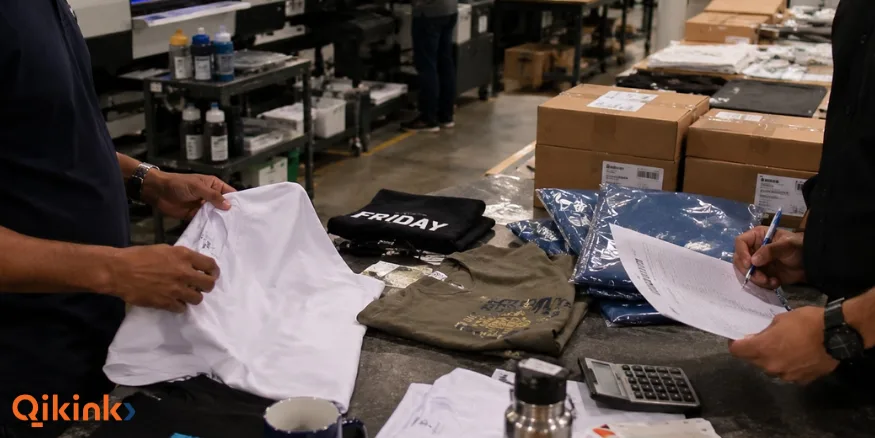
B2B dropshipping in India is influenced by local business practices, supplier availability, and the growing preference for flexible fulfilment models. Many buyers expect suppliers to support requirements such as GST-compliant invoicing, customised products, reliable communication, and predictable delivery timelines.
The domestic supplier ecosystem plays an important role in B2B dropshipping in India. Working with local suppliers can help businesses coordinate orders more easily, reduce delivery timelines, and manage fulfilment more efficiently compared to depending only on overseas suppliers.
The growing adoption of digital procurement is accelerating India’s B2B commerce market. According to Redseer Strategy Consultants, India’s eB2B market is projected to reach approximately ₹8.5–9.5 lakh crore (around $90–100 billion) in gross merchandise value by 2030, driven largely by SME demand in sectors such as textiles and apparel.
India’s regional manufacturing hubs also support B2B dropshipping across merchandise, gifts, and industrial products. Sellers can access specialised suppliers without needing to build their own production or storage infrastructure.
Together, these factors make B2B dropshipping a practical fulfilment model for businesses across multiple industries in India.
Benefits of B2B Dropshipping
B2B dropshipping helps businesses reduce the financial and operational commitments associated with traditional inventory-based models.
By avoiding large upfront inventory purchases, sellers can allocate more resources towards customer acquisition, product expansion, and long-term business growth. The model also aligns with broader changes in B2B buying behaviour.
According to McKinsey’s Global B2B Pulse Survey, digital commerce has become the highest revenue-generating sales channel for B2B organisations, as more business buyers prefer researching, ordering, and managing purchases online.
Lower Inventory Investment
Businesses can offer multiple products without committing significant capital to stock that may not sell immediately.
Reduced Warehousing Requirements
Eliminating the need for dedicated warehouse space helps reduce storage costs and operational overhead. It also allows businesses to respond more easily to seasonal or changing demand.
Better Cash Flow Management
Since capital is not tied up in unsold stock, sellers can use available funds for sales, marketing, operations, and business development activities.
Wider Product Range
Working with multiple suppliers allows sellers to expand their product offerings without managing separate inventories for every category. This makes it easier to test new products and respond to changing customer requirements.
Easier Business Expansion
Sellers can expand into new eCommerce markets without setting up additional storage infrastructure. Suppliers manage inventory and fulfilment, reducing the operational complexity of expansion.
Greater Focus on Sales and Customer Relationships
With fewer inventory-related responsibilities, sellers can spend more time strengthening customer relationships, generating leads, and developing repeat business.
Common Challenges in B2B Dropshipping
B2B dropshipping reduces inventory and operational requirements, but businesses still need to manage supplier coordination, quality expectations, fulfilment timelines, and customer commitments.
Understanding these challenges and their solutions helps sellers build better processes before scaling.
- Supplier dependency
→ Sellers rely on suppliers for product availability, quality checks, and order fulfilment. Any delay or inconsistency from the supplier can directly affect the buyer experience.
→ To reduce this risk, businesses should work with suppliers that have reliable fulfilment processes, clear communication, and consistent service standards.
- Product quality consistency
→ Sellers may have limited control over product quality because inventory and fulfilment are managed externally. This is especially important for customised products, branded merchandise, and repeat orders
→ A practical approach is to review samples, define quality expectations, and confirm supplier processes before scaling larger orders.
- Longer B2B sales cycles
→ Buyers may require quotations, approvals, customisation discussions, and internal coordination before confirming purchases.
→ Businesses can manage this by building a structured sales process with clear pricing, product information, and realistic delivery timelines.
- Shipping and fulfilment coordination
→ Managing delivery expectations can become challenging when orders involve multiple suppliers, locations, or customised requirements.
→ This becomes easier when partnering with suppliers who provide predictable timelines, order visibility, and clear fulfilment communication.
- GST and invoicing requirements
→ B2B transactions may involve documentation needs, GST invoices, and coordination between sellers and suppliers.
→ Sellers should understand compliance responsibilities and work with suppliers who support accurate documentation.
- Managing customer expectations
→ Buyers often expect accurate specifications, reliable delivery, and responsive support, especially for bulk or recurring orders.
→ Clear communication helps set expectations around product details, fulfilment timelines, and support responsibilities.
Key Profitability Factors
This guide clears all your doubts on whether dropshipping is profitable.
Learn and Start Today →
How to Start a B2B Dropshipping Business in India?
Starting a B2B dropshipping business requires careful planning before accepting customer orders. Unlike consumer-focused businesses, B2B sales often involve larger order quantities, customised requirements, negotiated pricing, and longer purchasing cycles.
Planning each stage before accepting orders helps reduce fulfilment errors, pricing issues, and communication gaps as the business grows.
1. Choose a Business Niche
Start by selecting a product category that addresses a specific business requirement instead of trying to sell a wide range of products. Corporate gifting, promotional merchandise, uniforms, hospitality products, office supplies, industrial equipment, and retail products are common B2B categories.
Focusing on one niche makes it easier to understand customer expectations, identify suitable suppliers, and build expertise within a specific market.
2. Understand Your Target Customers
Before selecting products, identify the type of businesses you want to serve. Organisations follow different purchasing processes, order volumes, and customisation requirements.
Understanding these requirements helps you choose suitable products, prepare accurate quotations, and develop pricing that aligns with customer expectations.
3. Find Reliable B2B Dropshipping Suppliers
Choosing the right B2B dropshipping supplier plays a central role in maintaining product quality, fulfilment reliability, and customer satisfaction. Evaluate potential suppliers based on product consistency, production capacity, fulfilment timelines, communication, customisation capabilities, and support for repeat orders.
Understand the supplier’s fulfilment process and review product samples wherever possible before accepting customer orders. This helps identify potential quality or operational issues early.
4. Complete Business and Compliance Requirements
Business buyers often expect GST-compliant invoices, quotations, purchase orders, and other commercial documentation.
Before starting operations, understand the legal and tax requirements that apply to your business and confirm that your supplier can support the necessary documentation. Where required, seek guidance from a qualified tax professional to ensure compliance.
5. Develop a Pricing Strategy
B2B pricing is rarely based on a fixed retail price. Order quantity, product customisation, fulfilment costs, shipping charges, and long-term business relationships all affect pricing. A structured pricing strategy helps maintain profitability while remaining competitive across different order sizes.
6. Set Up a Sales Process
Buyers usually require more interaction before confirming an order than individual consumers. Establish a clear process for handling enquiries, preparing quotations, confirming specifications, approving artwork where applicable, and communicating delivery timelines.
A structured sales process creates a better purchasing experience and reduces misunderstandings.
7. Standardise Order Management
As order volumes increase, consistency becomes more important than speed. Create a standard workflow for processing orders, sharing specifications with suppliers, tracking fulfilment, and monitoring deliveries. A documented process helps minimise errors and ensures every order follows the same quality standards.
8. Build Long-Term Business Relationships
Many B2B customers place repeat orders once they find a dependable supplier. Consistent product quality, reliable fulfilment, transparent communication, and responsive support encourage repeat business and strengthen long-term commercial relationships.
Choosing the Right B2B Dropshipping Partner
Selecting the right B2B dropshipping supplier is one of the most important decisions for any business using this model. Because suppliers manage inventory, product quality, customisation, and fulfilment, their performance directly affects delivery reliability, customer satisfaction, and repeat business.
While pricing is an important consideration, it should not be the deciding factor. A reliable supplier should consistently support your operational requirements as your business grows.
When evaluating a B2B dropshipping supplier, consider the following factors:
- Product quality and consistency
- Product range and customisation capabilities
- Fulfilment capacity and delivery timelines
- Communication and business support
- Transparent pricing structure
- GST-compliant invoicing and documentation
- Return and replacement policies
- Platform integrations or order management capabilities
No single supplier is the right choice for every business. The ideal partner depends on your product category, target customers, order volumes, and long-term business goals. The following example demonstrates how a specialised Indian B2B dropshipping provider aligns with these evaluation criteria.
Find Your Right B2B Dropshipping Supplier Fit
Answer 4 quick questions to see what kind of supplier your business actually needs, and what to check before you sign up.
Qikink: An Example of a B2B Dropshipping Partner
After discussing the key factors for evaluating a B2B dropshipping supplier, Qikink provides a practical example of how those criteria apply in the Indian market.
Qikink is an Indian print-on-demand and dropshipping B2B platform that enables businesses to sell customised apparel and merchandise without maintaining inventory. Products are manufactured only after a customer order is placed, allowing businesses to offer customised products without investing in inventory upfront.
The platform supports white-label fulfilment, custom branding, GST-compliant invoicing, and a wide range of apparel and merchandise products suitable for corporate gifting, employee merchandise, promotional campaigns run by agencies, and branded merchandise for other businesses.
Depending on the product, businesses can place orders without minimum order quantities, while many standard print-on-demand orders are dispatched in around two business days. For larger customised orders, options such as bulk screen printing are also available.
Qikink is best suited for businesses selling customised apparel, branded merchandise, and corporate gifting products rather than businesses looking to source general wholesale products across multiple industries.
For businesses operating within these categories, it demonstrates how supplier capabilities such as product consistency, customisation support, fulfilment reliability, and scalability influence the choice of a B2B dropshipping partner.
Is B2B Dropshipping the Right Model for Your Business?
B2B dropshipping is not the right choice for every business. The following table highlights common business situations where this model may or may not be suitable.
| Business Goal | Is B2B Suitable? | Reason |
|---|---|---|
| Selling products to other businesses | Yes | B2B dropshipping is designed for sellers serving business buyers with bulk or recurring requirements. |
| Entering a new product category or market | Yes | Allows businesses to test product demand without committing capital to inventory upfront. |
| Selling customised products or merchandise | Yes | Suppliers can manage production, branding, and fulfilment requirements. |
| Managing bulk or customised business orders | Yes | Helps businesses fulfil bulk and seasonal requirements without maintaining inventory. |
| Expanding product range without increasing inventory | Yes | Allows businesses to offer more products with lower upfront investment. |
| Already managing warehouses and large inventory | Maybe | Wholesale or traditional inventory models may offer better control. |
| Selling mainly to individual consumers | No | B2C dropshipping may be more suitable for consumer-focused sales. |
B2B dropshipping is a strong fit for businesses that want to sell to other businesses while reducing inventory commitments and fulfilment responsibilities. However, businesses that require complete control over stock, production, or distribution may find traditional wholesale or inventory-based models more suitable.
Free, Paid & Online Courses
Explore different dropshipping training sources, with a Course Finder tool
Courses on Dropshipping →
Frequently Asked Questions
1. Is B2B Dropshipping Legal in India?
2. Is B2B Dropshipping Profitable?
3. What is the Difference Between B2B Dropshipping and Wholesale?
4. Do I Need GST Registration for a B2B Dropshipping Business in India?
5. How Much Capital is Needed to Start a B2B Dropshipping Business in India?
6. Which Products are Suitable for B2B Dropshipping in India?
- Corporate gifting products
- Promotional merchandise
- Custom apparel and uniforms
- Branded employee merchandise
- Office supplies
- Hospitality products
- Retail merchandise
- Industrial and business-use products
7. How Do I Find Reliable B2B Dropshipping Suppliers in India?
8. Can a Print-On-Demand Platform be Used for B2B Dropshipping?
Final Thoughts
B2B dropshipping gives businesses in India a flexible way to serve commercial customers without taking on the operational responsibilities that come with traditional inventory-based models.
However, building a successful B2B dropshipping business requires more than reducing inventory commitments. Long-term growth depends on understanding customer requirements, selecting the right product categories, building dependable supplier partnerships, and creating processes that ensure consistent delivery and service quality.
For businesses working with customised merchandise, corporate gifting, apparel, and promotional products, choosing the right fulfilment partner can simplify production, branding, and order management as demand grows.
Businesses looking to sell customised apparel or branded merchandise can use Qikink, a B2B dropshipping India platform for production, branding, and order fulfilment. This allows businesses to focus on acquiring customers and growing long-term client relationships without maintaining inventory.
Businesses that combine the right products, reliable suppliers, and well-defined sales processes are better positioned to build a sustainable B2B dropshipping business.
Read More
- Branded Dropshipping: The Guide to Build an Online Business
- Instagram Dropshipping: Ultimate Guide on How to Sell Products
- Use Facebook for Dropshipping: Full Guide on Ads & Marketplace
- Discover Ways to Start Your Online Business with Zero Investment
- Best Profitable Dropshipping Business Ideas to Try Today: Guide
Summarise the Article


Share the Article


