

Reverse dropshipping is where sellers source products from one market and sell them in another market where brand, origin, availability or other product characteristics create a specific customer opportunity. The seller does not need to hold inventory. The supplier fulfils the order, while the seller handles the sale and customer relationship.
The model is built around a cross-border product opportunity rather than simply selling any foreign product. What matters is whether the product offers something that customers in the target market value and whether it can be sourced, fulfilled and delivered at a workable cost.
Reverse dropshipping involves more than finding an overseas supplier and listing a product online. Checking the reality of reverse dropshipping, supplier reliability, shipping costs, import requirements, and the total cost of fulfilment can all determine whether a particular product is practical to sell.
Key Takeaways
- Reverse dropshipping changes the sourcing and target-market direction of a dropshipping business, while the basic inventory-free fulfilment model remains similar.
- A product may suit reverse dropshipping when limited local availability, its origin, brand or specific characteristics create demand in the target market.
- Product selection should be based on factors such as demand, supplier reliability, shipping feasibility and the total cost of getting the product to the customer.
- The import and fulfilment arrangement can affect costs, delivery expectations and the compliance requirements that apply to the business.
- The model can provide access to specific cross-border product opportunities, but international shipping, supplier dependence, customs and returns can also create operational challenges.
- Profitability depends on the complete cost of each order, including the product cost, shipping, applicable charges, marketing expenses and potential returns.
What is Reverse Dropshipping?
Reverse dropshipping is a dropshipping model built around the direction of sourcing and selling. The seller identifies products in one country and offers them to customers in another country or market where those products may be difficult to access locally or where their origin, brand or specific characteristics create demand.
The fulfilment model remains similar to other forms of dropshipping. The seller presents the product, manages sales and handles the customer relationship, while the supplier handles fulfilment and dispatch according to the agreed arrangement.
Reverse dropshipping is differentiated by the demand gap created between the source market and the target market. Customers in the target market need a reason to choose the product, such as limited local availability, demand for a particular origin or brand, or access to features that are not easily available through domestic sellers.
The source country alone does not define the model. A foreign-made product is not automatically suitable for reverse dropshipping. The opportunity must still make commercial sense after fulfilment, shipping and overall costs are considered.
Note:
The term “reverse dropshipping” is not used consistently across the ecommerce industry. In this guide, it refers to sourcing products from one market and selling them into another target market where those products have a specific demand or availability opportunity.
How Does Reverse Dropshipping Work?
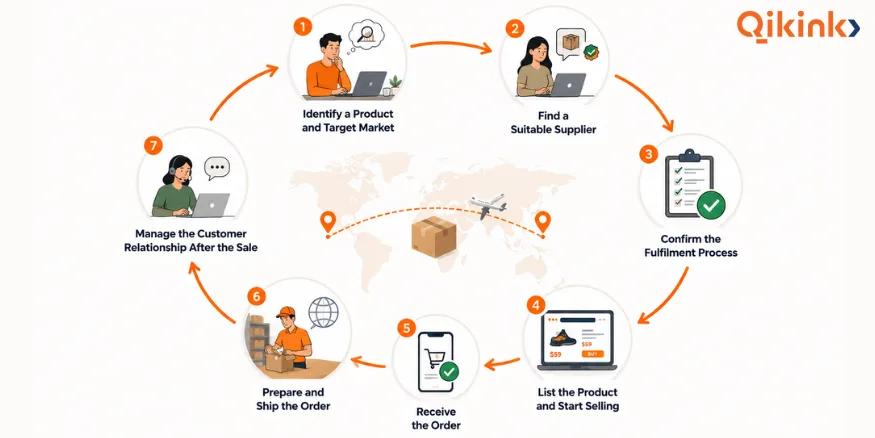
Reverse dropshipping follows a cross-border fulfilment process in which the seller identifies and lists a product for a target market, receives the customer’s order, and passes the order to the supplier for fulfilment.
1. Identifying a Product and Target Market
The process begins by identifying a product that has a clear reason to be sourced from another market and sold in the target market. The seller needs to consider who the target customers are, why they would look for the product and whether it can be supplied at a cost that supports competitive pricing.
The product and target market should be considered together. A product may have demand in one market but still be unsuitable if the costs or fulfilment requirements make it difficult to sell.
2. Finding a Suitable Supplier
Once the seller has identified a potential product, the next step is finding a dropshipping supplier who can support the required arrangement. The seller also needs to verify product availability, pricing and whether the supplier can deliver to the target market within an acceptable timeframe.
Testing the product or placing a sample order can help the seller assess product quality and the supplier’s fulfilment process before accepting customer orders.
3. Confirming the Fulfilment Process
Before listing the product, the seller needs to confirm how the order will reach the customer. This includes reviewing the shipping method, expected delivery time, who is responsible for customs clearance and any import or product-related requirements that may apply.
A product may appear suitable during the sourcing stage but become impractical if shipping costs are too high or delivery takes longer than customers are willing to accept.
4. Listing the Product and Starting to Sell
The seller can then list the product through a sales channel that supports the target market and present it to potential customers. The product information should clearly explain what the customer is buying and provide accurate information about pricing and expected delivery.
At this stage, the seller manages the sales side of the business, including product presentation, marketing and communication with customers.
5. Receiving the Order
When a customer places an order, the seller receives the order details and passes the order to the supplier according to the agreed fulfilment arrangement. The seller remains responsible for the customer-facing side of the transaction, including the information and support provided throughout the buying process.
6. Preparing and Shipping the Order
Depending on the fulfilment arrangement, the supplier may ship the product directly to the customer, or the order may pass through another fulfilment or logistics arrangement. The seller should confirm the shipping method, expected delivery time, tracking process and responsibility for customs before accepting orders.
7. Managing the Customer Relationship After the Sale
The seller’s responsibility does not end when the order is passed to the supplier. Customers may have questions about delivery, product issues, cancellations or returns, and the seller remains responsible for handling those requests.
Scrolling through Ideas?
Discover over 200 products that people are buying to sell online today!
Best Dropshipping Products →
Product Categories That May Suit Reverse Dropshipping
There is no single product category that automatically suits reverse dropshipping. A product may be suitable when its availability, origin, brand or specific characteristics create demand that domestic sellers do not fully address.
What Makes a Product Suitable for Reverse Dropshipping?
Customer demand alone does not make a product suitable for reverse dropshipping. The seller also needs to consider supplier reliability, delivery feasibility, applicable import requirements, and whether the total landed cost still leaves room for a workable selling price.
Delivery time also matters. Even when clearly communicated, a long delivery window can reduce customer interest, so the seller should consider it alongside the total cost of fulfilling the order.
Niche Beauty and Personal Care Products

Beauty and personal care products may be suitable when customers are looking for particular brands or formulations that are not readily available through domestic sellers. This category requires product-level checks before a seller lists an item. Ingredients, labelling and other applicable requirements can affect whether a particular item can be imported and sold through this model.
Hobby and Specialist Products
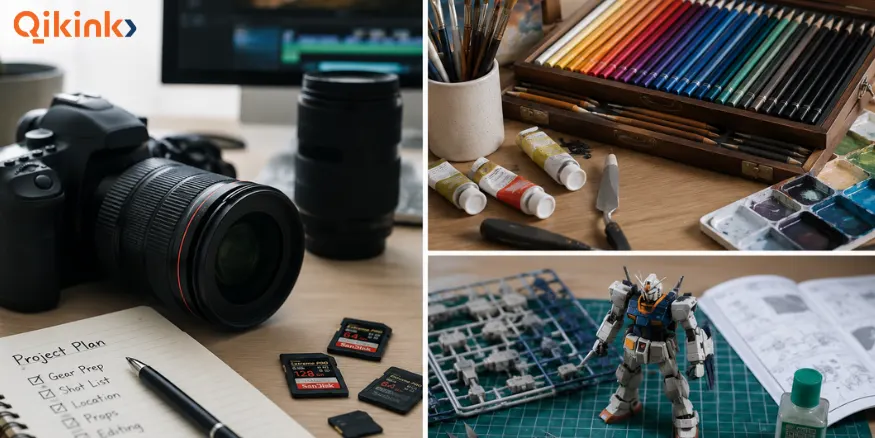
Hobby and specialist products may suit reverse dropshipping when a specific customer group has limited access to the equipment, materials or accessories it needs. These products are often driven by a clearly defined use case rather than broad consumer demand.
The seller needs to understand what customers can already buy locally and whether the overseas product addresses a genuine gap. In some cases, the opportunity may depend on a small but meaningful difference in product selection rather than the category as a whole.
Region-Specific Fashion and Accessories
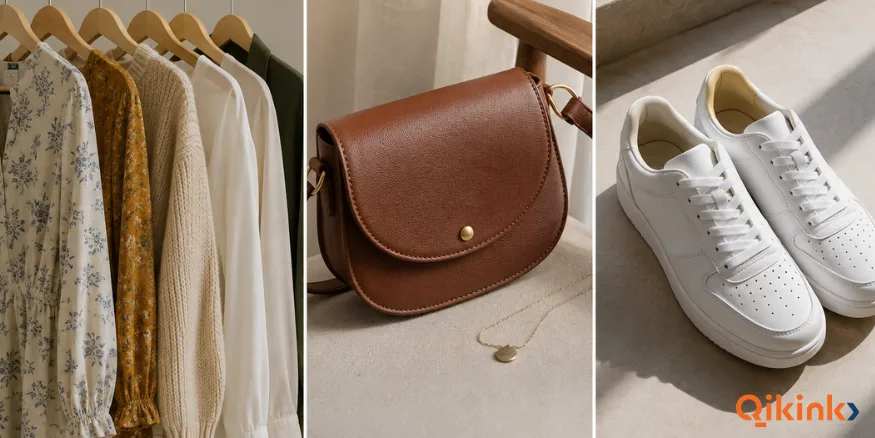
Fashion and accessories can suit this model when customers are interested in styles, labels or products associated with a particular country or region that are not widely available in the target market.
For example, fashion, footwear and apparel categories accounted for 29% of India’s cross-border B2C e-commerce market in 2025, according to Mordor Intelligence, which projects the category to grow at a 23.11% CAGR through 2031. These figures describe the cross-border B2C e-commerce market, not reverse dropshipping specifically.
Individual products still need to be assessed carefully. Sizing, returns and changing customer preferences can affect the practicality of selling fashion products across borders, especially when customers cannot inspect the product before placing an order.
Specialist Home and Lifestyle Products
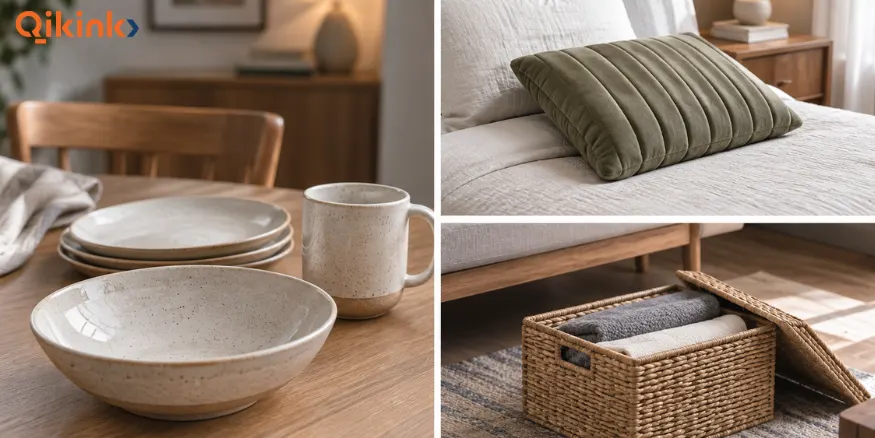
Home and lifestyle products may suit reverse dropshipping because of their design, materials, regional style or specialised use. A product does not need to be completely unavailable in the target market. A meaningful difference in its design or characteristics may be enough to appeal to a specific group of customers.
Shipping costs and damage risk are particularly important in this category. Product size and weight can affect shipping costs, while fragile items may require additional protection during international delivery.
Speciality Food Products
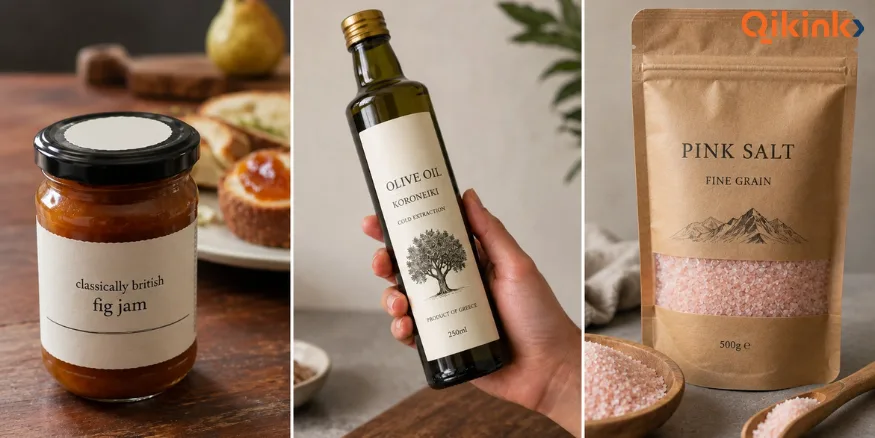
Some food products may attract demand because of their connection to a particular country, region or cultural preference. This can be relevant when customers have limited access to those products through local sellers.
Food products require additional checks because import restrictions, labelling requirements, shelf life and other product-specific conditions can affect whether a product can be imported and sold through this model.
Collectibles and Licensed Products
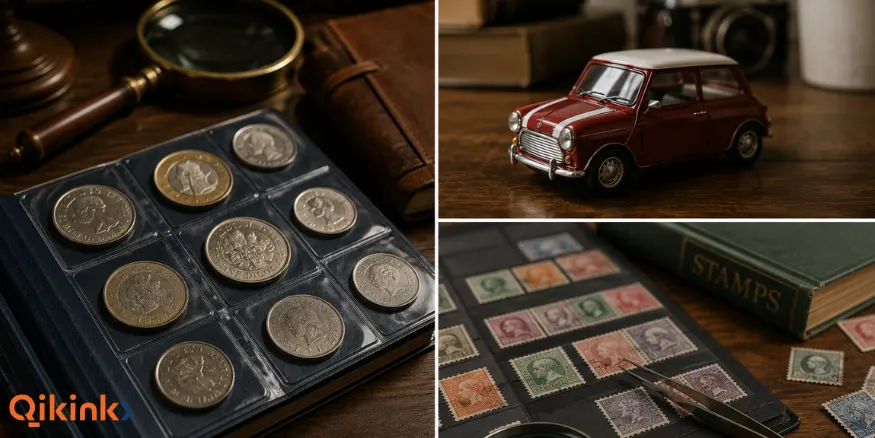
Collectibles, limited-edition items and products connected to particular brands or franchises may appeal to customers who have limited access to them locally. In these cases, demand is often tied to the specific item rather than the wider product category.
Supplier authorisation and product authenticity are especially important when branded or licensed goods are involved. Before listing such products, the seller should verify their source, authenticity and any restrictions that may apply to their sale or distribution.
Reverse Dropshipping vs Traditional Dropshipping
Both reverse dropshipping and traditional dropshipping use an inventory-free fulfilment structure. Traditional dropshipping describes the fulfilment model itself, while “reverse” dropshipping is used to describe the sourcing and selling direction of a particular cross-border arrangement.
| Factor | Reverse Dropshipping | Traditional Dropshipping |
|---|---|---|
| Sourcing and Selling Direction | Sources products from another market and sells them in the target market. | Can source products domestically or internationally and sell in the same or another market. |
| Product Selection Focus | Products with a clear reason for cross-border demand. | Products that can be sourced competitively and sold where demand exists. |
| Main Market Opportunity | Demand linked to availability, origin, brand, or product characteristics. | Demand combined with competitive sourcing. |
| Example | Selling a product sourced from another country to customers in the target market. | Selling products sourced from a suitable market to customers in a chosen market. |
For example, an Indian seller sourcing a product from another country and selling it to customers in India would follow the reverse-dropshipping direction. The key distinction is the sourcing and selling direction, not the basic fulfilment process.
Reverse dropshipping involves bringing products from another market into the target market, while traditional dropshipping is not defined by either direction and can involve different sourcing and selling combinations.
How to Start Reverse Dropshipping?
Starting reverse dropshipping involves validating the market opportunity, selecting suitable products and suppliers, checking the applicable requirements and establishing a fulfilment process that works commercially. The following steps take the process from initial product research to testing and scaling the business.
Step 1: Select a Niche and Target Customer
The best starting point is a specific niche rather than a spread of unrelated product categories. The type of customer being served should be clear from the outset, along with what that customer is looking for.
Good opportunities often involve products where customers in the target market have limited access to certain brands, designs, specialist items or other options available in another market. The goal is to identify a product opportunity that addresses a specific customer need or gap in the target market.
Step 2: Validate Demand
Before selecting individual products, the seller should check whether there is evidence of demand among target customers. Search interest, competing listings, customer reviews, social media discussions and relevant marketplaces can help show what customers in the target market are already looking for and buying.
Demand does not guarantee sales, but it can help the seller avoid investing in products that have little interest in the target market.
Step 3: Shortlist Products
Based on the niche and demand research, the seller can create a shortlist of products that could fit the opportunity. Factors such as local availability, competing prices, product characteristics, size and weight, expected shipping costs and potential customer interest can be compared.
A product that sells well in its source market is not automatically suitable for reverse dropshipping. It should offer something that distinguishes it from the options already available to customers in the target market and remain practical after cross-border fulfilment costs are considered.
Step 4: Evaluate and Verify a Supplier
Once products have been shortlisted, the seller can evaluate suppliers that support the intended sales arrangement. This includes checking product availability, pricing, shipping options, delivery estimates and policies for issues such as damaged or incorrect orders. Where possible, the seller should order a sample before launching. This allows the seller to assess the actual product quality, packaging and delivery experience instead of relying entirely on the supplier’s listing.
Step 5: Calculate the Landed Cost
Before setting a selling price, the seller should estimate the complete cost of getting the product to the customer. This can include the product price, shipping, applicable import charges, payment or transaction fees, marketing costs, potential returns and costs associated with unsuccessful deliveries or return-to-origin shipments.
At this stage, the objective is to determine whether the expected costs support a commercially sustainable selling price. More detailed profitability calculations can then help determine the product’s sustainable margin.
Illustrative Example:
Suppose a seller sources a product for ₹1,000 and pays ₹300 for international shipping. If the applicable customs duty and other import charges add ₹400, the estimated landed cost becomes ₹1,700.
If the seller incurs another ₹300 in payment fees, packaging, marketing or other order-related costs, the total cost rises to ₹2,000. If the product is sold for ₹2,800, ₹800 remains before additional business overheads and taxes on the sale.
COD and RTO can affect profitability too. In COD-heavy markets, refused or undelivered orders can create additional return-to-origin costs. With imported products, recovering and reselling a returned order may be more difficult or expensive than with domestic products.
This is an illustrative calculation only. Actual customs duty and other import charges depend on factors such as the product’s classification, valuation, applicable rates and import arrangement. The purpose of the calculation is to determine whether the product still yields a workable margin after accounting for the full cost of fulfilling the order.
Step 6: Check Import, Tax and Product Requirements
Before listing the product for sale, the seller should check the import, tax and product requirements that apply in the target market. Depending on the product and fulfilment arrangement, this may include import documentation, applicable customs duties and taxes, customs clearance responsibilities and product-specific requirements.
The seller should establish who is responsible for the import and customs process before accepting customer orders. A product that can be freely sold in its source country cannot automatically be assumed to be suitable for import and sale in the target market. The applicable requirements should be checked for the specific product and arrangement.
Step 7: Set Up the Store and Order Process
The seller can choose a sales channel that allows the business to reach its target customers and set up the basic systems needed to accept and manage orders. The store should include accurate product information, pricing, delivery expectations and relevant customer policies.
Order tracking, supplier coordination and the handling of customer queries or problems should also be established at this stage.
Step 8: Launch With a Small Product Range
The seller can start with a limited selection rather than launching a large catalogue. A small launch makes it easier to test customer response, fulfilment and actual operating costs before committing additional resources.
The first orders can also reveal issues such as unexpected delivery delays, product-quality problems, customer objections or additional costs that were not apparent during planning.
Step 9: Measure Actual Results
Once orders begin coming in, the seller should compare actual results with the initial expectations. Factors such as product and shipping costs, marketing spend, delivery times, returns and customer feedback should be monitored.
This helps the seller determine whether the product is performing as expected and whether changes are needed to pricing, marketing or fulfilment.
Step 10: Scale Products That Perform
If a product shows consistent demand and the fulfilment process works reliably, the seller can gradually expand. This could mean testing related products, increasing marketing activity or adding suppliers to support the business.
The seller should scale based on actual sales and operating results rather than simply increasing the number of products on the store. Products that consistently create delivery, quality or margin problems may be better replaced than expanded.
Dropshipping
How To Start a Dropshipping Business In India (Complete Guide)
Begin Your Dropshipping →
Is Reverse Dropshipping Legal?
Reverse dropshipping is not inherently prohibited as a business model. However, its legality depends on the laws and requirements that apply to the product, import arrangement, taxes and sale in the relevant target market.
For sellers importing products into India, this can involve compliance with applicable import, customs, tax and product-specific requirements.
Before You Start Reverse Dropshipping, Check These Assumptions
Flip six common assumptions about products, sourcing, customs and compliance before you start.
A foreign product will automatically sell well in India.
Not automatically.
A foreign product still needs a clear reason for Indian customers to choose it — such as limited availability, origin, brand value or a unique feature.
Explore product opportunities →Selling an Indian-made product to overseas customers is also reverse dropshipping.
The sourcing direction matters.
Reverse dropshipping describes sourcing from one market and selling into another. Selling Indian products abroad moves in the opposite direction.
Read what it means →Commercial imports for resale have a flat 10% customs duty.
No single rate applies.
The 10% rate discussed for certain personal-use imports is not a general commercial resale rate. Commercial imports depend on the product and applicable tariff treatment.
Check customs and import taxes →If sales are below ₹40 lakh, GST registration can never apply.
Turnover isn’t the only factor.
Compulsory GST registration can apply in certain situations regardless of turnover, depending on the supply and sales arrangement.
Check GST requirements →If the supplier ships directly to the customer, customs automatically becomes the supplier’s responsibility.
It depends on the arrangement.
Import responsibility can depend on the importer, delivery terms, carrier arrangement and transaction structure. It should be established before selling.
See who handles customs →If a product is legal where it is made, it can automatically be sold in India.
Source-country rules don’t automatically apply.
A product may still need Indian licences, approvals, standards or labelling before it can be imported and sold.
Check product requirements →Now Check the Opportunity
You have checked the common assumptions. Now explore the parts of reverse dropshipping that determine whether the model actually works.
Got the basics? Now see how the model works in practice — from choosing the right product and supplier to handling fulfilment, costs and customer expectations.
Start with a small product range, test the actual fulfilment experience and measure the complete cost before scaling.
Importing Products for Sale in India
When the seller is the importer of goods brought into India for commercial resale, the business needs to comply with the applicable import requirements, including the relevant documentation and customs-clearance process. An Importer Exporter Code (IEC) may also be required depending on the arrangement and any applicable exemptions.
An Importer Exporter Code is generally required for commercial imports, subject to specific exemptions. The personal-use exemption does not generally cover goods imported for trade or resale.
Import documentation is also part of the process. For imports where the seller or its appointed customs intermediary is responsible for clearance, documentation can include a bill of entry, commercial invoice, packing list and other documents required for the shipment.
The exact documentation can vary according to the goods, shipment and import arrangement.
Who Is Responsible for Customs in Reverse Dropshipping?
Responsibility for customs clearance depends on the fulfilment and shipping arrangement. If the Indian seller imports the goods for resale, the seller may be the importer and may be responsible for the import process and related customs requirements.
If a supplier ships directly to the customer, the importer of record and responsibility for customs clearance, duties and related obligations can depend on the delivery terms, carrier arrangement and structure of the transaction. The seller should establish these responsibilities before listing the product, rather than assuming that the supplier or customer will automatically handle them.
Customs Duty and Import Taxes
Imported goods may be subject to customs duties and other import charges depending on their classification and applicable tariff treatment. The seller should determine the appropriate customs classification before estimating the cost of importing a product.
Customs treatment can vary significantly between products, so there is no single customs-duty rate that applies to all reverse dropshipping imports.
What About the 10% Customs Duty for Personal Imports?
The Union Budget 2026 reduced the basic customs duty rate on dutiable goods imported for personal use under heading 9804 from 20% to 10%, effective April 1, 2026. This is not a general customs-duty rate for commercial imports for resale.
A reverse dropshipping seller importing products as part of a commercial resale business therefore needs to determine the duty applicable to the specific goods and import arrangement rather than applying the personal-use rate.
GST and Reverse Dropshipping
GST registration requirements depend on the nature of the business, the type of supply, the seller’s turnover and the circumstances in which compulsory registration applies.
Although a ₹40 lakh registration-exemption threshold exists for eligible suppliers of goods in certain states, compulsory-registration provisions can apply in situations such as specified inter-State supplies or supplies made through certain e-commerce operators.
Sellers should therefore verify the GST requirements applicable to their specific sales channel and transaction structure rather than relying on the turnover threshold alone. The GST and import-tax treatment can depend on who imports the goods, who is responsible for customs clearance, who bears the applicable import charges and how the subsequent sale is structured.
Product-Specific Import Requirements
A product being legally sold in its source country does not automatically mean it can be freely imported and sold in India. Additional requirements may apply depending on the product.
These can include:
- Food and consumable products
- Cosmetics and personal care products
- Electronics and electrical products
- Health and medical products
- Children’s products
- Regulated or restricted goods
- Branded or licensed products
The seller should check the applicable requirements before listing a product, particularly where licences, approvals, standards or labelling rules may apply.
What Should an Indian Seller Check Before Starting?
Before launching a reverse dropshipping product, the seller in India should verify:
- Product eligibility: whether the product can legally be imported and sold in India.
- Import classification: the appropriate customs classification and applicable tariff treatment.
- IEC requirements: whether the seller needs an IEC for the proposed import arrangement.
- Customs and tax treatment: applicable customs duties, IGST and other import charges.
- Product-specific compliance: any licences, approvals, standards or labelling requirements that apply.
- Import documentation: the documents required for the particular shipment and product.
- Importer and customs responsibility: who is the importer, who will handle customs clearance, and who is responsible for applicable duties, taxes and related obligations.
- Selling requirements: the tax and consumer-facing requirements that apply when the product is sold in India.
Is Reverse Dropshipping Legal for Every Product?
No. The reverse dropshipping model can be legal, but that does not mean every product is suitable for import and sale in India.
A product may be commercially attractive but still require additional approvals, meet specific standards or face restrictions that make it unsuitable for a particular seller or fulfilment arrangement.
The product and proposed import arrangement should therefore be assessed together before the product is listed for sale.
Note:
Import and tax rules can change, and the applicable treatment can depend on the specific product, customs classification, transaction structure and fulfilment method. The information above provides a general framework rather than product-specific legal or tax advice. Sellers should verify the current legal requirements with the relevant government authority or a qualified professional before importing regulated or high-risk products.
Is Reverse Dropshipping Worth It?
Reverse dropshipping can be worth pursuing when a product addresses a specific demand or availability gap in the target market. The model can be particularly relevant when customers have limited access to a product, brand, design or other characteristic available through an overseas source.
A product is more likely to be worth pursuing when:
- There is clear demand among customers in the target market.
- The product offers meaningful differentiation through its availability, origin, brand, design or specific characteristics.
- The total cost, including the product, shipping, applicable import charges, payment fees and marketing, allows the product to be priced competitively.
- The fulfilment arrangement is practical, with consistent product quality and a delivery timeframe customers are likely to accept.
- The product has enough demand to support repeatable sales and justify the effort involved in sourcing, marketing and managing orders.
If demand is unclear, the product lacks meaningful differentiation, or the total cost makes competitive pricing difficult, the cross-border arrangement may be less practical.
Benefits of Reverse Dropshipping
- Access to less-available products: The model can give customers access to products that may be difficult to find in the target market.
- Broader category selection: Sellers can offer products from different source markets without maintaining a large physical inventory.
- Flexible product testing: Products can be tested with relatively little inventory commitment before expanding the range.
- Differentiation potential: Products with distinctive brands, designs, origins or characteristics can help sellers differentiate their offering.
- Less inventory handling: With the supplier handling fulfilment, sellers can focus more on product selection, marketing, sales and customer relationships.
Challenges of Reverse Dropshipping
- International shipping, import charges and other order-related costs can increase the total cost of fulfilling an order and make pricing less competitive.
- Cross-border shipments can take longer and may be affected by customs or carrier delays.
- The seller has limited control over product quality, stock availability, packaging and fulfilment once the order is passed to the supplier.
- International returns may be expensive, slow or impractical, particularly for low-value products.
- Product eligibility, customs classification, taxes, documentation and product-specific rules can add complexity.
- Changes in shipping costs, supplier prices, exchange rates, returns or marketing expenses can reduce profitability.
- In markets where cash on delivery is common, refused or undelivered orders can add further costs, particularly when imported products are difficult or expensive to recover and resell.
Tip
Reduce fulfilment risks by testing suppliers before launch, calculating the full landed cost, setting realistic delivery expectations and establishing clear policies for returns and customer support. Where possible, start with a small product range so problems can be identified before scaling.
Who Uses Reverse Dropshipping?
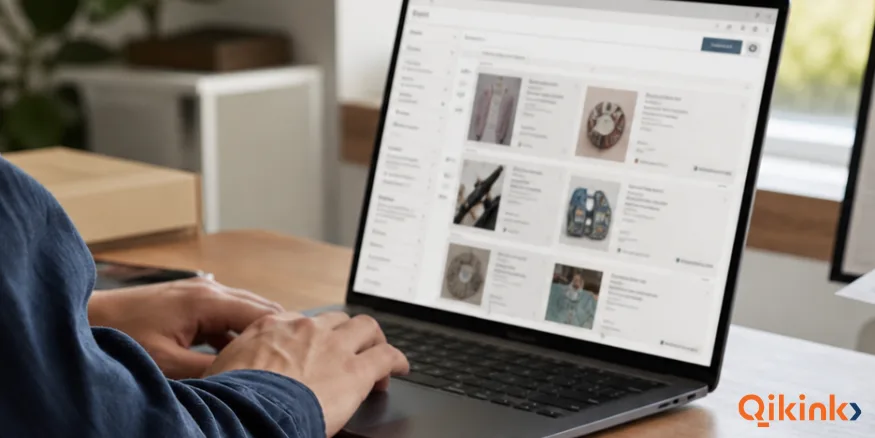
Reverse dropshipping can be used by different types of sellers, but it is generally more suitable for businesses that can identify a viable product gap between two markets. The model may be relevant to sellers such as:
Niche Ecommerce Sellers
Sellers focused on a specific niche may use reverse dropshipping to source products that are difficult to find through domestic suppliers. This can be useful when customers are looking for particular brands, designs, specialist products or products associated with a specific market.
Existing Dropshipping Sellers
Dropshipping sellers already familiar with the business model may use reverse dropshipping to explore different sourcing markets or product opportunities. Their experience with product research, supplier management, marketing and customer support can make it easier to test a cross-border product.
Small Ecommerce Businesses
Small online businesses can use the model to expand their product selection without committing to large inventory purchases. This allows them to test products from overseas markets before deciding whether a product justifies a larger inventory or sourcing arrangement.
Sellers With Access to Overseas Suppliers
Some sellers may already have relationships with suppliers, manufacturers or distributors in specific countries or regions. Reverse dropshipping can provide a way to use those sourcing connections to reach customers in another market, provided the products can be imported, fulfilled and sold at a workable cost.
Sellers Targeting Product Gaps
The model may also suit sellers who identify a gap between what customers want and what is readily available in their local market. The opportunity could involve limited availability, a particular brand or origin, a specialised product range or another characteristic that distinguishes the product from what is already available locally.
Ultimately, reverse dropshipping is less about the size or type of the seller and more about whether the seller can identify and execute a commercially viable sourcing and selling arrangement.
Thinking of Starting Dropshipping?
Here is the list of best Indian dropshipping suppliers & their features
Best Dropshipping Suppliers →
Frequently Asked Questions
1. What Is the Meaning of Reverse Dropshipping?
2. Is Reverse Dropshipping Legal in India?
3. Do I Need an IEC for Reverse Dropshipping in India?
4. Who Pays Customs Duty in Reverse Dropshipping?
5. Is Reverse Dropshipping Profitable?
6. What Is the Difference Between Reverse Dropshipping and Export Dropshipping?
Final Thoughts
Reverse dropshipping can be a practical model when it is built around a genuine cross-border product opportunity rather than simply sourcing products from overseas. The strongest opportunities involve products that offer customers in the target market something not readily available through existing local options, while supplier reliability, delivery times, import requirements and the complete cost of fulfilment remain manageable.
The model can reduce the need for upfront inventory, but it does not remove the operational responsibilities of running an ecommerce business. Sellers still need to verify suppliers, understand who is responsible for importing the goods, account for applicable taxes and charges, set realistic delivery expectations and manage customer issues after the sale.
Reverse dropshipping is worth considering when customer demand, sourcing costs and fulfilment requirements align. Starting with a small product range, testing actual orders and measuring the full cost and customer experience can help sellers determine whether an opportunity is worth scaling.
For Indian dropshipping sellers who prefer to avoid the additional requirements involved in customs clearance, import charges and cross-border shipping, domestic dropshipping can be a more straightforward starting point. Platforms like Qikink handle product fulfilment within India, helping sellers avoid the import-compliance and longer delivery considerations associated with overseas sourcing.
Read More
- How does Dropshipping Work for Your Online Store?
- Profitable Dropshipping Business Ideas to Try
- Dropshipping Niches (Profitable and Uncompetitive)
- B2B Dropshipping: How It Works & How to Start
- Meesho Dropshipping: Complete Guide for Indian Sellers
Share the Article


