
What Is SKU (Stock Keeping Unit)?
An SKU is a unique code used by businesses to identify and track products in their inventory. Each represents a specific product or product variant, such as a particular size, colour, or style.
The full form of SKU is "Stock Keeping Unit", which is used as an identification code that stores or warehouses use to manage and monitor their products.
Unlike universal barcodes, stock units are usually created by the company itself. Many businesses structure them using letters and numbers so they can quickly recognise product details like category, colour, or size.
Quick takeaways
- ✓Every product variant gets its own unique SKU to avoid fulfilment errors or mix-ups.
- ✓Created internally by the business and structured to reflect product details.
- ✓In eCommerce, a stock unit provides inventory tracking and sales reports.
- ✓For print on demand products in multiple variations, SKUs are a must.
- ✓A well-structured SKU system helps businesses scale without losing track of orders, stock levels, or product listings.
How an SKU is used?
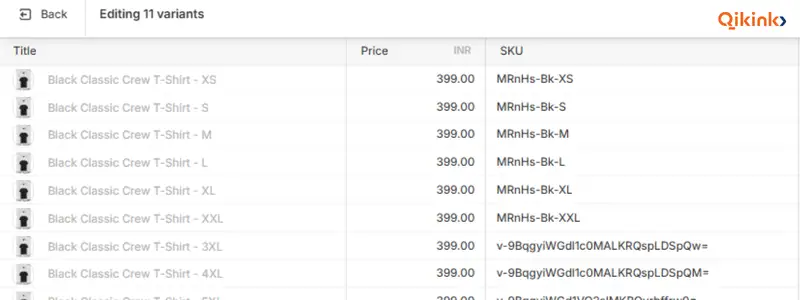
Retailers and eCommerce businesses assign these stock keeping units to keep their product catalogue organised. SKU is mainly an internal code for warehouses to identify the items in the store. Every product variant in the stock get their own unit number.
For example, a t-shirt available in three sizes and two colours would usually have a different SKU for each variation. This keeps a store's inventory in order, prevents fulfilment errors, and makes it easier to track stock levels and manage orders without confusion.
POD Business Tips & Tricks
Understand the top tips before starting a print on demand business.
What Is The Use Of SKU In ECommerce?
In eCommerce, a stock keeping unit helps online stores monitor an individual product variety. Even if two products look similar, they will have separate SKUs if their attributes differ. For instance:
- A Black hoodie with size S can have an SKU like: "HD-BLK-S"
- Same hoodie with a different size, XL, and if custom printed, it can be identified as: "HD-BLK-XL-DTF"
This setup powers inventory apps, auto-reorders, sales reports and has become vital for every print-on-demand brand too. It also helps store owners track which products are selling, which ones are running low in stock, and which variants need to be restocked.
Real Example
How a POD seller uses SKUs to manage 200+ variants
An online clothing store sells a hoodie in 3 colours and 4 sizes, making 12 total variants. Each variant is assigned its own stock unit number. When a customer orders a specific variant, the warehouse picks the right item using the SKU. As the store grows to hundreds of products, the SKU system keeps everything organised and ensures the correct product is always printed, packed, and shipped.
How SKU helps in Inventory Management?
A stock keeping unit plays a key role in inventory management because it helps businesses organise and track their products more efficiently. By assigning a unique number to each item, companies can monitor each and every sale and avoid confusion between similar items.
These units also simplify tasks such as updating inventory records, managing product listings, and processing customer orders. When every product variant has its own stock number or unit, businesses can quickly locate items in warehouses and ensure the right product is picked for shipping.
In the print-on-demand and dropshipping industry, SKUs are especially useful because the products often come with multiple variations like size, colour, and print placement. Each of these combinations may have its own unit number, which can streamline:
- Track stock: See the stock number and get low-stock alerts per variant.
- Handle variants: Best for t-shirts with sizes and colours, or mugs custom printed with personalised text.
Every seller will find difficulties in managing the stock while growing their business. When starting your own business, make sure every stock or inventory is managed perfectly and also ensure the item is printed, shipped and delivered to the customer correctly.
What is Inventory Management?
Real-time inventory management tracking is the primary thing needed for your online store.