

AI dropshipping is the use of artificial intelligence tools to automate or assist with tasks in a dropshipping business. AI dropshipping tools can help with product research, identifying trends, writing product descriptions, creating ads, answering customer questions, analysing sales data, managing inventory, and setting prices. These tools can reduce repetitive work, speed up content and data-related tasks, and help sellers manage their store more efficiently.
In a dropshipping business, you sell products without keeping inventory yourself. When a customer places an order, a dropshipping supplier or fulfilment partner processes and ships the product. AI can support different parts of this process, from researching products and creating content to analysing data and handling routine tasks.
AI does not run a dropshipping business by itself. You still choose the products, set prices, manage your store, market your products, and make the final business decisions. AI can make these tasks easier and faster, but it does not replace the work involved in running the business.
Key Takeaways
- Different AI dropshipping tools are designed for different tasks. Some focus on customer support, while others handle creative work, advertising, research, pricing, or store optimisation.
- The best AI dropshipping setup depends on your business model, the tasks you want to automate, your budget, and the amount of control you want over the work.
- AI dropshipping in India follows the same basic business model, but you also need to consider GST obligations, COD, shipping times, returns, RTO, and fulfilment costs.
- Product selection, pricing, marketing, fulfilment, and customer experience remain important factors in building a successful dropshipping business.
What Is AI Dropshipping?
AI changes how a dropshipping business is handled by using automation, data analysis, and content generation. Instead of manually completing every research, content, support, or analysis task, sellers can use AI tools to process information and handle repetitive work faster.
The core dropshipping process remains the same: you sell products without keeping inventory, while a supplier or fulfilment partner processes and ships orders to customers.
AI tools are particularly useful for tasks that involve processing information, generating variations, and identifying patterns.
| Area | Traditional Dropshipping | AI Dropshipping |
|---|---|---|
| Research | Direct review of products, suppliers, and market information. | Large-scale data analysis and pattern detection. |
| Content Creation | Content created manually or outsourced. | Multiple content variations created quickly. |
| Data Analysis | Reports require manual review and interpretation. | Patterns and unusual changes surfaced from large datasets. |
| Product Validation | Physical product quality and supplier reliability assessed directly. | Data signals used alongside product evaluation. |
| Customer Support | Direct handling of individual customer interactions. | Routine queries handled through automated responses. |
AI supports specific parts of the dropshipping process, but it does not replace the judgement needed to choose products, evaluate suppliers, manage customers, and run the business.
What is Dropshipping?
This guide explains how to start grow a successful dropshipping store in India
Learn and Launch →
How AI Is Used in Dropshipping?
The practical value of AI depends on the task being automated and the data available to the tool. Each use has a specific purpose, and the level of automation depends on the tool being used.
Finding Trending Products
AI tools can analyse search trends, product data, customer behaviour, and market signals to identify products that are gaining attention. This can make product research faster by helping narrow down potential products based on available data.
A product showing strong demand does not guarantee sales. Competition, supplier reliability, product quality, selling price, shipping costs, and profit margins still need to be evaluated before choosing a product.

Writing Product Descriptions
AI can generate product descriptions using product specifications, features, benefits, and information about the target customer. It can also create different versions of descriptions for product pages, marketplaces, and advertising campaigns.
The final content needs to match the actual product. Product specifications, pricing, delivery details, and other claims should be checked before publishing.

Creating Ads and Customer Support
AI can create ad copy, headlines, captions, and different creative variations for products and target audiences. These variations can make it easier to test different messages and identify which ones get better results.
AI can also handle routine customer questions about products, orders, delivery, and other common issues. Refunds, complaints, and situations that require judgement still need human attention.

Predicting Sales & Automating Inventory
AI can analyse sales history, demand patterns, seasonal changes, and other business data to identify possible changes in future demand. This can support sales forecasting and inventory planning.
When connected with store or supplier data, automation can also monitor stock levels and flag products that may need attention. These forecasts are estimates, so actual sales and supplier information remain important.

Smart Pricing Strategy
AI tools can evaluate product costs, demand, competitor prices, and sales performance to suggest pricing changes. This can help identify when a product’s price may need to change based on market conditions.
The final price should also account for fulfilment costs, shipping charges, payment fees, discounts, returns, and the profit margin required by the business.
Best AI Dropshipping Tools
Different AI dropshipping tools support different parts of a dropshipping business. The best dropshipping tools can help sellers automate different parts of their workflow, from customer support and product sourcing to advertising, pricing, and SEO.
Some are built specifically for dropshipping automation, while others apply AI to customer support, product visuals, marketing, advertising, pricing, or SEO.
The right choice depends on which part of the business you want to improve.
| Tool | Primary Use | Pricing | Best Fit |
|---|---|---|---|
| Tidio | Customer support | From $24.17/month when billed annually; additional Lyro AI usage is priced separately | Stores handling frequent customer queries |
| Flair | Product visuals | Free plan; paid plans from $8/month | Sellers needing product visuals without photoshoots |
| AutoDS | Dropshipping automation | From $26.90/month for Shopify Import | Sellers managing stores across multiple channels |
| Jasper | Marketing content | From $59/month per seat when billed annually | Stores producing content across multiple channels |
| Spocket | Product sourcing | From $39.99/month | Sellers looking for supplier sourcing and product importing |
| Pencil | Ad creative | Custom / contact sales | Brands running ongoing paid campaigns |
| Pricen (Advanced) | Pricing optimisation | Custom pricing | Established ecommerce businesses with advanced pricing needs |
| Frase | SEO and content optimisation | From $49/month | Stores using organic search to attract customers |
1. Tidio
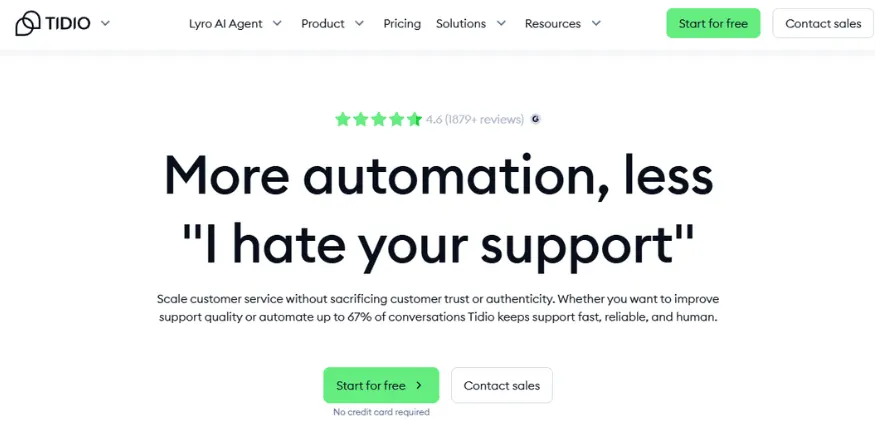
Tidio is a customer service platform with AI features for handling routine customer conversations. For a dropshipping store, its main use is reducing manual support work while keeping customer and order information accessible in one place.
- Customer support: Lyro AI can handle a large share of routine customer questions, including queries about order status, shipping policies, and product availability. Tidio supports conversations across live chat and channels such as Messenger, Instagram, WhatsApp, and email.
- Order management: For Shopify stores, Tidio lets sellers view order information and manage orders from the inbox, including shipping-address changes; cancellations and refunds are available on the Growth plan.
- Support workflows: Canned responses and a live typing preview can speed up replies, while support requests can be converted into tickets and assigned to team members.
- Sales automation: Tidio provides 40+ no-code templates for sales and lead-generation flows. Its chat tools can also support product recommendations, upselling, and video calls.
- Store integrations: Tidio integrates with platforms including Shopify, WooCommerce, and Wix.
Tidio’s pricing is divided into separate Customer Service, Lyro AI Agent, and Flows components, so the total cost depends on which features a store needs.
2. Flair
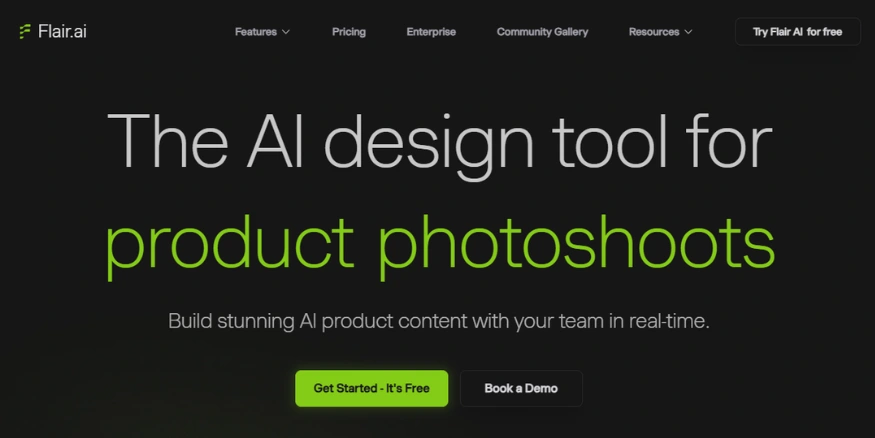
Flair is an AI design tool for creating product photos, videos, and marketing visuals. It is useful when a dropshipping seller needs product imagery without arranging a separate studio, model, or traditional photoshoot.
- Product photography: Flair generates product scenes and lets sellers place products into different backgrounds and settings.
- AI models: Clothing, jewellery, and other products can be placed on AI-generated models for product and marketing imagery.
- Scene creation: Its drag-and-drop canvas lets sellers combine products, props, backgrounds, and other visual elements.
- Video and advertising: Flair supports product videos, animations, and ad creatives for marketing campaigns.
- Image editing: Tools such as Magic Erase, Upscale, product or model swapping, and Virtual Try-On provide additional ways to adapt visuals.
- Custom AI models: Brands can create consistent AI-generated people for repeated visual campaigns.
Flair is useful for producing variations quickly, but generated visuals still need to represent the actual product accurately, particularly its colour, proportions, materials, and physical appearance.
3. AutoDS
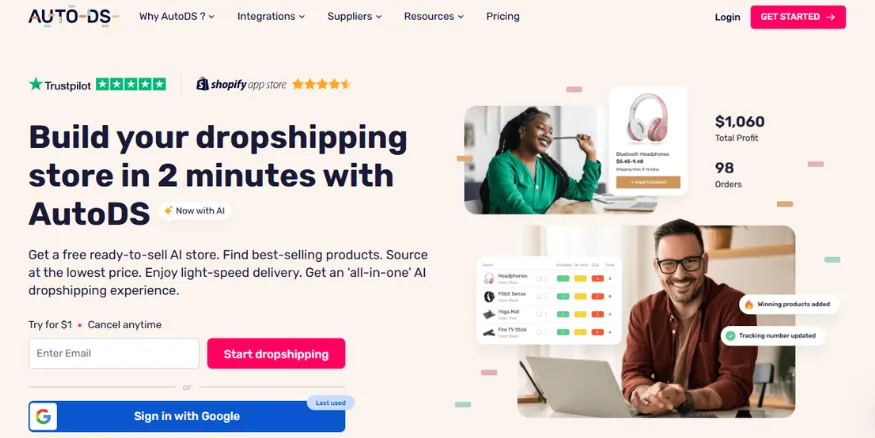
AutoDS is a broad dropshipping automation platform rather than a single-purpose AI tool. It covers product importing, price and stock monitoring, and order automation across supported stores and marketplaces.
- Product sourcing: AutoDS supports supplier marketplaces including AliExpress, Amazon, Walmart, and Costco.
- Selling channels: AutoDS supports platforms and marketplaces including Shopify, eBay, Wix, WooCommerce, and Facebook Marketplace, with availability varying by channel and plan.
- Price and stock monitoring: Paid plans can monitor supplier price and inventory changes to reduce manual updates.
- Order automation: Supported suppliers and channels can use automated ordering and fulfilment workflows.
- Product importing: Sellers can import products into supported stores and manage listings from the AutoDS platform.
AutoDS pricing varies by selling channel and plan. For Shopify, the Import plan currently costs $26.90 per month when billed monthly, while the Starter plan costs $39.90 per month; annual billing is lower. The Import plan focuses on product importing, while the Starter plan adds price and stock monitoring. Sellers should check the exact channel, plan, billing cycle, and usage limits before subscribing.
The platform is better suited to sellers who already have a store and want to reduce repetitive backend work.
4. Jasper
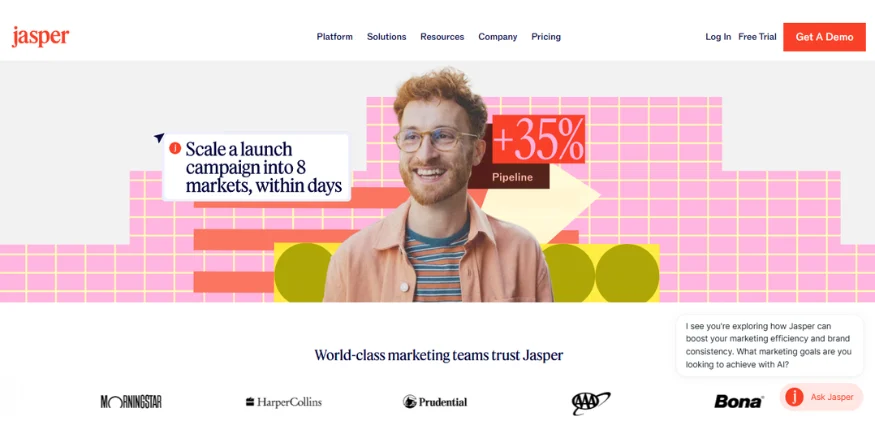
Jasper is an AI marketing platform that supports product descriptions, landing pages, social content, email campaigns, and other marketing work. For dropshipping, it is useful when the same products need consistent content across several channels.
- Product descriptions: Jasper’s Product Description Agent turns product specifications into benefit-focused descriptions and can produce copy for ecommerce and marketplace listings.
- Landing pages: Its content tools can help create landing-page copy for product and campaign pages.
- Brand voice: Brand Voice and related brand controls help keep content consistent across channels.
- Social and campaign content: Jasper supports social captions, scripts, emails, campaign briefs, and other marketing formats.
- Content reuse: Existing content can be adapted into other formats, while translation features support content for different markets.
- SEO content: Jasper also supports blog and website content for stores using organic search as part of their marketing strategy.
Jasper is most useful when content production is an ongoing part of a store’s marketing workflow rather than for generating a single product description.
5. Spocket
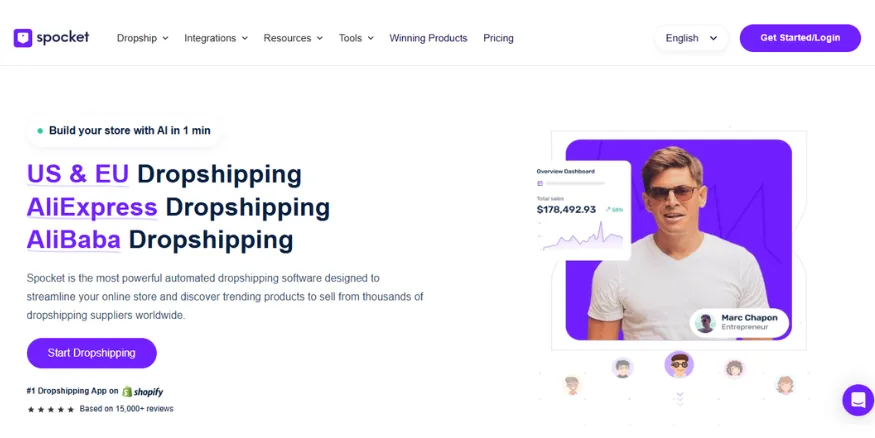
Spocket is a dropshipping sourcing platform that connects sellers with suppliers and supports product importing, inventory updates, order processing, and fulfilment. It is also directly relevant to sellers looking for dropshipping tools for eBay or Amazon.
- Product discovery: Spocket provides product discovery tools, including AI-powered features for identifying products and market opportunities.
- Supplier network: Spocket provides access to suppliers across multiple regions, with a strong presence in the US and Europe.
- Product catalogue: Spocket currently advertises a catalogue of more than 100 million products.
- Store automation: Supported workflows include product importing, inventory updates, order processing, and fulfilment.
- Platform integrations: Spocket supports platforms and marketplaces including Shopify, WooCommerce, Wix, BigCommerce, Squarespace, eBay, and Amazon.
Spocket currently offers a 7-day trial for its paid plans, with Starter listed at $39.99 per month on monthly billing. Its annual billing option is advertised as saving the equivalent of eight months. Spocket also maintains a free Basic plan with limited access.
Spocket can simplify product sourcing and store management, but sellers still need to evaluate supplier reliability, product costs, shipping times, marketplace requirements, and return policies.
6. Pencil
Pencil is an AI advertising platform designed to generate, edit, and evaluate ad creatives. It is more relevant to brands and marketing teams running ongoing paid campaigns than to someone looking for a basic product-image generator.
- Ad generation: Pencil creates image and video advertising variations along with supporting copy.
- Creative scoring: Its predictive scoring system helps marketers compare creatives before committing more advertising budget.
- Ad workflows: Teams can review, collaborate on, and prepare creatives for supported advertising platforms.
- Creative variations: Product assets can be adapted into different formats, languages, audiences, and campaign variations.
- Brand controls: Brand libraries and templates help maintain consistent visual and messaging guidelines.
Pencil was acquired by Brandtech Group in 2023. Following the acquisition, Brandtech launched Pencil Pro as an enterprise-level generative AI product aimed at global brands. Pencil’s pricing and available plans depend on the current product offering and usage requirements, so sellers should check its latest pricing before subscribing.
Pencil’s predictive scoring is an additional input for creative decisions, not a guarantee that an advertisement will achieve a particular result. The seller still needs to test campaigns, manage budgets, and evaluate actual performance.
7. Pricen, formerly Sniffie
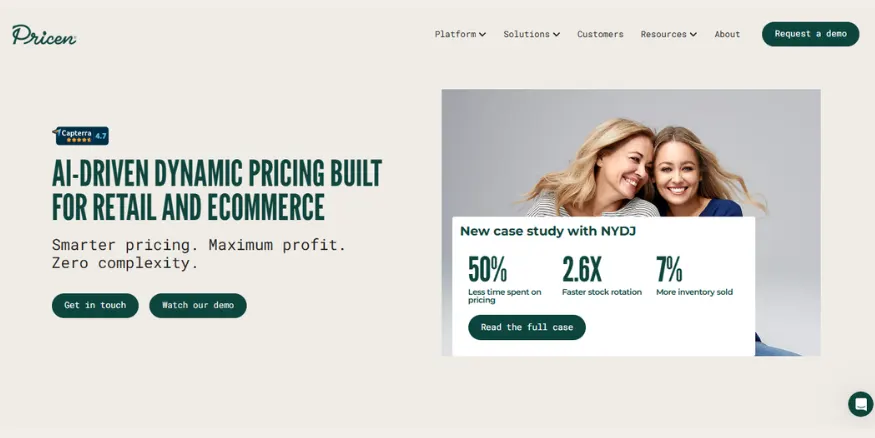
Pricen is an AI-powered pricing platform designed primarily for established ecommerce and retail businesses. It can support dynamic pricing, price optimisation, promotions, markdowns, forecasting, and pricing workflows across larger product catalogues and multiple sales channels.
- Dynamic pricing: Pricing recommendations can consider demand, competition, and product costs.
- Promotions: Pricen supports pricing and promotion decisions while taking profitability into account.
- Product assortment: The platform provides sales data and seasonal insights that can help identify which products to keep, promote, or discontinue.
- Profit optimisation: Pricing decisions can balance price, sales volume, and margins rather than focusing only on revenue.
- Automation: Price changes, markdowns, and promotional workflows can be automated.
- Multiple channels: Pricen can integrate with ecommerce platforms and other retail systems, including Shopify, and supports pricing workflows across online and offline channels.
For a new dropshipping store with limited sales and pricing data, Pricen is likely to be unnecessary. It becomes more relevant as a store grows and needs more advanced, data-driven pricing automation. Pricen uses customised pricing rather than a simple fixed monthly subscription, so businesses need to request pricing based on their requirements.
Sellers should still set pricing safeguards and account for product costs, fulfilment, shipping, payment fees, discounts, returns, and target margins before implementing automated pricing changes.
8. Frase
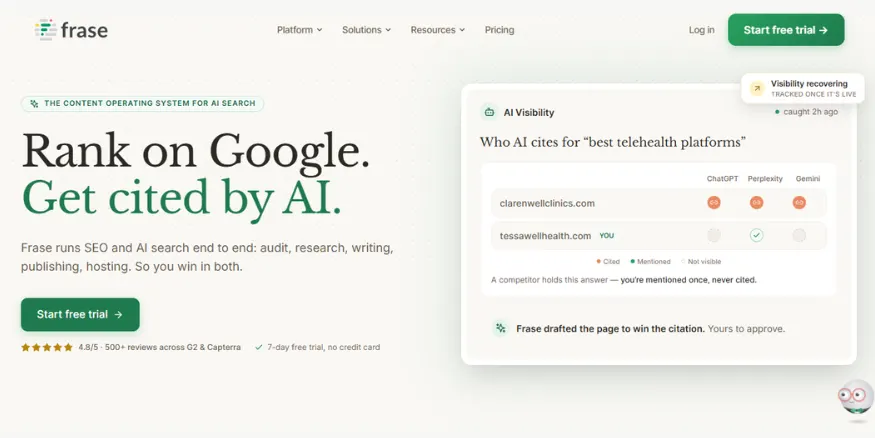
Frase is an SEO, GEO and AI-search content optimisation platform that supports research, content creation, content audits, and search visibility. For a dropshipping store, it can help with product content, category pages, buying guides, blog posts, and other pages intended to attract organic traffic.
- SEO research: Frase analyses search results to identify keywords, headings, questions, and topics covered by competing pages.
- Content briefs: It creates structured briefs based on search and competitor data.
- Content creation: Product descriptions, articles, landing pages, and FAQs can be drafted within the platform.
- Content optimisation: Existing pages can be reviewed for missing topics and optimisation opportunities.
- Performance monitoring: Frase’s Content Guard can monitor pages for ranking decay and help identify content that may need updating. It can also suggest or draft fixes for affected pages.
- Team workflows: Teams can assign content tasks, provide feedback, and organise work using folders and templates.
Frase’s Starter plan costs $49 per month when billed monthly or $39 per month when billed annually. It also offers a 7-day free trial without requiring a credit card, with usage limits on the entry plan.
Frase can improve the research and optimisation process, but it does not replace product knowledge or editorial judgement. Store content still needs to accurately describe the products and answer the questions customers actually have.
How an Online Store Succeed?
Discover the best dropshipping websites and learn how they are built
Dropshipping Website Examples →
AI Dropshipping in India
AI dropshipping in India follows the same basic model as dropshipping in other markets. You sell products through an online store without keeping inventory yourself, while a supplier or fulfilment partner processes and ships customer orders. What changes is the operating environment around that model, including GST, COD, shipping, returns, RTO, and fulfilment costs.
The broader dropshipping market in India is also projected to expand significantly. Grand View Research estimates that the Indian dropshipping market generated around ₹3.28 lakh crore (US$34.33 billion) in revenue in 2025 and could reach approximately ₹18.30 lakh crore (US$191.31 billion) by 2033, representing a 23.4% CAGR from 2026 to 2033.
GST and Tax Considerations
GST requirements depend on how and where you sell. The rules can differ based on your selling channel, the type of supply, your location, and whether you sell through an e-commerce operator.
For example, GST registration rules can apply differently to businesses selling through certain e-commerce operators, including cases involving tax collection at source. Because of these conditions, sellers should not assume that staying below a particular turnover automatically means GST registration is unnecessary.
Before starting, check the GST requirements that apply to your specific business model and selling channels. Tax treatment can also change, so current rules should be verified rather than relying on a fixed turnover figure.
COD, Shipping and RTO
Cash on Delivery (COD) is another factor to consider when selling in India. It gives customers an alternative to online payment, but an order is not guaranteed to become a completed sale until it is successfully delivered.
This makes RTO, or Return to Origin, an important operating cost. When a shipment cannot be delivered and is returned, the business may have to absorb shipping and return costs without receiving revenue from the order.
Shipping conditions also affect your margins and customer experience. Delivery coverage, shipping charges, expected delivery times, and fulfilment reliability should therefore be considered before adding a product to your store.
Returns and Fulfilment Costs
The selling price of a product does not represent your actual profit. A dropshipping order may also involve product costs, fulfilment charges, shipping fees, payment costs, discounts, returns, and RTO-related expenses.
This is particularly important when testing products. A product that appears profitable based on its selling price and supplier cost may leave a much smaller margin after the other costs are included.
AI tools can help analyse sales data, compare prices, identify patterns, and reduce repetitive work. They do not remove the need to calculate these costs or evaluate whether a product makes business sense.
AI Tools Relevant to Indian Ecommerce
Some AI tools available to Indian sellers can support individual parts of a dropshipping process. They are not necessarily dedicated dropshipping platforms, but they can be useful for customer support, product imagery, content, and ecommerce operations.
1. Jio Haptik
Jio Haptik focuses on conversational AI and customer engagement across channels such as WhatsApp. Its ecommerce use cases include product discovery, customer support, order-related queries, and multilingual conversations. Haptik, backed by Reliance Jio, also offers a WhatsApp AI agent plan for small businesses starting at around ₹10,000, alongside larger enterprise deployments.
2. Spyne
Spyne offers AI-powered product photo editing for marketplaces including Amazon, Flipkart, and Myntra. Its broader current focus has shifted toward automotive dealership retail, so sellers evaluating it for general ecommerce photography should confirm current plans and support directly on its site.
3. Scalenut
Scalenut focuses on AI-assisted SEO and content marketing. Its ecommerce tools cover content briefs, keyword research, content creation, and optimisation, making it relevant for stores that want to attract customers through organic search.
What to Consider Before Getting Started?
The main advantage of using AI in an Indian dropshipping business is not that it changes the business model. It is that it can reduce repetitive work while giving you more data and tools to manage the store.
Before choosing a product or launching a store, consider the complete cost of fulfilling an order, including product cost, shipping, payment fees, returns, RTO, discounts, and your required margin. You should also check the applicable GST requirements and make sure your fulfilment partner can reliably serve your target locations.
Why Qikink for Your Dropshipping Fulfilment?
AI tools cannot handle the physical side of an order. Sellers always need a fulfilment partner to produce, pack, and ship products. For sellers targeting customers in India, Qikink handles this side of the dropshipping workflow:
- Products are made and shipped only after an order is placed, so there is no need to purchase stock upfront or commit to a bulk order to get started.
- Qikink supports cash on delivery for orders across India, relevant given how many Indian buyers still prefer paying on delivery over paying online.
- Sellers are not charged when a shipment is returned undelivered, which matters given how much RTO can eat into margins, as covered above.
- Orders are generally dispatched within 2–3 business days, though final delivery timelines depend on the destination and courier.
- Sellers can add branding options such as neck labels, hang tags, and thank-you cards to create a more branded customer experience.
AI can make parts of a dropshipping process work faster, but it does not replace product selection or fulfilment decisions. The fulfilment setup behind a store still affects delivery outcomes, customer experience, and profitability.
Frequently Asked Questions
1. Can AI Run a Dropshipping Business on Its Own?
2. Which AI Tool Is Best for Dropshipping?
3. How Do I Start an AI Dropshipping Business in India?
4. Are There Free AI Dropshipping Tools?
5. Which Dropshipping Tools Work with eBay or Amazon?
6. Is AI Dropshipping Profitable?
Final Thoughts
AI dropshipping tools are useful for speeding up product research, content, customer support, and pricing. They reduce the amount of repetitive work involved in running a store, but they do not remove the need for a person to make decisions.
Sellers who get the most value from these tools are the ones who still choose products carefully, evaluate suppliers, and always check AI-generated content against the actual product before publishing it. The tools can speed up the work, but the decisions behind running a profitable store still need to be made by the seller.
Fulfilment matters as much as the tools you choose. For sellers targeting India, Qikink handles that side of the business, from production to packing and shipping, so the operational load stays manageable as your store grows.
Ready to Start & Scale Your Dropshipping Business in India?
Sign Up with Qikink Now! →Read More
- Best Spy Tools For Dropshipping To Analyse Website, SEO & More
- Top Plugins that Help with Import, Automation, & Conversions
- What Is Digital Dropshipping & How Does It Work: Explore
- Automated Dropshipping: Guide on Software, Tools & Platforms
- How To Start Your Dropshipping Business In India: Complete Guide
Summarise the Article


Share the Article

Swati
Content Writer at QikinkSwati is a content writer and SEO intern at Qikink who creates content that’s both search-friendly and engaging. She enjoys exploring new ideas and spending time in the mountains.
A complete guide to reverse dropshipping: how it works, which products fit, the legal and GST…

B2B dropshipping lets businesses supply other businesses without holding inventory or managing fulfilment in-house. Here's how…
Want to start a Meesho dropshipping business without inventory? This guide explains how Meesho dropshipping works,…

Ready to sell your designs?
Launch your own print-on-demand brand with Qikink — no inventory, no upfront cost. We print, pack & ship under your brand.
Sign up free →