
The choice between print on demand and dropshipping depends on the type of ecommerce business a seller wants to build. Both business models let you sell products without investing in inventory upfront, but they differ in how products are created, sourced, and fulfilled.
Print on Demand (POD) is ideal for selling custom-designed products under your own brand, while traditional dropshipping focuses on selling ready-made products sourced from suppliers. In India, fulfilment platforms like Qikink have made both models more accessible by handling production, sourcing, packing, and shipping, so sellers can spend more time growing their businesses.
The right choice depends on what you want to achieve with your store. If you want to build a recognisable brand with original designs, print on demand is often the stronger option. If you want to test a wider range of products and respond quickly to market trends, dropshipping may be a better fit.
Comparing factors such as branding, product range, startup costs, profitability, scalability, competition, fulfilment, and customer experience makes it easier to choose the business model that best fits your ecommerce goals in 2026 with Qikink’s free Business Model Finder tool.
Key Takeaways:
- Print on demand and dropshipping both eliminate inventory management, but they differ in product sourcing, customisation, branding, and fulfilment.
- Print on demand supports sellers building a branded business with custom products, while dropshipping offers a wider product range and faster product testing.
- Startup costs are low for both models, but profit margins, competition, and long-term growth potential vary depending on your business strategy.
- Product quality, supplier reliability, fulfilment speed, and customer experience influence long-term success regardless of the business model.
- The right choice depends on your goals, from building a unique brand to testing trending products or creating a scalable ecommerce business.
The Business Model that Suits You
Answer these 5 questions based on how you would actually approach your business. There are no right or wrong answers.
What is Print on Demand?
Print on demand is a fulfilment model where products are manufactured only after a customer places an order. Instead of buying inventory in advance, a seller uploads designs to a print on demand platform, which prints, packs, and ships the product directly to the customer.
Common print on demand products include
and many other products that can be customised with original designs. This workflow gives sellers the flexibility to test products, update designs, and expand their product catalogue without managing physical inventory or worrying about unsold stock.
Unlike dropshipping, print on demand allows sellers to create unique products with their own designs instead of selling ready-made items available from multiple suppliers. As a result, it suits businesses focused on brand identity and customer loyalty.
In India, Qikink manages printing, fulfilment, shipping, and custom branding services, making it easier for sellers to launch and grow a custom product business without investing in inventory.
How Does Print on Demand Work?
The print on demand process begins only after a customer places an order. Once your store is connected to a print on demand partner, each order can be processed automatically from production to delivery.
- Create or upload your designs: Develop artwork that matches your niche and appeals to your target audience.
- Publish products: Upload your designs to the print on demand platform, select products, set prices, and publish them on your store or marketplace.
- Receive customer orders: When a customer places an order, the order details are automatically sent to your print on demand partner.
- Print, pack, and ship: The product is printed, quality-checked, packed, and shipped directly to the customer using your available branding options.
- Grow your business: The fulfilment partner handles manufacturing and shipping, while you focus on marketing, customer support, and growing your brand.
This workflow eliminates the need to purchase stock in advance while giving sellers the flexibility to introduce new designs or discontinue products without worrying about unsold inventory.
Tip
Select print on demand model if building a recognisable brand with original designs matters more than offering a large product catalogue. Your fulfilment partner handles production and shipping while you focus on growing the business.
What is Dropshipping?
Dropshipping is an ecommerce business model where a seller lists products for sale without keeping them in stock. When a customer places an order, the seller purchases the product from a supplier, who packs and ships it directly to the customer.
Since sellers purchase products only when they receive orders, this model reduces the risk of holding unsold stock. It also provides access to a wide range of products across categories such as home décor, pet supplies, and more, making it easier to test different niches and respond to market trends.
Unlike print on demand, where products are manufactured with custom designs after an order is placed, dropshipping focuses on selling ready-made products supplied by manufacturers or wholesalers.
This approach works well for sellers who want to start selling quickly, test multiple products, and expand their product catalogue based on customer demand, making it a popular approach for businesses exploring dropshipping in India.
Sellers using Qikink's dropshipping service can source products, automate fulfilment, and ship orders while focusing on marketing, store management, and customer support.
According to Grand View Research, the global dropshipping market is projected to grow at a CAGR of over 20% during the forecast period (2026 to 2033), reflecting continued adoption of inventory-free ecommerce business models.
How Does Dropshipping Work?
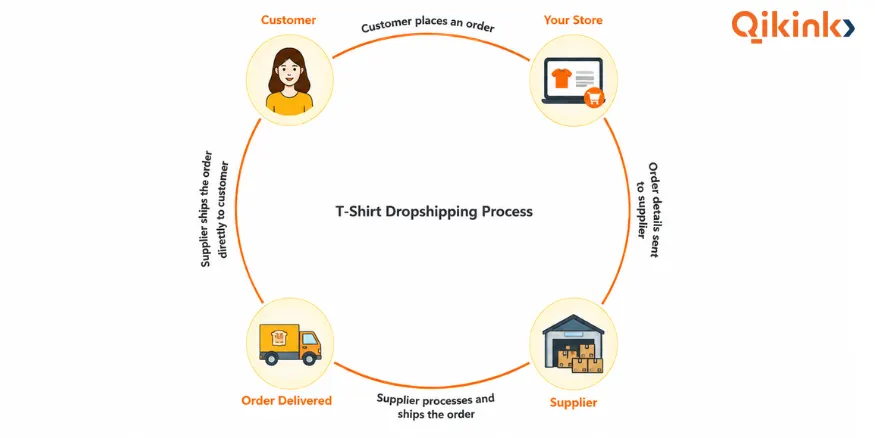
The dropshipping process begins when a customer places an order in your store. Once your store is connected to a dropshipping supplier, order processing becomes much easier to manage.
- Choose products: Select products from your supplier's catalogue that match your niche and add them to your online store.
- Publish your listings: Write product titles, descriptions, set your selling prices, and publish the listings on your ecommerce store or marketplace.
- Receive customer orders: When a customer places an order, the order details are automatically forwarded to your supplier.
- Fulfilment and shipping: The supplier picks, packs, and ships the product directly to your customer on your behalf.
- Grow your business: While the supplier handles inventory and fulfilment, you focus on marketing, customer support, and expanding your product catalogue.
This dropshipping workflow allows sellers to test new products quickly without purchasing inventory, although product quality, shipping speed, and customer experience largely depend on the suppliers they choose.
Tip
Consider dropshipping if you want to launch quickly, test different product categories, and expand your catalogue without holding inventory. Success depends largely on choosing reliable suppliers and maintaining a good customer experience.
Dropshipping
How To Start a Dropshipping Business In India (Complete Guide)
Begin Your Dropshipping →
Print on Demand vs Dropshipping: Detailed Comparison
Although print on demand and dropshipping both let you sell products without holding inventory, they operate very differently once an order is placed. The way products are sourced, customised, fulfilled, and marketed affects everything from branding and profit margins to customer experience and long-term growth.
The table below provides a quick overview of the major differences before each comparison is explained in detail.
The comparison above highlights the key differences, but whether print on demand is better than dropshipping or vice versa depends on your budget, business goals, target audience, and long-term growth strategy. The sections below explain where each model performs better and the trade-offs to consider before deciding.
1. Branding and Customisation
Branding and customisation are where print on demand and dropshipping differ the most. Though both business models let you sell without holding inventory, they give sellers very different levels of control over the products customers receive.
If your goal is to build a memorable business rather than simply sell products online, this distinction becomes important.
Print on Demand:
Print on demand gives sellers greater control over the appearance of the products they sell. Instead of choosing ready-made items, they create original designs and apply them to products such as T-shirts, hoodies, mugs, tote bags, and phone cases. This helps every product reflect the seller's brand identity rather than a supplier's catalogue.
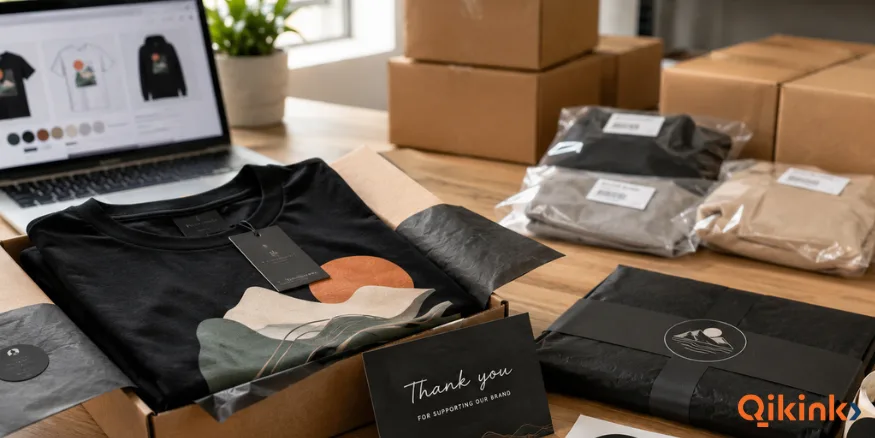
Many print on demand providers also offer branding features such as custom neck labels, branded packing slips, packaging inserts, thank you cards and personalised packaging. These additions create a more consistent brand experience from the moment a customer places an order to the day it is delivered.
Because the products are built around the seller's own designs, the product catalogue becomes unique to their brand, making it harder for competitors to offer identical products. This helps create stronger brand recognition, allowing customers to associate the products with the seller's store rather than viewing them as generic items.
Dropshipping:
Dropshipping is designed around selling products that already exist in a supplier's catalogue. Sellers can choose from thousands of products across different categories, but the products themselves are usually identical to those offered by other stores using the same suppliers.
Some suppliers support private labelling or basic branding services, but these options vary between suppliers and are not available for every product. As a result, sellers often have less control over packaging, product presentation, and the overall brand experience delivered to customers.
For businesses that prioritise speed and product variety over product uniqueness, this approach offers flexibility. However, creating a distinctive brand can be more challenging because the same products may be sold by many competing stores.
Note:
Choose print on demand if creating a distinctive brand with unique products is your priority. Choose dropshipping if expanding into multiple product categories matters more than product customisation.
2. Product Range
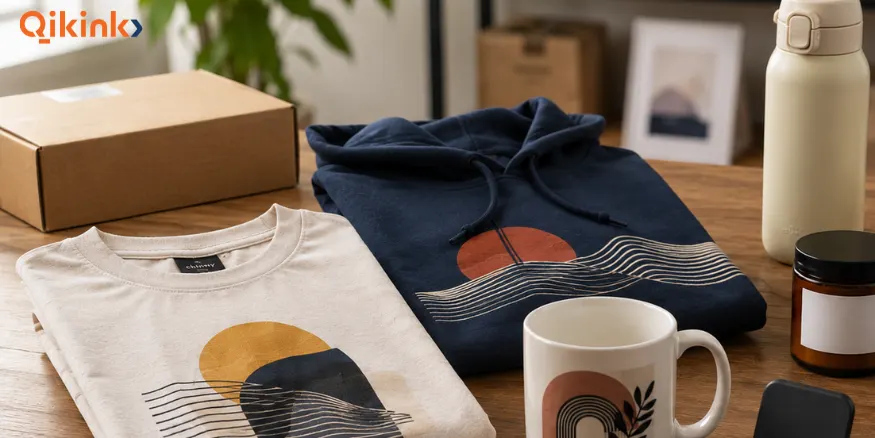
The variety of products that a seller can offer is another major difference between print on demand and dropshipping. While both business models let you expand your catalogue without purchasing stock in advance, the types of products available depend on how each fulfilment model works.
Print on Demand:
Print on demand centres on products that can be personalised with original designs. These typically include apparel, drinkware, bags, phone accessories, wall art, stationery, and other printable items. Although the range of products offered by print on demand providers continues to expand, sellers are generally limited to products that can be customised through printing.
Rather than offering products across many unrelated categories, print on demand encourages sellers to build focused collections around a specific niche, audience, or design style.
Launching new products is also straightforward because the same design can often be applied across multiple products, allowing sellers to expand collections with minimal additional effort.
Dropshipping:
Dropshipping provides access to a much wider selection of products because sellers source already manufactured items from wholesalers. A single store can offer products across multiple categories, including electronics, kitchenware, beauty products, fitness equipment, and more.
This wider selection allows sellers to explore new markets, respond to seasonal demand, and introduce trending products without creating original designs. As trends change, sellers can quickly add, replace, or remove listings by working with different suppliers.
Note:
Choose dropshipping if offering a broad product catalogue or testing multiple niches is your priority. Choose print on demand for building carefully curated product collections around custom designs.
3. Profit Margins
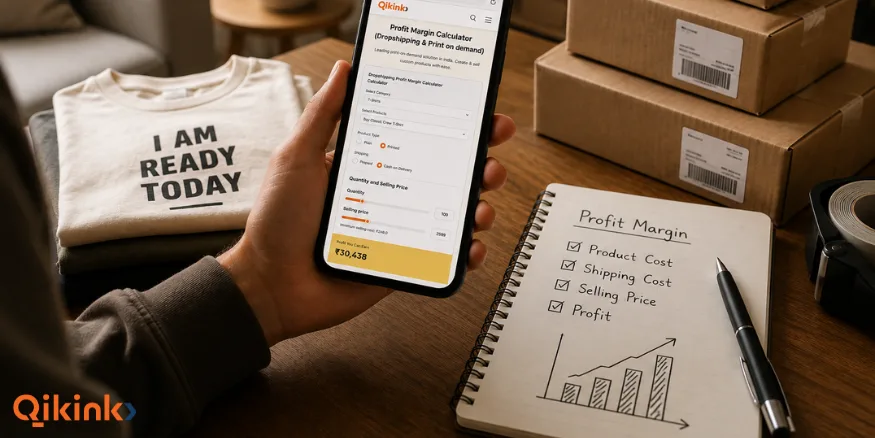
Profit margins are influenced by more than the cost of a product. Pricing flexibility, competition, and the value customers place on what you sell all affect how much profit you can earn. While both business models can be profitable, they generate profits in different ways.
Print on Demand:
Print on demand allows sellers to charge premium prices because customers are buying original designs rather than generic products. A well-defined niche, strong branding, and original designs often justify higher selling prices, helping sellers maintain healthier profit margins on each order.
Although production costs are generally higher than those of mass-produced goods, sellers can often charge higher prices because they compete on creativity rather than price alone. As your brand grows, repeat purchases and customer loyalty can improve long-term profitability.
Dropshipping:
Dropshipping products are often available from multiple suppliers, meaning many sellers can offer the same items. This creates stronger price competition, making it more difficult to maintain high profit margins on individual products.
Many successful dropshipping businesses offset lower margins by selling higher volumes, identifying trending products early, and continually refreshing their catalogue. While profit margins on individual products may be lower, consistent sales across a wider catalogue can still produce strong overall profits.
Note:
Choose print on demand if your goal is to earn higher margins from unique, branded products. Choose dropshipping if you prefer generating profits through larger sales volumes across a broader catalogue.
4. Startup Costs
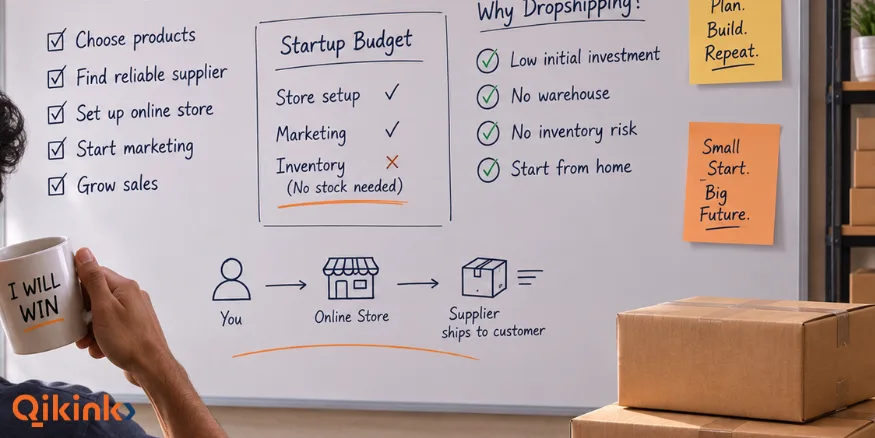
Though both business models eliminate the need to buy inventory upfront, their startup costs differ based on where your initial investment goes. The biggest difference is not how much the sellers spend, but whether they invest in building original products or sourcing existing ones.
Print on Demand:
Print on demand businesses usually require investment in creating original designs and building a brand. Sellers may create their own artwork, purchase designs, or hire freelance designers before publishing products. Along with setting up an online store, design creation is often one of the biggest upfront expenses.
Beyond product creation, many sellers also invest in branding elements such as logos, custom packaging, and marketing. While these expenses are optional, they can help build a stronger brand over time..
Dropshipping:
Dropshipping typically has fewer upfront requirements because sellers list products that already exist in a supplier's catalogue. Without the need to create original designs, many businesses can launch more quickly by listing products directly from supplier catalogues.
Initial expenses usually include setting up an ecommerce store, selecting reliable suppliers, and marketing products to attract customers. Since suppliers already stock the products, sellers can test different niches with relatively little upfront investment.
Note:
Choose dropshipping if your priority is launching with minimal upfront investment and testing products quickly. Choose print on demand if you are comfortable investing in original designs to build a long-term brand.
5. Scalability
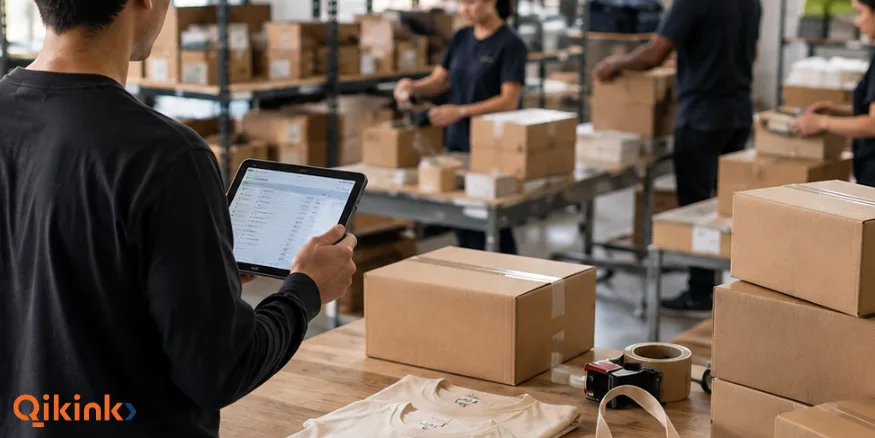
As an ecommerce business grows, the ability to expand its product catalogue, manage increasing order volumes, and enter new markets becomes increasingly important. Both print on demand and dropshipping can scale without requiring sellers to hold inventory, but they achieve growth in different ways.
Print on Demand:
Print on demand scales by allowing sellers to launch new designs and collections without managing additional inventory. A single design can often be applied across multiple products, making it easier to expand their product offerings without increasing operational complexity.
As order volumes grow, the fulfilment partner continues to handle printing, packing, and shipping, allowing sellers to focus on marketing, customer acquisition, and brand development. Businesses with a strong niche or a loyal customer base can also introduce seasonal collections and limited-edition products without the risk of excess inventory.
Dropshipping:
Dropshipping scales by expanding the range of products and suppliers available through the business. Sellers can quickly add new categories, test trending products, and enter different niches without investing in inventory or manufacturing.
As the product catalogue grows, managing multiple suppliers, product listings, inventory availability, and customer support can become more complex. Businesses often rely on automation tools and strong supplier relationships to maintain a consistent customer experience as they scale.
Note:
Choose print on demand if your goal is to build a scalable brand around original products and growing product collections. Choose dropshipping if you want to scale by expanding into multiple product categories and responding quickly to changing market demand.
6. Competition
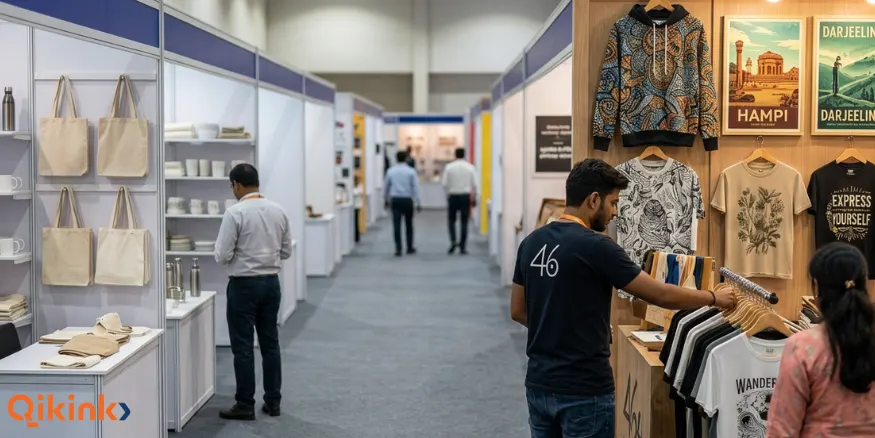
Competition affects how easily a business can attract customers, maintain healthy profit margins, and build long-term success. While both print on demand and dropshipping operate in competitive ecommerce markets, the nature of that competition differs because of how products are created and sold.
Print on Demand:
Print on demand allows sellers to compete through originality rather than price alone. Since products are customised with original designs, businesses can build a unique product catalogue that is difficult for competitors to replicate exactly.
A strong brand, well-defined niche, and distinctive designs can help reduce direct price competition while encouraging customer loyalty and repeat purchases.
Though successful niches can still become competitive, sellers have greater opportunities to differentiate themselves through creativity, branding, product quality, and customer experience instead of relying solely on lower prices.
Dropshipping:
Dropshipping often involves selling products that are available from multiple suppliers, making it common for many stores to sell identical or very similar products. This increases competition, particularly for trending products where many sellers enter the market simultaneously.
To remain competitive, sellers often focus on pricing, product selection, marketing, customer service, and finding reliable suppliers before competitors do. Businesses that consistently identify new opportunities and adapt to changing market demand are generally better positioned for long-term success.
Note:
Choose dropshipping if you want to compete through product selection, marketing, and responding quickly to market trends. Choose print on demand if you want to compete through unique products, branding, and customer loyalty.
Advantages and Disadvantages of Print on Demand
Advantages of Print on Demand:
- Create and sell custom products without purchasing inventory in advance.
- Build a recognisable brand through original designs and custom branding options.
- Charge premium prices for products that are unique to your store.
- Launch new collections by applying existing designs to different printable products.
- Reduce inventory risk because products are manufactured only after a customer places an order.
Cons of Print on Demand
- Product options are limited to items that support custom printing.
- Fulfilment takes longer because production begins after each order is received.
- Product quality depends on the consistency and standards of your print on demand partner.
- Creating original designs requires time, creative skills, or additional design costs.
Advantages and Disadvantages of Dropshipping
Advantages of Dropshipping:
- Sell products across multiple categories without purchasing inventory upfront.
- Test new niches and trending products with minimal upfront investment.
- Expand your store quickly by adding products from different dropshipping suppliers.
- Let your dropshipping supplier manage inventory, packing, and shipping.
- Respond quickly to changing market demand by adding or replacing products.
Disadvantages of Dropshipping:
- Many sellers offer the same products, making price competition more intense.
- Branding opportunities are limited because suppliers usually control the product and packaging.
- Product quality and shipping times vary between dropshipping suppliers.
- Concerns about dropshipping scam risks are usually linked to unreliable suppliers, not the business model itself.
Can You Combine Print on Demand and Dropshipping?
Print on demand and dropshipping do not always have to be treated as separate business models. Both let sellers start without buying stock in advance and rely on fulfilment partners to handle production or sourcing, which makes it possible to run them together in the same store while keeping one clear brand direction.
For example, a fitness brand can sell custom workout vests and T-shirts through print on demand while adding shaker bottles, gym bags, or other fitness accessories through dropshipping. The custom products help build the brand identity, while additional products give customers more options within the same niche.
Tip
Combine print on demand and dropshipping only when the added products support the same audience and brand direction. A larger catalogue does not automatically create a stronger store; every product should add value to the customer experience.
Dropshipping or Print on Demand: Which Model Should You Choose?
Choosing between print on demand and dropshipping depends on your ecommerce goals, target audience, and long-term growth strategy. There is no single model that works best for every seller. Your goals, skills, and growth strategy should determine which approach fits you better.
The right choice depends on whether you want to build a brand around unique products or focus on testing, discovering, and expanding product opportunities.
Print on demand tends to fit sellers who want to:
- Build a recognisable brand through original products and designs.
- Compete through creativity and uniqueness instead of price.
- Create focused collections around a specific niche or community.
Dropshipping tends to fit sellers who want to:
- Launch quickly and test different product ideas.
- Explore multiple categories before settling on a product direction.
- Scale a catalogue by adding trending or in-demand products.
Understanding your audience, partnering with reliable dropshipping suppliers or print on demand fulfilment partners, and building a strong brand strategy will have a greater impact on long-term success. Once you know the type of store you want to build, selecting the right approach becomes much easier.

Frequently Asked Questions
1. Is Print on Demand the Same as Dropshipping?
2. Is Print on Demand Profitable?
3. Is Print on Demand Saturated in 2026?
4. Is Dropshipping Sustainable as a Long-term Business?
5. Dropshipping vs Reselling: What are the Differences?
6. Can I Start Dropshipping with Less Money or No Inventory?
Final Thoughts
Print on demand and dropshipping both remove the biggest barrier to starting an ecommerce business: the need to invest in inventory before making sales. Beyond that starting point, the two models serve different business goals.
Sellers who want to build something distinctive should consider starting with print on demand, while sellers who want to test demand and discover winning products may find dropshipping a better starting point.
Neither choice is permanent, and businesses can expand into both models as they grow, but choosing the right starting direction helps create a clearer strategy. Regardless of the model you choose, long-term success depends on product quality, reliable fulfilment, effective marketing, and building customer trust.
Selecting the right fulfilment partner and creating a clear growth strategy can help you build a sustainable ecommerce business in 2026 and beyond. Platforms like Qikink support both print on demand and dropshipping by managing production, sourcing, packing, and shipping, allowing sellers to focus on growing their brands.
Sign Up & Start Today! →Read More
- Business Start-Up Ideas For Every Student
- B2B Dropshipping In India: Complete Guide
- Can Dropshipping Make You Rich? Success Tips
- Profitable Dropshipping Business Ideas to Try
- Best Dropshipping Products To Sell Online
Share the Article


