
When it comes to creating custom clothing like T-shirts, sweatshirts, hoodies, tote bags, and other garments, screen printing and embroidery are the most popular techniques.
If you’re running a Print On Demand business and wondering which printing technique is better for you, it’s essential to understand how each method works, your design requirements, investments, and more.
In this blog guide, we’ll discuss the differences between screen printing and embroidery, their costs, minimum requirements, durability, and printing quality to help you start your online brand with ease.
What is Screen Printing and Embroidery?
Screen printing and embroidery are two popular methods used for customizing apparel and other textile items.
What is Screen Printing?
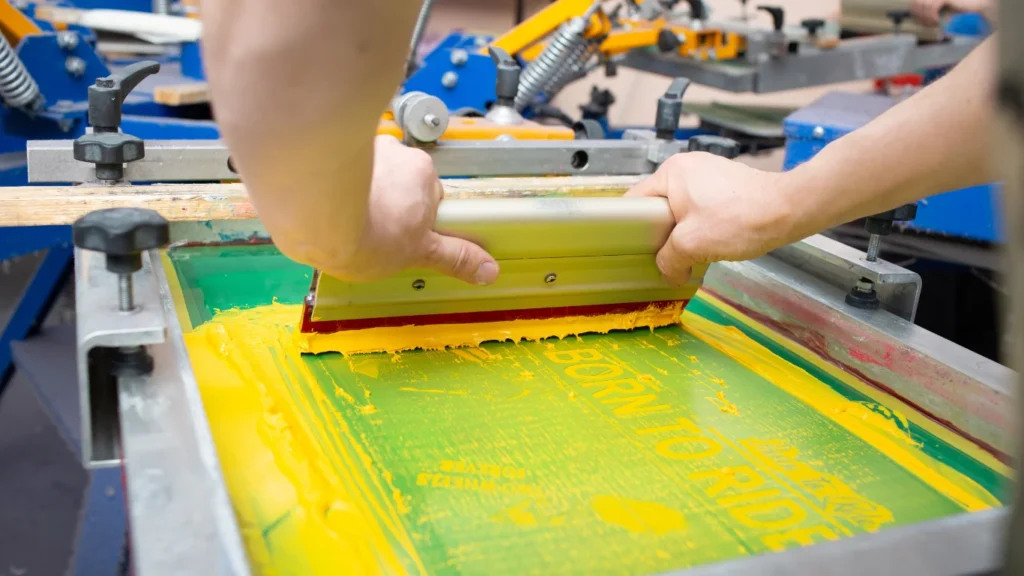
Screen printing involves creating a stencil called a screen. The screen is used to apply a layer of ink to the printing surface. Each screen is placed on the garment with dyes on top and squeezed onto the fabric.
This process is repeated for all the colours in the design. Screen printing uses different stencils for different colours. All of these components come together to create the final design.
How does Screen Printing Work?
Step 1: Design Creation
The first step in the screen printing process is creating custom designs. Next, print the image on a transparent sheet.
Step 2: Screen Preparation
A layer of emulsion can be applied using a squeegee screen. This ensures that the entire surface is evenly coated. After applying the emulsion, the screen must dry.
Next, transparent design film is positioned on top of the screen to create a stencil for a screen print.
Then, expose the screen to bright light to transfer the design onto the emulsion-coated screen.
Next, rinse with water to reveal the screen design.
Step 3: Setup Screen
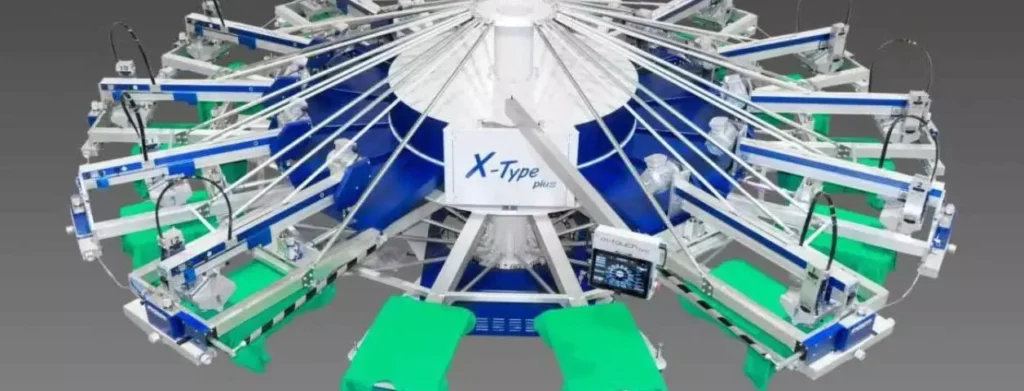
Set up the screen in a printing press. Place a garment on a platen using adhesive. It helps the garment not move around.
Step 4: Ink Application
Next, prepare the ink colours. Start applying a generous amount of ink to the top of the screen. Then, use a squeegee to distribute the ink evenly across the screen.
Step 5: Final output
Finally, lift the screen to reveal the printed product design. Next, heat can be applied to the printed design using a heat source that can enhance the durability and quality of the print.
Pros and Cons of Screen Printing
Pros:
- It offers vibrant colours, Durability, and versatility.
- It is cost-effective for bulk quantity printing.
- It can print on polyester, plastic, glass, and ceramic.
Cons:
- It can be time-consuming for complex designs that require new stencils and screens for each colour.
- It’s not suitable for intricate designs and gradient colours.
- It’s not ideal for small-run orders.
- It needs high-volume orders with a minimum quantity of 50-100.
Done Embroidery on Hoodie Before?
Premium products with the right embroidery design that sets the trend.
Embroidery Ideas →
What is Embroidery?
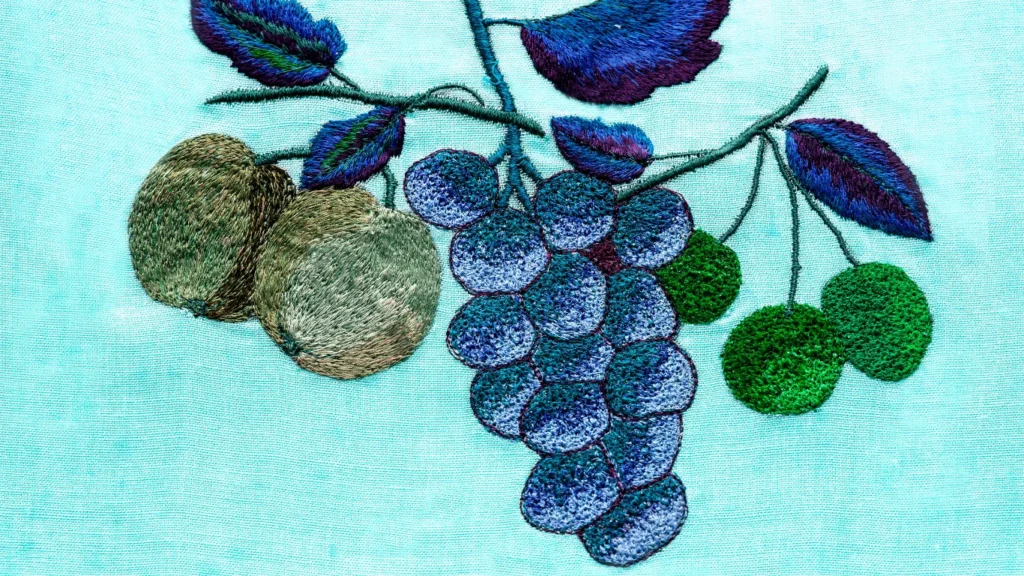
Embroidery is a decorative technique that involves stitching a design onto fabric using thread or yarn. It can be done by hand or machine, and it adds both texture and visual interest to fabrics.
How to do Embroidery?
Step 1: Design creation
The first step in the embroidery printing process is creating custom designs.
Tip: Simple designs with neat typography and minimum colour graphics are the best-suited files for embroidery.
Step 2: Digitization
Embroidery Digitization is the process of converting your design file to a format for the embroidery machine. Every design needs to be digitized for embroidery. This involves specifying stitch types, colours, and sequences.
Step 3: Stitching
The embroidery machine stitches the design according to the digitized instructions. The machine automatically controls the thread and stitch patterns.
Step 4: Finishing
After stitching, excess threads are trimmed, and any stabilizers used during the embroidery process are removed.
Pros and Cons of Embroidery
Pros:
- Embroidered designs are generally more durable.
- Embroidery works well on a variety of fabrics, including cotton, polyester, and denim.
- Unlike screen printing, which can have high setup costs, embroidery can be more economical for small quantities, especially if using an existing design.
Cons:
- Complex designs or large areas of coverage can make embroidery more expensive.
- There are fewer thread colour options compared to the range of ink colours available for screen printing.
- Embroidery can be more time-consuming compared to other methods.
Screen Printing vs. Embroidery: Key Differences
| Aspects | Screen Printing | Embroidery |
|---|---|---|
| Durability | Less durable compared to embroidery. The printed design can fade or crack over time, especially with frequent washing and use. | Highly durable, so it lasts longer and resists fading and wear. |
| Texture | The design is flat and sits on the surface of the fabric, so it feels smooth to the touch. | The design is raised from the fabric, giving it a 3D effect that feels more tactile and detailed. |
| Color Variety | You can use many colors and even create detailed images. This method is great for colorful, complex designs. | Limited to the colors of threads available. It’s harder to create gradients or very detailed images with embroidery. |
| Fabric Compatibility | Good for various types of fabric, from t-shirts to tote bags. It’s flexible and adaptable. | Works well on many fabrics but can struggle with very thin or stretchy materials. The fabric needs to hold the stitches well. |
| Small Details | Fine details or tiny text can be hard to print clearly. It’s better for simpler designs. | Excellent at showing small text and intricate patterns clearly due to the stitching. |
| Order Quantity | Minimum order quantity required. More cost-effective when making bulk items because you can produce a lot of items quickly with the same setup. | More affordable for smaller quantities since setup costs are lower. Good for personalized or custom items. |
| Look and Feel | It provides a smooth, clean, and flat finish. | The design looks sophisticated and has a 3D feel, which adds a touch of luxury and quality. |
| Care and Maintenance | Can fade or crack if not cared for properly. Usually machine washable, but should follow specific washing instructions. | It is durable but needs gentle washing to avoid damaging the threads. |
| Minimum Cost Required | The minimum charge is Rs.30 if the design uses a single color. | Embroidery charges a minimum of Rs.100. |
| Best for | Best for big orders and colorful designs. It’s quicker and cheaper for large runs. | Best for small quantities and designs that benefit from a textured, high-quality look. It lasts longer and handles fine details well. |
| Turn Around Time | Faster production time for large orders once screens are set up. | Can be more time-consuming, especially for intricate designs or small runs. |
This comparison should help you understand which method might be better suited to your needs based on what you’re looking for in terms of durability, design, and order size.
Screen Printing vs Embroidery: Which One to Choose?
When deciding between screen printing and embroidery, consider your specific needs, such as durability, cost, and order size.
Opt for screen printing if you have a large order, want vibrant colours, and require a detailed, multi-coloured design.
Choose embroidery for a durable, high-quality finish, especially if the design is more straightforward and you’re working with higher-end fabrics.
Final Thoughts
When deciding between screen printing and embroidery for custom apparel, consider the design’s complexity, the fabric type, and the desired aesthetic.
Screen printing offers vibrant colours and is cost-effective for large quantities, making it ideal for promotional items and large events. Embroidery, on the other hand, provides a sophisticated and durable finish, best suited for smaller orders and more detailed designs.
Your choice ultimately depends on your specific needs and preferences.
Read More
- DTG vs DTF Printing: Key Differences For Print On Demand
- Direct To Garment (DTG) Printing: Questions Answered
- How Is DTF Printing A Game Changer For Your Business
- DTG vs DTF vs Vinyl Printing: The Future of Print-on-Demand
Frequently Asked Questions
1. How to Make Machine Embroidery Designs?
1) Create your design and choose colours and details.
2) Convert your design to a vector format if necessary.
3) Use embroidery software to import the design, select stitch types, set stitch density, and sequence the stitching.
4) Save the design in a compatible file format for your machine and prepare for production.
2. What is Better, Screen Printing or Embroidery?
3. Which Embroidery is Costly?
4. Is Screen Printing Long-lasting?
Share the Article


