

Jersey fabric is a knitted textile made by forming yarn into interconnected loops, which gives it flexibility and stretch, while its softness and drape vary with the fibre and knit construction. Unlike woven fabric, which crosses yarns over and under each other in a fixed grid, jersey has no such rigid crossing points.
The term jersey describes the knit construction, not a single fibre, so jersey can be made from cotton, polyester, viscose, or blends. Its characteristics vary with the fibre composition and the way the fabric is knitted.
Cotton jersey is commonly chosen for its breathability, and the knit structure gives it a notably soft feel against the skin, while polyester jersey is more often used where durability and easy care matter.
Jersey is widely used for custom T-shirts, tops, and other everyday apparel because its structure provides comfort, flexibility, and an easy drape. Fabric weight also affects the fit, with lighter jersey suited to close-fitting garments and heavier jersey suited to warmer, structured pieces.
Key Takeaways
- Because jersey is a construction rather than a fibre, the same “jersey” label can describe fabrics with very different feel and performance.
- Single jersey and interlock jersey are different knit constructions with differences in weight, stability, surface, and edge behaviour.
- Jersey fabric and a sports jersey are not automatically the same thing, since many sports jerseys use performance mesh fabrics instead.
- Fabric weight, measured in GSM, affects whether a jersey suits lighter garments such as T-shirts or heavier garments such as sweatshirts.
- The suitable jersey fabric and printing method depend on both fibre composition and knit construction, not on the term “jersey” alone.
What Is Jersey Fabric?
The knitted structure of jersey is built through repeated loops that connect across the fabric as yarn is worked into successive rows. Unlike woven construction, the yarn does not remain fixed at a series of rigid crossing points, allowing the knitted structure to move when the fabric is stretched.
When a jersey is stretched, its loops can shift and open within the knitted structure. This allows the fabric to extend with body movement instead of resisting movement like a more rigid woven textile.
The fabric’s name comes from the island of Jersey in the Channel Islands. Records of knitted goods held by the Victoria and Albert Museum date back to Elizabethan times, including a reference to 1587, while the cottage industry for woollen stockings and waistcoats on Guernsey and Jersey thrived through most of the 17th and 18th centuries. The goods were exported to England, France and further afield, and the knitted fabric Jersey gained its name from the island.
Most jersey fabric is produced on circular knitting machines, which form the fabric as a continuous tube. Flat knitting machines produce flat panels instead and are useful for creating shaped sections and wider pattern pieces.
Circular and flat knitting describe the machine used to produce the fabric, while terms such as single jersey and interlock describe how the knitted loops are arranged. These are separate classification methods and should not be treated as interchangeable terms.
Jersey Fabric Journey
How Does Jersey Fabric Take Shape?
Follow four simple stages to see how fibre, yarn, knit construction and the finished fabric influence the jersey you use.
The Fibre Stage
Jersey is not a single fibre. Cotton, polyester, viscose and blends can all be used to make jersey. The fibre is one of the first things that influences how the finished fabric feels and performs.
Fibre = what the material is made fromFibre: Quick Answers
Is jersey fabric cotton?
Not necessarily. Jersey describes a knitted fabric construction, while cotton describes a fibre. Cotton is one of the fibres used to make jersey.
Does jersey fabric shrink?
It depends on the fibre, construction and finishing. Cotton jersey can shrink if it has not been pre-shrunk, while polyester jersey generally resists shrinkage.
The Yarn Stage
Yarn is the strand that is worked into the knitted structure. Its characteristics can influence the appearance, surface and feel of the finished jersey. Slub jersey, for example, gets its uneven texture from deliberate variations in yarn thickness.
Yarn = the strand used to build the fabricYarn: Quick Answers
Is jersey fabric breathable?
Breathability depends on fibre content and fabric construction. Cotton jersey is commonly chosen for breathable everyday clothing, while polyester jerseys can be engineered for specific performance requirements.
Does yarn affect jersey fabric?
Yes. Slub yarn creates the textured, uneven surface seen on slub jersey, while smoother, even yarn produces the plain finish seen on standard jersey.
The Knitting Stage
Jersey takes shape when yarn is formed into interconnected loops. Single jersey uses one set of knitted loops, while interlock uses two linked sets, giving it greater thickness and stability.
Knit = how the loops are arrangedKnit: Quick Answers
Is jersey fabric stretchy?
Generally, yes. The knitted loops can move and expand when stretched. The amount of stretch and recovery depends on the construction and fibre composition, with elastane adding greater stretch recovery.
Is jersey fabric good for T-shirts?
Yes. Jersey is widely used for T-shirts because its knitted structure provides comfort, flexibility and an easy drape. Lightweight cotton single jersey is a common choice for everyday T-shirts.
The Finished Fabric
Fibre, yarn and knit construction each shape the fabric, and weight and finishing add another layer on top. That combination is why two fabrics labelled jersey can behave quite differently.
What Is Jersey Fabric Made Of?
Jersey fabric can be made from natural fibres, synthetic fibres, or blends. Cotton, polyester, viscose, and blended fibres are all used in jersey fabrics. The fibre affects the fabric’s feel, performance, and care requirements, while the knit construction determines how the yarn is arranged and how the fabric behaves.
Cotton Jersey
Cotton jersey is widely used in everyday apparel, particularly T-shirts, lightweight tops, and garments intended for regular wear. Its final feel and performance also depend on the knit construction, yarn, fabric weight, and whether other fibres such as elastane are included.
- 100% cotton jersey: Contains only cotton fibre and is commonly selected when breathability and a soft feel are important.
- Cotton single jersey: Combines cotton fibre with single jersey construction and is commonly used for lightweight apparel.
- Cotton-elastane jersey: Adds elastane to cotton, providing additional stretch recovery while retaining the characteristic feel of cotton.
Polyester Jersey
Polyester jersey is widely used in technical, performance, and everyday apparel. Its performance can vary considerably depending on the knit construction and whether the fabric has been engineered for properties such as moisture management, lightweight performance, or increased durability.
- Polyester jersey: Uses polyester as the main fibre and is suitable for garments that require durability and regular washing.
- Polyester-elastane jersey: Combines polyester with elastane to provide additional stretch recovery.
- Fibre and construction: Polyester can be used in performance fabrics designed for specific apparel requirements, with the final fabric characteristics also depending on its knit construction.
Cotton-Poly Blend Jersey
Cotton-poly blend jersey combines cotton and polyester in the same fabric. Cotton contributes breathability and softness, while polyester contributes durability and easier care. The resulting fabric depends on the proportion of each fibre.
- Comfort and durability: The combination provides characteristics associated with both cotton and polyester, making it suitable for everyday apparel.
- Different proportions: Changes in the cotton-to-polyester ratio can affect the resulting fabric’s feel and performance.
- With elastane: Some cotton-poly blends also contain elastane when additional stretch recovery is required.
Different Jerseys Explained
Explore the different types of jerseys by purpose, style, fabric, and sport.
Types of Jerseys →
Types of Jersey Fabric
The different types of jersey fabric can be classified by the way the knit is constructed, the fibres added to it, the yarn used, or the method used to create a pattern. Single jersey and interlock describe knit structures, while stretch, slub, and jacquard identify additional features created during yarn selection or knitting.
1. Single Jersey
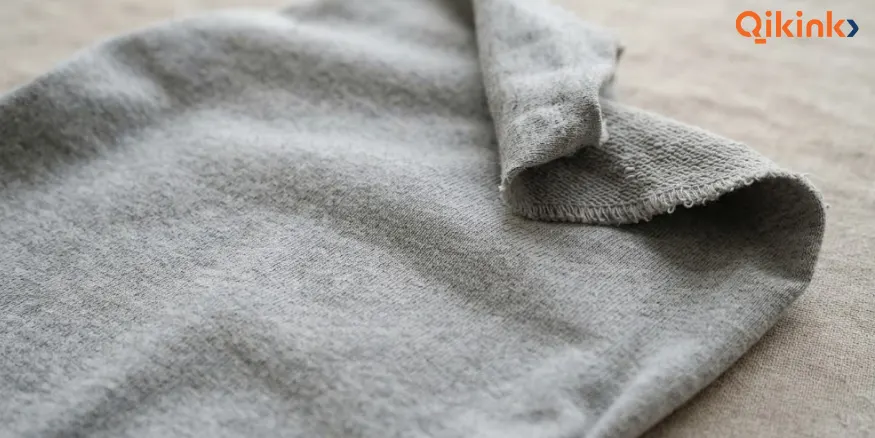
Single jersey is a lightweight knit with one smooth face and one looped face. Its relatively light construction gives it the flexible feel associated with many everyday jersey garments and makes it a common choice for T-shirts and tops.
One of its defining features is its tendency to curl at a raw cut edge. The knitted loops can pull the edge inward after cutting, which affects how the fabric behaves during garment construction. Single jersey is also less stable than interlock because it uses a simpler loop structure.
Single jersey can be produced using different fibres. For example, cotton single jersey combines the properties of cotton with the characteristics of this lightweight knit construction.
2. Interlock Jersey
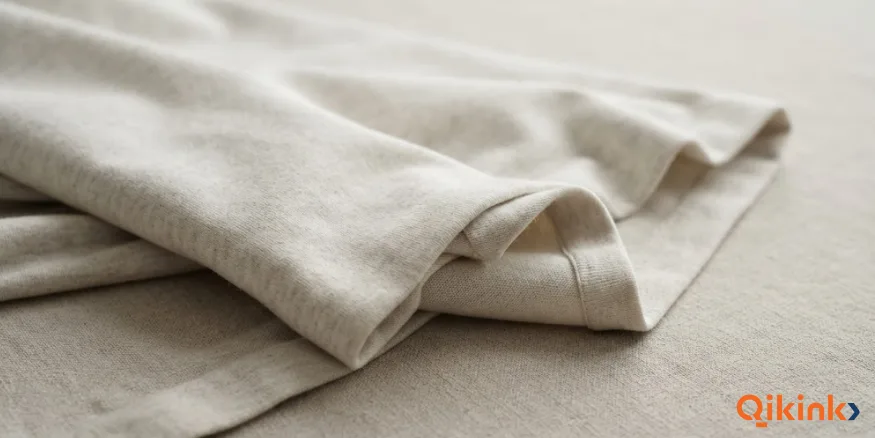
Interlock jersey, also called double jersey, is formed by connecting two sets of knitted loops. This creates a fabric that is thicker and more stable than single jersey, with a smooth surface on both sides.
The added stability also changes how the fabric behaves at the cut edge. Unlike single jersey, interlock generally does not curl at raw edges, making it easier to handle when a steadier fabric surface is required.
3. Stretch Jersey
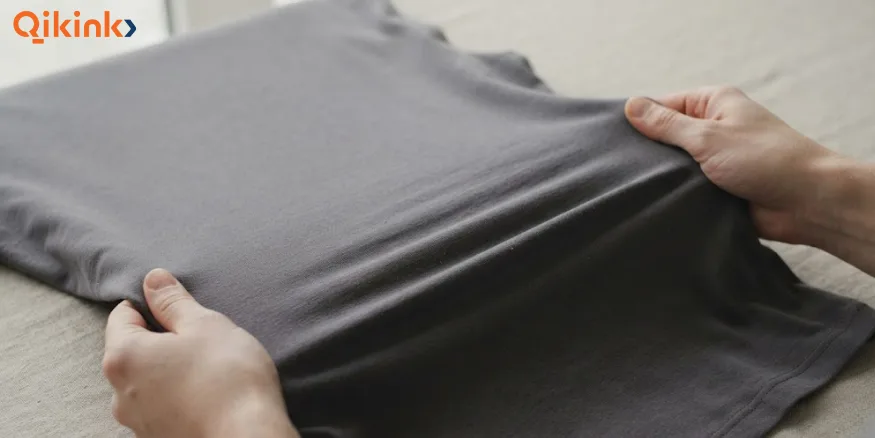
Stretch jersey refers to jersey fabric designed to provide greater extensibility and recovery, often by adding elastane to the fibre blend. The knitted structure provides natural stretch, while elastane adds greater recovery after the fabric is extended.
Cotton-elastane and polyester-elastane are common examples. Cotton continues to contribute characteristics such as softness and breathability, while polyester is associated more closely with durability and easy care. The added elastane improves the fabric’s ability to return towards its original shape after it is stretched.
Stretch jersey can be made using different knit constructions, so it is better understood as a jersey with added stretch recovery rather than as a single construction like single jersey or interlock.
4. Slub Jersey
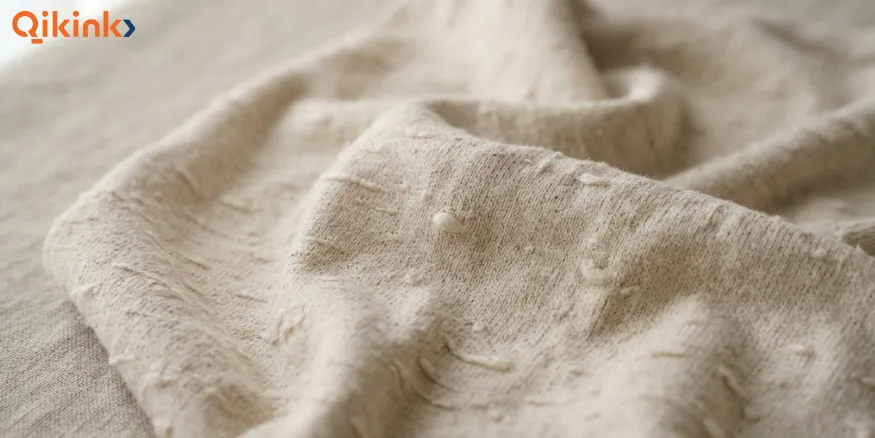
Slub jersey is made using slub yarn, which has deliberate variations in thickness along its length. These thicker and thinner sections create an irregular texture that can be seen across the finished fabric.
The textured appearance comes from the yarn itself rather than from a printed design. This allows slub jersey to retain the characteristics of its underlying knit construction while giving the surface a less uniform appearance.
5. Jacquard Jersey
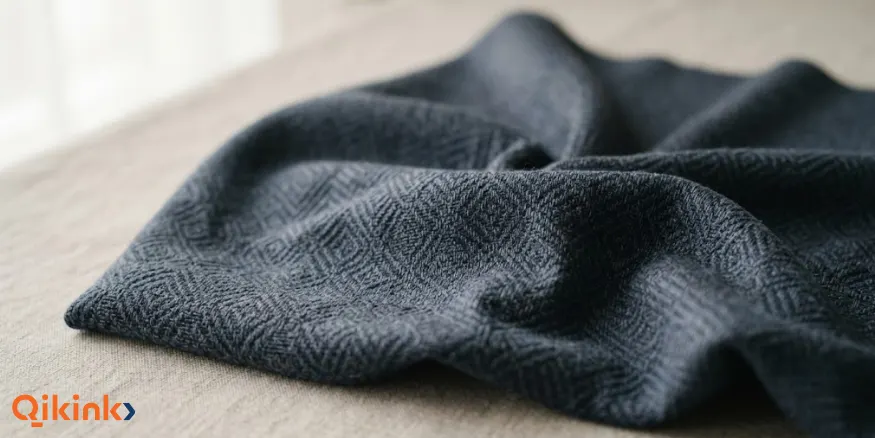
Jacquard jersey has a pattern formed directly during knitting rather than printed onto a plain fabric after it has been produced. Knitting machines control the arrangement of the yarn and loops to create the design within the fabric structure.
This produces a patterned surface in which the design is part of the knitted fabric rather than a separate layer applied after production. The appearance and handle can vary according to the pattern, yarn, and underlying knit construction.
Jersey Fabric Types: Quick Comparison
Jersey Fabric Characteristics
Jersey fabric is valued for its flexibility, comfortable feel, and ability to move with the body. However, these qualities vary between fabrics. The fibre, knit construction, yarn, fabric weight, and finishing can all influence how a particular jersey looks, feels, and performs in a garment.
Stretch and Flexibility
The looped structure allows jersey to extend when the fabric is pulled, making it suitable for garments that need to accommodate body movement. The amount of stretch and the ability to recover after stretching depend on the fabric’s construction and fibre composition.
- Single jersey generally has a flexible feel, while interlock offers greater stability.
- Elastane can be added when greater stretch and recovery are required.
- The required level of stretch depends on the garment’s design, fit, and intended use.
Softness and Comfort
Jersey is commonly used for clothing worn close to the body because it can provide a soft and comfortable hand. Its feel can differ significantly depending on the fibre, yarn, construction, and finishing.
- Cotton jersey is often chosen for its soft, breathable feel.
- Viscose jersey can provide a smooth surface and fluid movement.
- Finishing treatments can alter the fabric’s surface feel without changing its basic knit construction.
Drape
Jersey generally moves with the body rather than maintaining the rigid shape associated with many woven fabrics. Its drape is strongly influenced by fabric weight, fibre content, and construction.
- Lightweight jersey tends to have a softer fall and works well for T-shirts, flowing tops, and lightweight dresses.
- Medium-weight jersey offers a balance of movement and structure for everyday garments.
- Heavier jersey has more body and can provide greater coverage and a more defined silhouette.
Breathability
The breathability of jersey varies according to its fibre content and fabric construction. Knit density, fabric weight, and finishing can also affect how easily air and moisture move through the material.
- Cotton jersey is commonly used for breathable everyday clothing.
- Lighter and more open constructions may allow greater airflow than dense, heavier fabrics.
- Polyester jersey can be engineered for specific performance requirements, so different polyester jerseys may have different moisture and airflow characteristics.
Fabric Weight
Jersey is available in a wide range of weights, commonly measured in grams per square metre (GSM). Weight affects the fabric’s coverage, opacity, warmth, drape, and overall body.
- Lightweight jersey (around 120–160 GSM): Commonly used for T-shirts, camisoles, lightweight tops, and warm-weather garments.
- Medium-weight jersey (around 160–220 GSM): Offers more coverage and body and is suitable for everyday T-shirts, dresses, tops, and casual garments.
- Heavyweight jersey (around 220–300+ GSM): Provides greater coverage, warmth, and structure and can be used for heavier casual garments, structured tops, and sweatshirt-style pieces.
These ranges are approximate rather than universal industry categories. Fabric weight can vary depending on the fibre, yarn, knit construction, and finishing. For example, a jersey around 140–160 GSM is generally suited to lightweight T-shirts, while heavier jersey provides more body and coverage.
GSM is useful when comparing fabrics, but it should not be considered on its own. Two jerseys with a similar GSM can still differ in feel and performance because of differences in fibre content, yarn, and construction.
Stability and Edge Behaviour
The knit construction also affects how jersey behaves during cutting and sewing. This is particularly noticeable at unfinished edges, where some fabrics are more likely to curl or shift than others.
- Single jersey tends to curl at cut edges because of the way its loops are arranged.
- Interlock is generally more stable and is less prone to edge curling.
- These differences can affect handling around hems, necklines, and other narrow garment sections.
Surface and Appearance
Jersey can have a smooth, textured, or patterned surface depending on the yarn and knitting method. Its appearance is therefore not determined by the term “jersey” alone.
- Slub yarn creates deliberate variations in thickness, giving the fabric a textured appearance.
- Jacquard knitting can produce patterns directly within the knitted structure.
- Finishing processes can further influence the surface, sheen, softness, and handle.
Durability and Care
Jersey fabric generally holds up well to regular washing, though how it performs over time depends on fibre content, construction, and finishing.
- Cotton jersey can shrink slightly after washing if it has not been pre-shrunk.
- Polyester jersey generally resists shrinkage and retains its shape well.
- Blends containing elastane generally retain their stretch recovery better when washed in cooler water and kept away from high heat.
The characteristics of a jersey are therefore best understood as the result of several factors working together. Fibre composition influences properties such as softness, breathability, and durability, while knit construction affects stretch, stability, and surface behaviour.
Yarn, fabric weight, and finishing then further shape how the material performs in a finished garment. Considering these factors together gives a more accurate picture than judging a fabric simply by the label “jersey.”
Looking for Custom Sports T-Shirts?
Digital prints to durable sublimation with custom name printing options
Sports T-Shirt Printing →
Is Jersey Fabric the Same as a Sports Jersey?
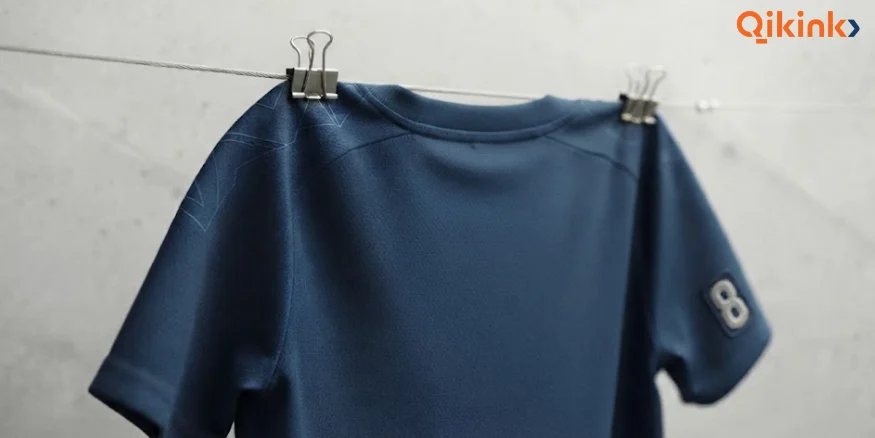
Jersey fabric and a sports jersey are related, but they do not mean the same thing. Jersey fabric refers to a knitted textile construction, while a sports jersey refers to a garment designed for athletic use. Understanding the difference helps when choosing fabric for everyday apparel, teamwear, or custom sportswear.
- Jersey fabric describes the textile construction. It can be made from cotton, polyester, viscose, or blends, with its stretch, softness, weight, breathability, and durability depending on the fibre content and knit construction.
- A sports jersey describes the garment rather than a specific fabric. It is designed for activities such as football, cricket, basketball, and cycling and is commonly made from lightweight polyester or other performance knits suited to movement, durability, and moisture management.
- A sports jersey may use a jersey knit, but the term does not guarantee a particular fabric construction. Some sports garments use mesh or other specialised knitted fabrics when greater airflow, lighter weight, or specific performance properties are needed.
- The distinction also matters for custom apparel and printing. A cotton jersey T-shirt and a polyester sports jersey can differ considerably in surface, weight, stretch behaviour, and moisture properties, so the appropriate printing method may also differ.
Jersey describes a fabric construction. Sports jersey describes a type of garment. The material used for either should therefore be identified by its fibre, knit construction, and intended use rather than by the word “jersey” alone.
Where Is Jersey Fabric Used?
Jersey fabric is used across a wide range of apparel, from everyday T-shirts to close-fitting garments, children’s clothing, loungewear, and activewear.
1. T-shirts and casual tops:
Lightweight jersey is widely used for T-shirts, tank tops, camisoles, and everyday tops. Single jersey is particularly common because its construction provides a lightweight fabric that is easy to wear and suitable for relaxed or close-fitting styles.
2. Dresses and skirts:
Lightweight and medium-weight jersey are commonly used for casual dresses, skirts, and other garments that benefit from fluid movement. Lighter fabrics create a softer, more flowing silhouette, while heavier jersey provides greater coverage and structure.
3. Underwear and close-fitting clothing:
Jersey is used for underwear, leggings, fitted tops, and similar garments that need to accommodate body movement. Fabrics containing elastane are often preferred when the garment requires additional stretch and recovery.
4. Children’s clothing and loungewear:
Jerseys are well suited to children’s clothing, sleepwear, and loungewear where softness and freedom of movement are important. Cotton-based jerseys are commonly used for everyday comfort, while heavier constructions can provide greater coverage and warmth.
5. Sportswear and activewear:
Jersey and other knitted fabrics are widely used in sportswear and activewear. Polyester-based performance jerseys are particularly common where durability, lightweight construction, and moisture-management properties are required. Depending on the application, specialised mesh and other performance knits may also be used.
6. Heavier casual garments:
Heavier jersey can be used for sweatshirts, casual jackets, structured tops, and other garments that require more body and coverage. These fabrics provide a more substantial feel than lightweight T-shirt jersey while retaining the flexibility associated with knitted construction.
Why Is Jersey Fabric Commonly Used for T-Shirts?
Jersey is one of the most widely used fabrics for T-shirts because it provides a practical balance of comfort, flexibility, weight, and ease of wear. Its knitted construction allows a T-shirt to move with the body without requiring the rigidity associated with many woven fabrics.
The choice of jersey depends on the type of T-shirt being produced. Cotton single jersey is commonly used for everyday T-shirts, while cotton-polyester blends may be selected when greater durability and easier care are required. Elastane can be incorporated when additional stretch recovery is needed.
Fabric weight also plays an important role. Lightweight jersey can create a cooler, softer T-shirt suited to warm conditions, while medium- or heavier-weight jersey can provide greater coverage and a more substantial appearance.
Jersey is also well suited to custom T-shirt production, but the fabric should be considered before selecting a printing method. Cotton, polyester, and blended jerseys can respond differently to printing because their fibre content and surface characteristics affect how the print is applied and how it performs after washing.
For this reason, choosing jersey for a T-shirt is not simply a matter of selecting any fabric labelled “jersey.” The fibre composition, knit construction, fabric weight, and intended printing process should all match the requirements of the finished garment.
How to Choose the Right Jersey Fabric?
Choosing between jersey fabrics comes down to which property matters most for the finished garment, since no single type performs best across every requirement.
- When softness and everyday comfort are the priority, cotton single jersey is generally the better choice.
- When shape retention matters, such as for fitted or structured garments, interlock holds its form and resists edge curling more effectively than single jersey.
- When stretch recovery is the main requirement, a jersey with added elastane keeps its fit through repeated wear.
- When durability and resistance to shrinkage during frequent washing matter, polyester jersey is generally a suitable choice.
- When moisture management is the priority, such as for sportswear, a polyester or performance mesh knit is usually the stronger option.
- When the garment needs to suit a particular season, lighter GSM works better for warm-weather wear, while heavier GSM suits structured or cold-weather pieces.
Jersey Fabric for Custom Apparel

The custom printing method used for jersey apparel depends on the fabric, garment colour, surface, design, and production requirements. Cotton jersey and polyester sports fabric can require different approaches, particularly because polyester may present additional challenges during heat application.
Printing on Cotton Jersey
Cotton jersey works with several established garment-printing methods. The choice depends on the design, quantity, level of detail, and finish required.
The fabric surface and garment colour also affect the result. Dark garments may require an underbase for stronger colour coverage, while textured jersey can affect how evenly the design appears.
Because jersey stretches during wear, the print must remain flexible enough to move with the fabric. An unsuitable or overly rigid print can crack or distort when the garment is stretched. Correct ink or transfer selection and proper application are therefore important for maintaining the design through regular use and washing.
Printing on Polyester Sports Fabric
Polyester sports fabric requires more attention to heat and dye migration. When exposed to high temperatures, dyes from strongly coloured polyester can migrate into the printed layer and change its colour.
Lightweight performance fabrics can also have smooth, textured, or highly flexible surfaces, which can affect adhesion and print appearance. The selected printing system should therefore be compatible with polyester and applied within the manufacturer’s recommended temperature, pressure, and curing or pressing conditions.
Testing is particularly important for dark or brightly dyed polyester garments, where dye migration can be more noticeable.
Choosing the Right Printing Method
The appropriate method depends on the combination of fabric, artwork, quantity, and required finish:
- Screen printing: Suitable for larger production runs, particularly when the design uses a limited number of colours. It can produce durable prints when the ink and curing process are matched to the fabric.
- Direct-to-garment (DTG): Prints directly onto compatible garments and works well for detailed, multicolour artwork, gradients, and photographic designs, particularly on suitable cotton jersey.
- Direct-to-film (DTF): Prints the design onto a film before transferring it to the garment with heat and pressure. It is useful for detailed artwork, smaller quantities, and a range of fabric compositions when the transfer system is compatible with the garment.
- Heat-transfer printing: Applies a prepared transfer to the garment using heat and pressure. It is commonly useful for names, numbers, logos, and individualised designs, particularly for smaller orders.
For cotton jersey, screen printing and DTG are common choices depending on the artwork and quantity, while DTF and other heat-transfer methods provide alternatives when transfer application is preferred. Polyester sports fabric requires a system designed to work with polyester and, where necessary, minimise the risk of dye migration.
Before full production, a test print on the actual garment is recommended. This allows the printer to check adhesion, colour accuracy, stretch behaviour, and wash performance under the conditions that will be used for the finished apparel.
Bring Your Ideas to Life
Discover the ultimate guide to creating custom t-shirt designs effortlessly
Personalised T-Shirt Printing →
Frequently Asked Questions
1. What Is the Meaning of Jersey?
2. Is Jersey Fabric Stretchy?
3. What Is Single Jersey Fabric?
4. What Are the Properties of Single Jersey Fabric?
5. What Is the Difference Between Single Jersey and Double Jersey Fabric?
6. Is Single Jersey the Same as Cotton?
7. What Is Flat Jersey Fabric?
8. What Is Jersey Fabric Used For?
Final Thoughts
Jersey is not one material but a knit construction that can be made with different fibres, weights, yarns, and finishes. Two fabrics can both be labelled “jersey” and still behave very differently depending on what actually went into them, which is why checking the fibre and construction matters more than the word on the label alone.
For custom sportswear, the fabric choice also affects the printing process and the finished result. A sports jersey may use a performance-oriented polyester knit or mesh rather than the cotton jersey commonly used for everyday T-shirts. The printing method should also match the fabric, particularly when working with polyester, where heat and dye migration can affect the final result.
For custom sports jerseys, Qikink offers custom jersey printing for teams, events, businesses, and individual requirements, with sublimated designs available in personalised names, numbers, and colours.
Read more
- Custom Embroidered Hoodies: Guide to Sell Designed Hoodies
- Custom Cricket T-Shirt Printing Online: Design Your Team Jersey
- Best Personalised Diwali Gifts for Employees in India
- Custom Baby T-Shirts Printing: Design and Order on Online Today
- Top Custom Corporate Gifting Ideas For Clients and Employees
Share the Article

